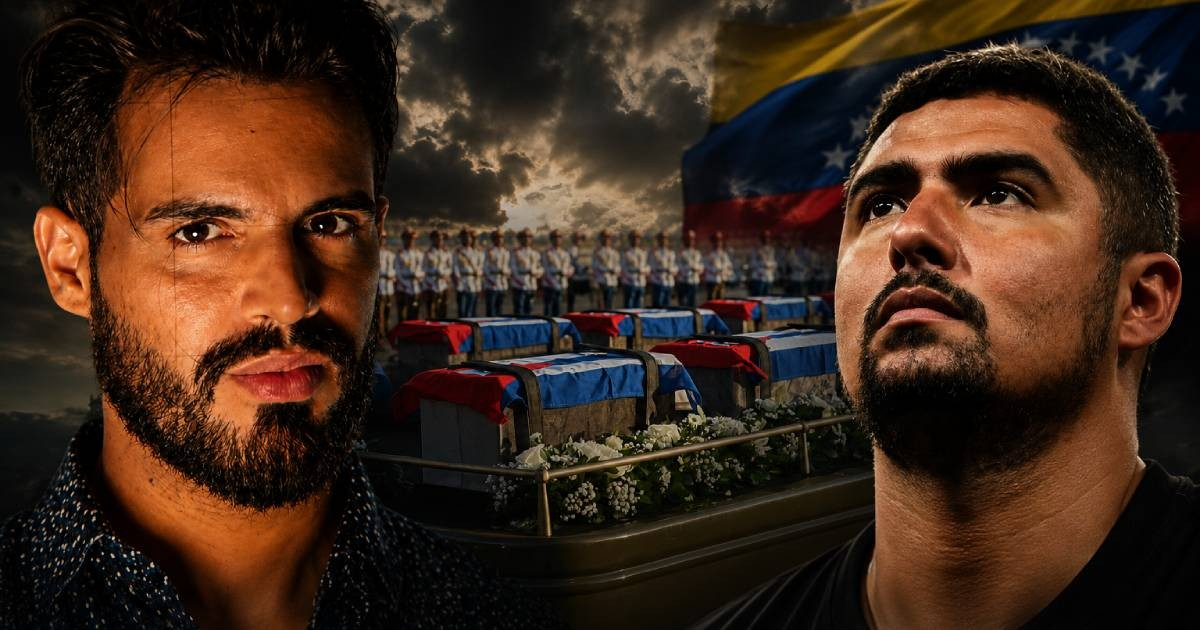
Cuban state media communicator Pedro Jorge Velázquez, widely recognized on social media as El Necio, engaged in a heated dispute with the nephew of prominent Venezuelan politician Diosdado Cabello. The altercation arose after the nephew claimed that the 32 deceased Cubans, who perished during a U.S. operation culminating in Nicolás Maduro's capture, were simply fulfilling their job duties for which they were compensated, and ultimately failed in their mission.
The confrontation, which took place on August 29, was initiated when Alejandro Rondón (@ArondonFT) responded on the platform X to several spokespersons of the Chavista regime and Cuban Communism. Rondón asserted that the 32 Cubans were merely doing their jobs for pay, questioning, "Did the Cuban personnel in Venezuela live on patriotism?"
Rondón further argued that "dying equates to failing" and criticized the Cubans' performance, pointing out their primary role was to protect the President, which they did not achieve.
El Necio's Outburst and Defense
El Necio passionately defended the deceased, stating, "These 32 men didn't flee like others, who were also paid but abandoned their positions, leaving their own president alone. Dignified Venezuelans have shared their gratitude with us for our loyalty. For us, 'Homeland or Death' is genuine."
Moreover, El Necio interpreted Rondón's comments as an allegation of mercenarism, responding with indignation. "I CANNOT REMAIN SILENT when attempts are made to slander and insult Cuban heroes. First, they're labeled as paid mercenaries, then accused of 'failing,'" he posted on Facebook.
El Necio also highlighted the alleged family connection of his adversary to the Chavista leader: "It wouldn't be as severe if they weren't recognized on social media as 'Diosdado Cabello's nephew.' Families and a nation are still mourning their dead, and the spilled blood deserves respect!"
Further Escalation and Accusations
The conflict intensified when Rondón accused the Cuban commentator of receiving allowances during his visits to Venezuela: "Return the allowances given when you came here to suck up."
Velázquez retorted that money was not the issue at hand: "We don't show respect because of pay or salaries. That's apparently your handbook. We respect principles, which you seem to lack."
The 32 deceased Cubans, including members of the Ministry of the Interior and the Revolutionary Armed Forces, were killed on January 3 during the U.S. operation that led to Maduro's capture.
The Cuban government declared two days of national mourning, celebrating them as heroes. The Venezuelan Parliament also formally recognized them, and in June, a monument was unveiled in Caracas in their honor.
This controversy follows El Necio's criticism of Delcy Rodríguez's government for reaching a petroleum agreement with the United States while Cuba suffers from a severe energy crisis. He previously emphasized the need for Havana to consider Caracas's actions, particularly in light of the 32 Cuban 'heroes' who died defending Venezuela from invaders.
Understanding the Dispute Over Cuban Deaths in Venezuela
Who is El Necio in this confrontation?
El Necio is the social media alias of Pedro Jorge Velázquez, a Cuban state media communicator known for his critical stance in defending Cuban interests and personnel.
What triggered the argument between El Necio and Diosdado Cabello's nephew?
The argument was sparked by Alejandro Rondón's comments that the 32 Cubans who died were merely fulfilling paid duties and failed in their mission, which El Necio perceived as an affront to their honor.
How did the Cuban government respond to the deaths of the 32 Cubans?
The Cuban government declared two days of national mourning and posthumously honored the fallen as heroes, acknowledging their sacrifice in Venezuela.