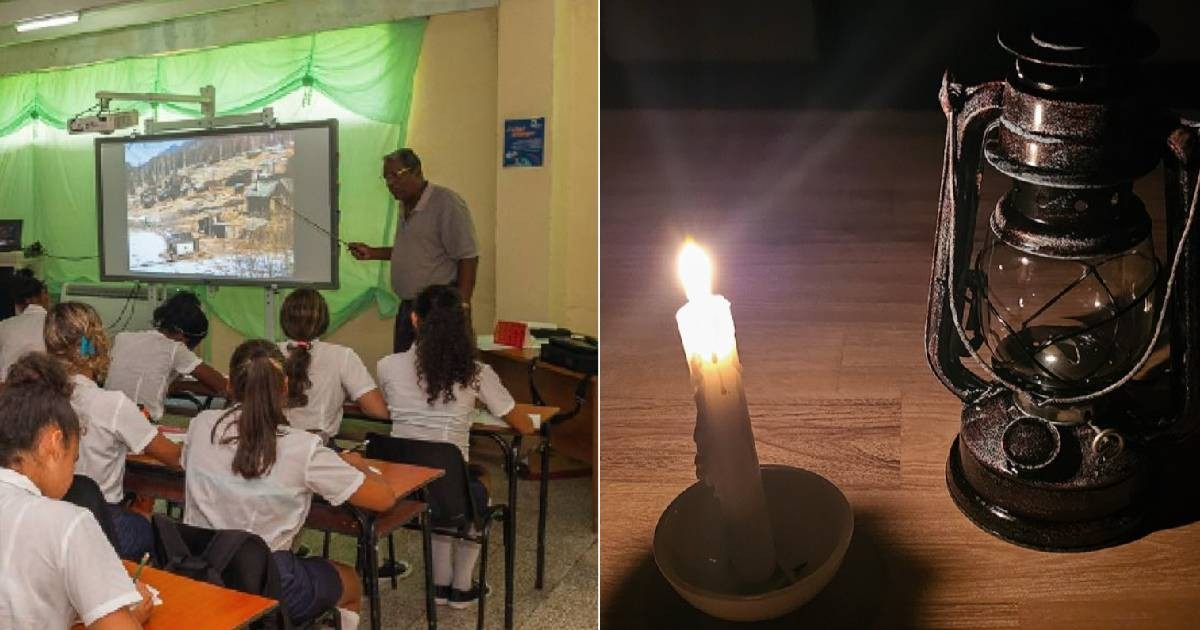
The Electric Company of Las Tunas shared a post on Facebook featuring an institutional image to celebrate the start of the 2026-2027 school year. The image, showing smiling children in Pioneer uniforms, included the message, "Wishing you an excellent start to the 2026-2027 school year." Cubans didn't hold back in their reactions, swiftly turning the official post into a barometer of public discontent through a flurry of sarcastic comments.
One of the first to comment set the tone with, "Gifting a lovely blackout from 2 in the afternoon." This sentiment was quickly echoed by others.
Another user chimed in with, "And of course Mr. Blackout as the best host."
Public Outcry in Response to Power Failures
The irony continued with another commenter noting, "The Electric Company says 'excellent start to the school year'... what a level of comedy!" Meanwhile, someone posed the question on many minds: "The children look happy in the photo, but the important question was missing: will they have electricity to study, or is that also part of the fictional content?"
Perhaps the most telling comment was, "The poster has more light than many homes in Las Tunas."
The Harsh Reality Behind the Jokes
The bitter humor reflects a stark reality. As of the end of August, Cuba's available power generation was just 910 MW, against a demand of 2,730 MW, with a projected shortfall of 2,390 MW. The worst day of the month, August 11, saw a record deficit of 2,411 MW. Just days before the school year began, up to 72% of the country was simultaneously without electricity.
Las Tunas, specifically, had 311 unresolved electrical complaints by August 31 and had reported 11 transformer thefts so far this year. The province's eight solar parks, with an installed capacity of 64.8 MW, only supply about two and a half hours of electricity daily on average, according to the local Electric Company's director.
Challenges in the Educational Sector
The school context was equally grim. The Minister of Education acknowledged a "dramatic" start to the 2026-2027 school year, with only 20% of students having new uniforms. Families from the Vocational Lenin School reported a shortage of 400 mattresses and planned blackouts for boarding students. Several mothers declared they would not send their children to school unless electricity, potable water, and lunch were guaranteed.
Meanwhile, the Communist Party of Cuba hailed the start of the school year as "another act of heroism," a statement that was also met with derision on social media. Despite mounting evidence, Díaz-Canel denied the nation's collapse.
The Las Tunas Electric Company's post, with its image of happy children and a promise to "reaffirm support for education," inadvertently became a symbol of the gap between official rhetoric and the harsh realities faced by Cubans daily.
Understanding Cuba's Power Crisis and Its Impact
What is causing the electricity shortages in Cuba?
Cuba is experiencing electricity shortages due to a mismatch between power generation capacity and demand. With an available capacity of 910 MW and a demand of 2,730 MW, the country faces a significant shortfall, which is further exacerbated by aging infrastructure and theft of resources such as transformers.
How are these power outages affecting Cuban schools?
The recurrent power outages are severely impacting Cuban schools by creating an unstable environment for learning. Many schools cannot guarantee electricity for studying, affecting both students' educational experiences and their families' willingness to send them to school.