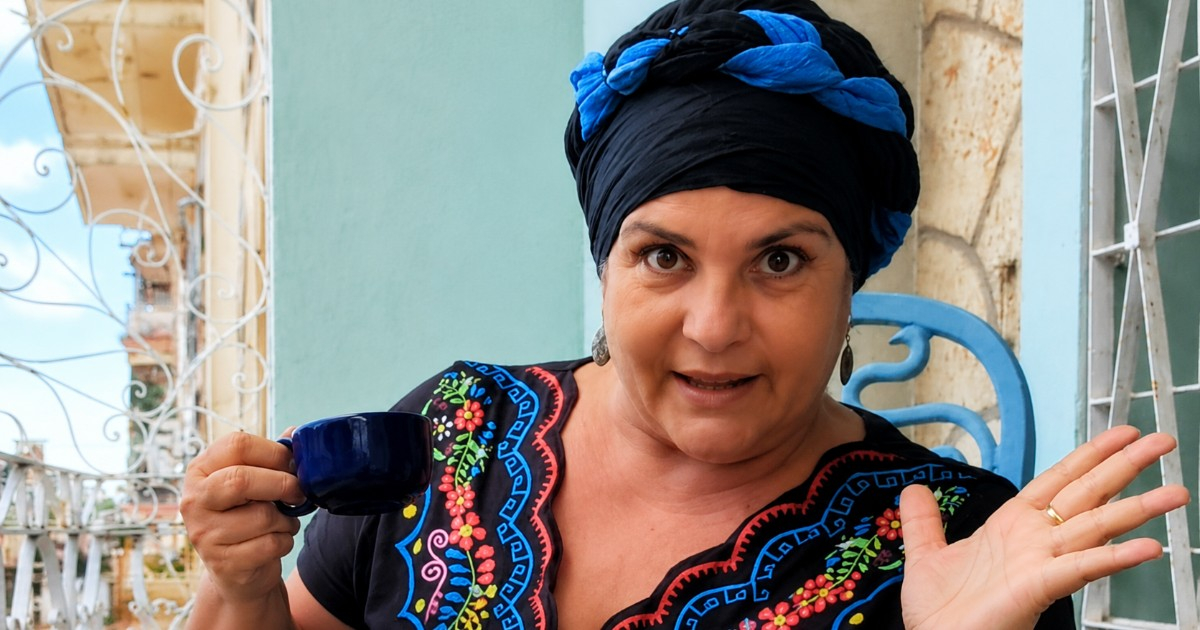
The Cuban broadcaster and presenter Laritza Camacho once again used irony to critique the state of the nation. This time, she juxtaposed one of the revolutionary propaganda's iconic achievements—the Literacy Campaign—with the absence of freedoms that, in her view, define contemporary Cuba.
"First, we declared ourselves free from illiteracy. Then we rid ourselves of everything else, and today we can claim to be a country free of everything that would make us... free," Camacho posted on Facebook this Monday.
Her post was paired with an image of one of the lanterns used during the 1961 National Literacy Campaign, a symbol long celebrated by the official narrative as a hallmark of that mobilization.
The brief yet impactful message sparked numerous reactions, with many users echoing Camacho's sarcastic tone.
"The first territory free of everything that could make us free," commented one person.
Another user, an 80-year-old woman, reminisced about her childhood in the countryside, where she used a lantern similar to the one Camacho featured.
"Now, we don't even have that; we're moving backward. Where will this lead us?" she wrote.
Power outages frequently emerged in the responses. A 42-year-old woman recalled using a similar Chinese lantern during her fourth-grade year to light her home amid blackouts.
"We've been dealing with these power outages for many years," she lamented.
Another individual humorously pointed out that even owning a lantern wouldn't solve the current problem: "Even if you have the lantern, there's no fuel."
Some comments revisited the literacy reference directly. "Very soon, we'll need another literacy campaign; it's just a matter of time," one user remarked, while others criticized the perceived decline in Cuban education and society.
One reaction turned the irony toward the food crisis: "I think we can now declare ourselves the first Latin American country free of cholesterol," joked a user, referring to the high price and scarcity of cooking oil.
Other comments focused on the wordplay about freedom. "After 67 years, we are anything but free," stated one user, while another summed it up: "First territory free of everything."
This latest post is part of a series of statements in which Camacho has intensified her criticisms of the Cuban government and the nation's economic, social, and political conditions in recent months.
On August 17, she sarcastically proposed opening a "new ideas business" in her neighborhood and urged Cubans to collectively remove "the trash that stinks and the one that organizes and lies," intertwining criticism of street waste accumulation with the authorities' rhetoric.
Days earlier, she publicly challenged Communist Party members to explain why Miguel Díaz-Canel remained in the presidency and whether the party's grassroots could advocate for his replacement.
On August 5, Camacho asserted that "Cubans are not happy, and that cannot be hidden," lamenting that events like the 27N and the July 11, 2021 protests failed to lead to genuine dialogue among Cubans.
Understanding Laritza Camacho's Critique of Cuban Society
What is Laritza Camacho known for in her critiques of Cuba?
Laritza Camacho is recognized for her ironic critiques of the Cuban government's shortcomings, particularly highlighting the lack of freedoms and the country's economic and social issues.
Why did Camacho mention the Literacy Campaign?
She used the Literacy Campaign as a symbol to contrast the revolutionary propaganda with the current lack of freedoms, suggesting that while the country may have achieved literacy, it has lost other fundamental freedoms.
How have people reacted to Camacho's statements?
Camacho's statements have resonated with many, sparking reactions that often mirror her sarcastic tone, as people share personal anecdotes and express frustrations over Cuba's ongoing challenges.