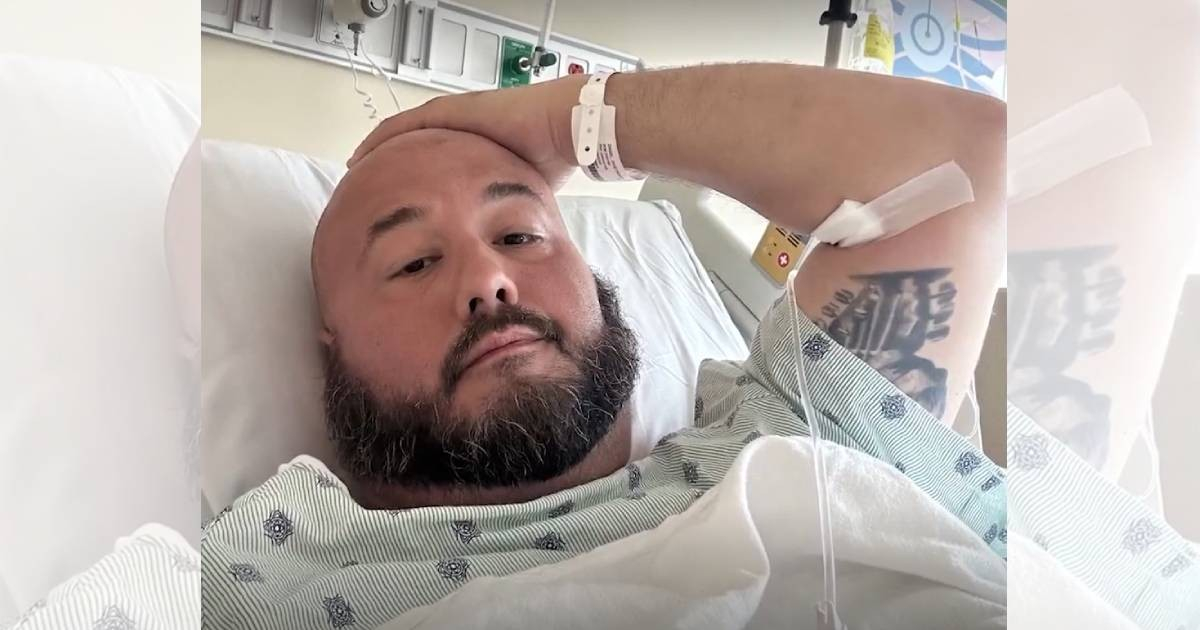
At 43, Dave Daniel, a Florida resident, feared for his life after a nearly six-foot shark viciously attacked him, leaving part of his leg mangled and bleeding profusely on a Florida Keys beach. Fortunately, two nearby boaters with medical training played a crucial role in saving his life.
The harrowing incident unfolded on August 23, while Daniel, an exterminator by trade, was fishing in shallow waters near a sandbar off Boca Grande Key, west of Key West.
He recounted to NBC News' Today show how he spotted the shark and tried to move away, but the predator advanced on him, biting his foot and lower leg.
"I looked down and there was so much blood," he recalled.
Despite the attack, Daniel managed to reach the shore, but his severe blood loss convinced him he might not survive.
"Sitting there on the beach, bleeding out, I was making peace with myself, thinking, 'If it's my time, it's my time,'" he said.
In those desperate moments, he thought about the music he loves, the good people in his life, and especially his late mother. "I started thinking about my mom, who passed away in October, and I felt she was there with me," he remembered.
Then, two boaters appeared, rushing to his aid. They managed to control the bleeding while waiting for rescue teams. Daniel referred to them as "angels out of nowhere."
"Without them, I'd be dead on that beach, no doubt. Luckily, they were medically trained, nurses, and paramedics," he emphasized.
One of the rescuers, registered nurse Courtney McMurray, told Today that she was simply fortunate to be in the right place at the right time.
"I believe we were meant to be there," she noted.
The U.S. Coast Guard later airlifted Daniel to Jackson South Medical Center in Miami-Dade, where he underwent two surgeries.
Daniel was discharged on August 26, just three days post-attack, albeit with his foot immobilized in a cast and facing significant mobility challenges.
He maintained his sense of humor throughout. "I'm feeling pretty good, quite strong. It's just my blood pressure's a bit funny because, you know, I just got attacked by a shark," he joked.
However, his recovery path is long. Daniel will need to refrain from walking for six to eight weeks, followed by physical therapy, and will be away from work for a while.
Adding to his physical challenges is the financial burden. Without health insurance, his friend Robyn Corliss launched a GoFundMe campaign to help cover his medical expenses and recovery costs.
Historically, Florida leads the U.S. in unprovoked shark attacks. The Florida Keys often see nurse sharks, typically considered non-aggressive toward humans.
This incident adds to a list of recent shark attacks in the state. In June 2026, a naval base employee in Panama City was critically injured after a shark attack while swimming.
For Daniel, surviving has reshaped his views on life's fragility.
"One moment, you could be having the time of your life, enjoying the weather and friends, and the next, you could be literally facing death," he reflected.
While grateful to be alive, he's firm about one thing: he's not rushing back into the water anytime soon.
"Probably not for a long time," he admitted.
FAQs About Shark Attacks in Florida
What should you do if you're bitten by a shark?
If bitten by a shark, try to stop the bleeding with pressure and seek immediate medical help. It's crucial to get to safety as quickly as possible.
Are nurse sharks dangerous to humans?
Nurse sharks are generally not considered dangerous to humans, as they are known to be docile. However, they can still bite if provoked.
How common are shark attacks in Florida?
Florida has one of the highest numbers of unprovoked shark attacks in the United States, although fatalities are rare.