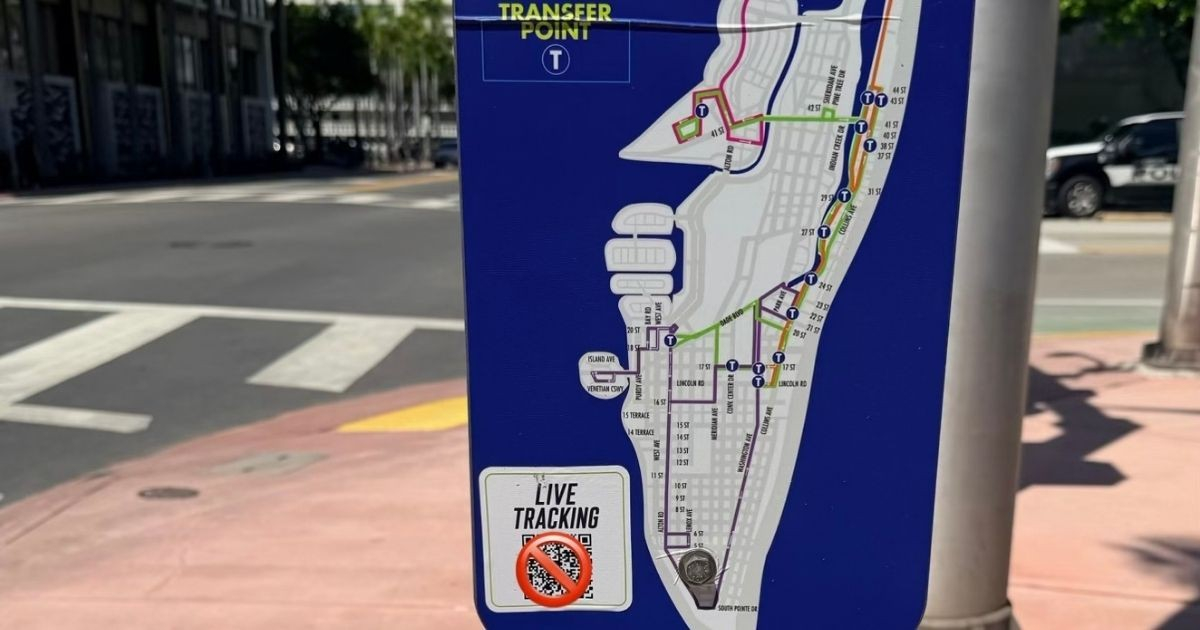
On Sunday, the city of Miami Beach issued a warning to both residents and visitors after unauthorized QR codes were discovered on some of the city's trolley service signs. These codes could potentially redirect users to a non-governmental app that requests payment.
The official Miami Beach account on social media platform X announced that teams are actively working to remove the detected stickers from the signage.
Uncovering the QR Code Scam
Upon scanning these QR codes, users are taken to an application not endorsed by Miami Beach, which claims to offer real-time trolley tracking and charges for this purported service. Authorities have stressed that Miami Beach does not charge for accessing information, routes, or real-time tracking of its trolleys.
Free Trolley Service Details
The Miami Beach trolley service, which operates free of charge, runs daily from 8:00 a.m. to 11:00 p.m., with an average frequency of about 20 minutes across its four routes. The city provides official tools for tracking vehicle locations, including the Trolley Tracker and the Transit app.
Moreover, Miami Beach covers the cost of the premium "Royale" subscription of the Transit app for users tracking Miami Beach trolleys, making it unnecessary to pay for tracking access.
Previous QR Code Scams in Florida
The city did not disclose how many stickers were found, where they appeared, or if any users made payments or suffered financial losses through the misdirecting app. However, this incident is reminiscent of a QR code scam that has already prompted other South Florida authorities to take extraordinary measures.
In December 2024, the Miami Parking Authority began removing QR codes from over 7,000 parking signs after false stickers were placed over legitimate codes, potentially leading to fraudulent sites that could compromise drivers' banking information.
Similar warnings were issued in Fort Lauderdale in November 2024 regarding fake QR codes on parking meters and payment signs. These stickers directed users to sites designed to steal banking information, prompting the city to urge the use of only officially printed codes.
In 2025, Orlando police discovered a similar operation downtown, finding approximately 200 fraudulent QR codes on parking meters. These linked to fake websites seeking personal and financial data.
Heightened Awareness Among Residents
QR code scams have become a growing concern among South Florida residents. In August 2024, a Cuban resident in Miami reported receiving an unsolicited package containing a suspicious QR code requesting personal information, warning that such data could fall into the hands of scammers.
A month later, another alert highlighted the risk of QR codes in unexpected packages, advising against scanning unknown links that could jeopardize personal information.
Understanding Miami Beach's Public Transit Warning
What prompted Miami Beach to issue a warning?
Unauthorized QR codes were found on trolley signs, potentially redirecting users to a payment-required app not affiliated with the city.
Is there a cost to use Miami Beach's Trolley Tracker?
No, Miami Beach provides free access to its Trolley Tracker and even covers the cost of the premium Transit app subscription for users.
Have similar QR code scams occurred elsewhere in Florida?
Yes, similar scams have been reported in Miami, Fort Lauderdale, and Orlando, involving unauthorized QR codes on parking signs and meters.