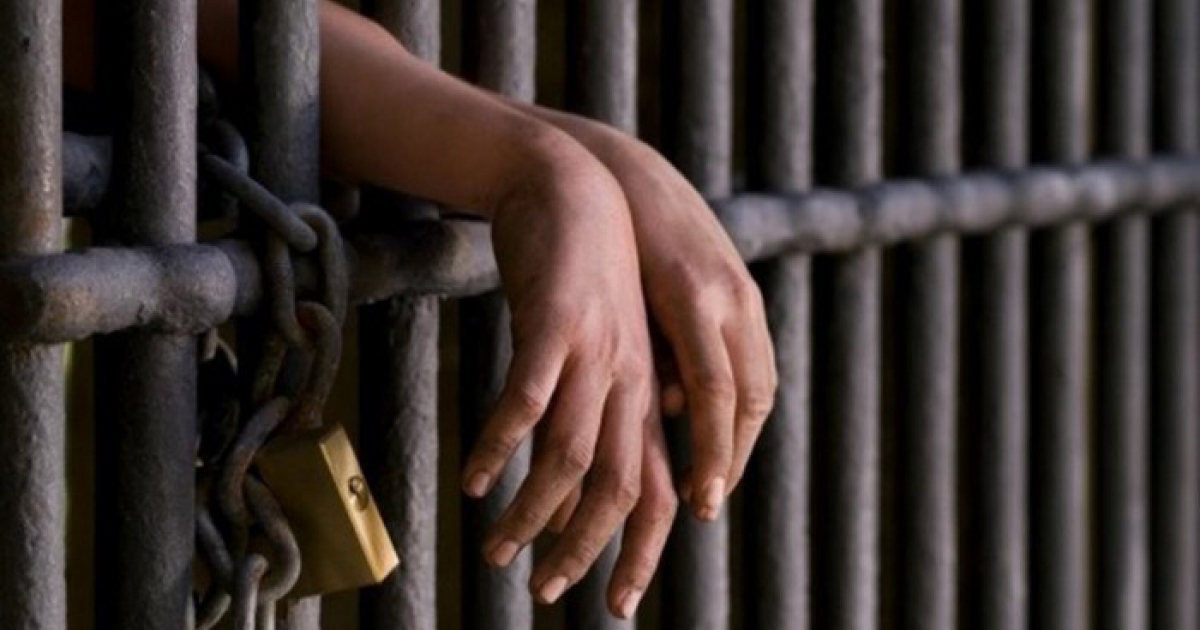
A former political prisoner, who was released just two weeks ago, has exposed the web of corruption, abuse, and delegated repression within the prisons of Granma province, located in eastern Cuba.
According to Fernando Bárzaga Mompié's account, as reported by Martí Noticias, military authorities have devised a parallel system of control in which selected inmates, known as "discipline monitors" or "promoters," wield actual power over the rest of the prison population.
Fernando Michael Bárzaga Mompié, a 44-year-old member of Cuba Independent and Democratic (CID), regained his freedom on August 16 in Manzanillo after serving a five-year sentence for his involvement in the July 11, 2021 protests. During his imprisonment, he endured time in four different Granma prisons, including Veguita #1 and La Demajagua.
The Hidden Power Structure
Bárzaga recounts that each monitor operates with a group of six to eight allies, termed a "clique," that manages entire divisions and barracks. These monitors decide whether a prisoner can see a doctor, receive food, or make a phone call, and they enforce arbitrary adherence to the prison regulations—rules that Bárzaga claims are purposely withheld from inmates.
"That prisoner distributes the food, decides if you can visit the doctor. They are the ones who rule. Any incident is a confrontation between inmates. The police have washed their hands of it," stated the former prisoner.
Enforcement and Repression
The task of physically repressing troublesome inmates also falls to these monitors, who act as enforcers on behalf of the army and State Security, in exchange for immunity and privileges.
This setup aligns with findings documented by Cubalex in August 2024, which identified the role of "discipline" inmates as a tool for systematic harassment against political prisoners, compensated with 250 Cuban pesos.
Resource Diversion and Economic Exploitation
Bárzaga's testimony further reveals an organized diversion of resources. Military leaders seize food, footwear, clothing, and packages meant for inmates from their families, either during inspections or before they can reach the prisoners.
Using prison supplies, officers produce goods for personal use, raise pigs and cattle, and assign inmates to cultivate rice without any pay. The harvest does not benefit the inmates' diet but is instead sold privately.
Even prison privileges are subject to this corrupt system. Conjugal visits and placements in less severe regimes are auctioned to the highest bidder, according to the former inmate.
Silencing Dissent
Attempts by prisoners to report these abuses are quashed. Bárzaga experienced this firsthand at La Demajagua: "Captain Francisco del Toro blatantly stole a new cap my aunt brought me, and when I reported him to the Military Prosecutor, I followed their protocol and was threatened by the same prosecutor, advising me to drop the case to avoid worse consequences. She warned me that she could not guarantee my safety if I proceeded with my complaint."
This pattern is part of a broader prison crisis. In its report for the first half of 2026, Cubalex documented 762 incidents against incarcerated individuals, including beatings and sexual assaults ordered by State Security.
As of April this year, the organization Justicia 11J reported 775 political prisoners in Cuba, with 338 convicted for the 11J protests, many of whom are held in the same Granma province described by Bárzaga.
Understanding the Cuban Prison System
What role do "discipline monitors" play in Cuban prisons?
"Discipline monitors" are selected inmates who exercise control over other prisoners, enforcing rules and making decisions about access to medical care, food, and communication.
How are resources diverted in Cuban prisons?
Military officials confiscate items like food and clothing intended for inmates and use prison resources to produce goods for personal use, while selling agricultural products for profit.
What happens when prisoners try to report abuses?
Prisoners who attempt to report abuses often face threats and retaliation, discouraging them from pursuing complaints and ensuring the system remains unchallenged.