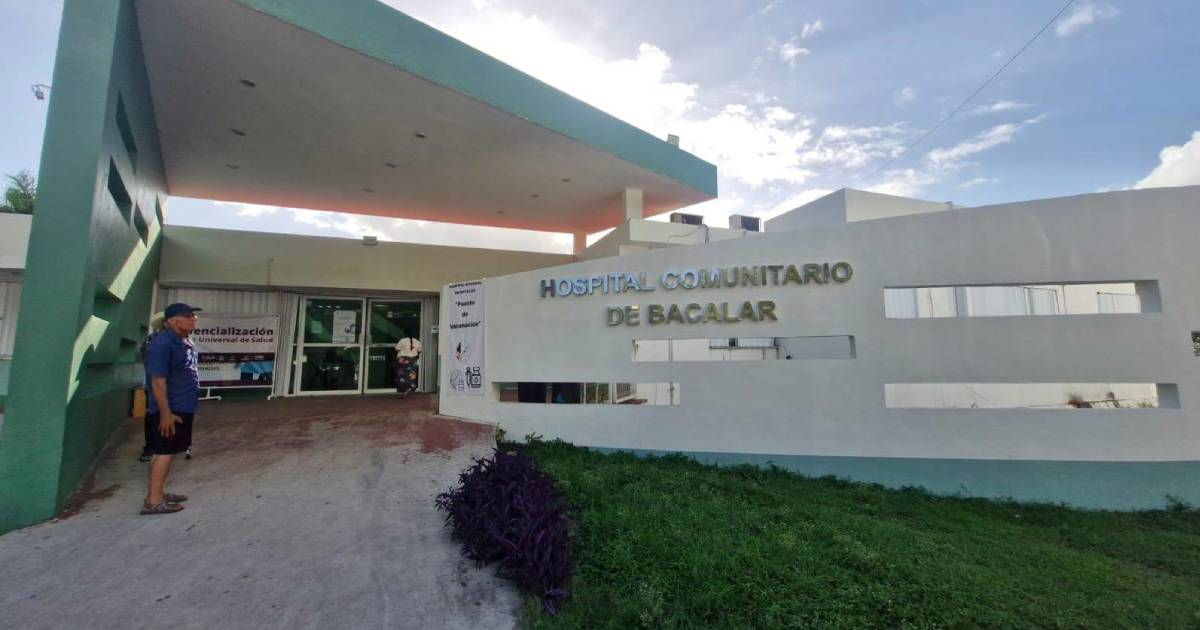
In a rural part of Quintana Roo, more than 300 residents from two communities have signed a petition urging health authorities to ensure that Cuban doctor Yoanis Viñas Vázquez continues to provide medical services during weekends.
According to journalist Rogelio Baruch, the people of Blanca Flor and Buena Fe in Bacalar municipality argue that Dr. Viñas Vázquez's presence is essential. The local community doctor's services are limited to weekdays, leaving them without local medical support on Saturdays and Sundays.
"We request that this vital service remains available. We fall ill on weekends too and require medical attention," the residents stated in their letter dated August 28, addressed to the Secretariat of Health and the State Health Services of Quintana Roo.
The petitioners specifically ask for the "continuous assignment and presence" of Viñas Vázquez to ensure healthcare for families in both areas.
Among their reasons, they emphasize the importance of ongoing care for patients with chronic illnesses, pregnant women, and children, as well as having immediate care in emergencies and avoiding the costs associated with traveling to urban centers for medical assistance.
Residents also highlight the doctor's role in preventive work, such as vaccination campaigns and identifying potential disease outbreaks.
"We respectfully request the continuous assignment of Dr. Yoanis Viñas Vázquez at our community health center to ensure the basic and fundamental right to medical care for all families residing here," the petition states.
Blanca Flor is home to approximately 633 residents, while Buena Fe has about 214, as per INEGI data. Both are recognized as indigenous Maya communities in the National Catalog of Indigenous Peoples and Communities.
The petition underscores the significance Cuban doctors have gained in some rural Mexican communities struggling to fill healthcare positions. As of February, IMSS-Bienestar reported 173 Cuban doctors working in rural areas of Quintana Roo, with another 30 in the process of being incorporated.
The program, however, remains controversial due to the conditions under which these professionals from Havana work. In April, the Inter-American Commission on Human Rights (IACHR) raised concerns about labor rights violations within the Cuban medical missions. Its president, Edgar Stuardo Ralón, indicated signs of "forced labor and human trafficking" in the program.
Additionally, an August report by Prisoners Defenders accused the Cuban regime of withholding between 75% and 90% of the compensation intended for doctors sent abroad by recipient countries.
For the residents of Blanca Flor and Buena Fe, the immediate concern is more pressing: ensuring they have access to a doctor when the weekend comes.
"We appeal to your sensitivity and commitment to the health of rural areas so that our plea is heard and addressed promptly," they concluded.
Key Questions About Cuban Doctors in Mexico's Rural Areas
Why is the presence of Cuban doctors crucial in some Mexican communities?
Cuban doctors are essential in certain Mexican communities due to the scarcity of local healthcare professionals willing to work in rural areas, leading to gaps in medical coverage, especially during weekends.
What are the concerns regarding the Cuban medical missions?
The Cuban medical missions face criticism for alleged labor rights violations, including claims of forced labor and human trafficking, as well as financial exploitation where the Cuban government retains a significant portion of the doctors' earnings.
How do rural communities benefit from having continuous access to healthcare?
Continuous access to healthcare ensures that residents, especially those with chronic illnesses, pregnant women, and children, receive timely medical attention. It also helps manage emergencies without the financial and logistical burden of traveling to urban centers.