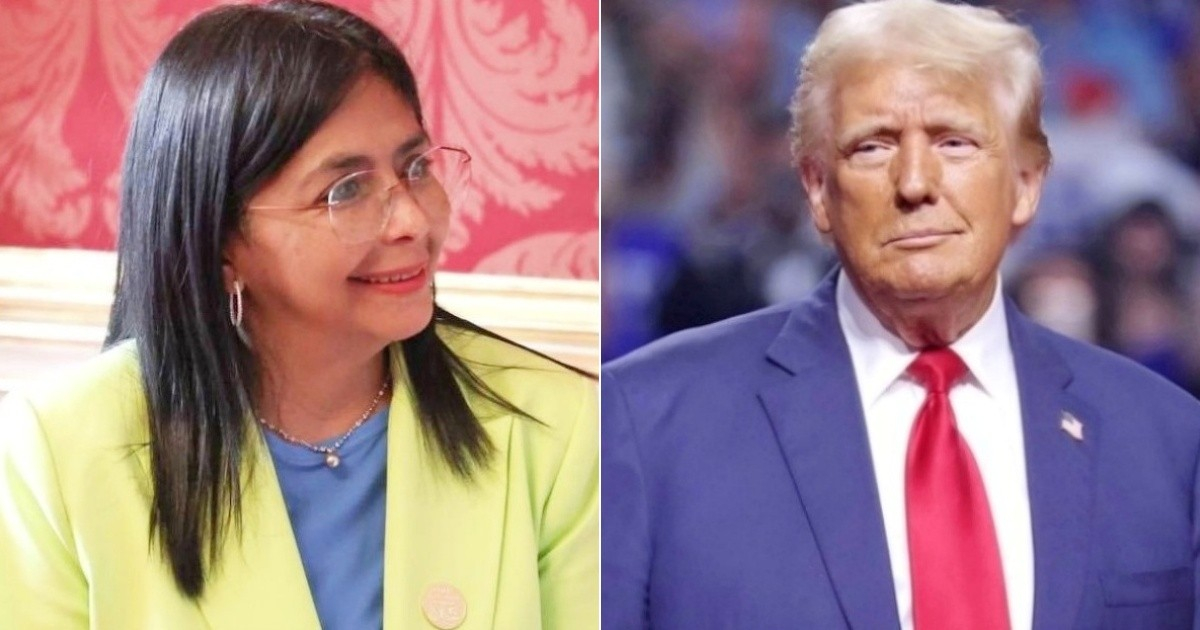
On Friday, August 28, Donald Trump revealed what he claimed to be "the largest oil deal in world history." Through this agreement, Washington gains majority control over more than 65 billion barrels of Venezuela's proven oil reserves.
While the White House has been sparing with details, the scale of the deal positions it as one of the most ambitious energy maneuvers in recent memory.
The agreement represents the culmination of efforts that began after the U.S. forces captured Nicolás Maduro on January 3, 2026.
The Agreement's Terms
Following Maduro's capture, Trump foresaw that major oil companies would enter Venezuela to restore infrastructure and generate revenue. Nearly nine months later, this vision has materialized.
The U.S. government and an undisclosed private operator have formed a joint venture with rights to 17 strategic fields, boasting a proven potential of 65 billion barrels, which constitutes over 21% of the world's largest reserves found in Venezuela.
The United States secures 55% of the actual production, blending equity stakes with rights to purchase oil at cost, earmarked for strategic reserves and the military, according to an anonymous official referenced by AP.
Trump specified that the deal was negotiated by Secretary of State Marco Rubio, Defense Secretary Pete Hegseth, and Venezuela's interim president, Delcy Rodríguez.
Duration Discrepancy: 25 or 100 Years?
One of the more ambiguous aspects is the agreement's duration. Anonymous U.S. sources cited by AP mentioned that the company received rights to develop the fields for 100 years.
Yet, Rodríguez stated on state television that the term is 25 years, with a production target exceeding 1.5 million barrels per day.
Neither party has released the full text of the agreement.
Rodríguez projected the deal would attract over $100 billion in investments and generate more than $209 billion in taxes for the Venezuelan government, emphasizing, "Venezuela retains ownership and sovereignty over its resources."
Geopolitical Implications for the U.S.
By adding 65 billion barrels of Venezuelan oil to its own 46 billion barrels of reserves, the U.S. would control approximately 111 billion barrels, rivaling the United Arab Emirates.
This new enterprise would also become the second-largest corporate holder of proven reserves globally, second only to Saudi Aramco.
The immediate backdrop is the conflict with Iran, which has closed the Strait of Hormuz, causing gasoline prices in the U.S. to soar to $4.08 per gallon, up from $3.20 the previous year.
Will Gas Prices Drop?
Experts remain skeptical.
Amy Myers Jaffe from New York University cautioned that while the agreement "could be beneficial in the long run, it won't affect gas prices at the retail station by Labor Day weekend," set for September 7.
Kevin Book of ClearView Energy Partners expressed similar caution: "Deploying all that capital and achieving the kind of incremental results history suggests is possible will take time—many years."
Currently, Venezuela's production is at 1.23 million barrels daily, down from 3.1 million in 1998.
Legal Concerns and Political Criticism
The deal conflicts with the Venezuelan Constitution, which stipulates that hydrocarbon deposits are "inalienable and imprescriptible" and prohibits transferring them to foreign powers.
Rodríguez's government argues that the amendment to the Organic Hydrocarbons Law, passed in January 2026, allows for operational access contracts without transferring resource ownership.
Harvard economist Ricardo Hausmann was blunt: "The U.S. chose to push for an asset grab, an unconstitutional agreement with an illegitimate and oppressive government."
Democratic Senators Tim Kaine and Chris Van Hollen labeled the operation as "corruption on an epic scale."
In Caracas, Douglas Borjas, interviewed by AP at a city market, echoed the sentiments of many citizens:
"I think they're doing it to cling to power. It's like giving you a lot of oil to leave me alone here in power. The Venezuelan people deserve something better."
Despite the criticism, the PSUV issued a statement of "full support" for the agreement, marking a historic shift in the Chavista rhetoric.
Nicolás Maduro Guerra, son of the former leader imprisoned in the U.S., publicly thanked Trump and Rubio for "their willingness in developing this agreement."
The complete text of the deal remains unpublished.
Insights into the U.S.-Venezuela Oil Deal
What is the significance of the U.S.-Venezuela oil deal?
The deal grants the U.S. majority control over a substantial portion of Venezuela's oil reserves, potentially boosting U.S. energy security and geopolitical influence.
How long is the U.S.-Venezuela oil agreement supposed to last?
There is a discrepancy regarding the duration; U.S. sources suggest a 100-year term, while Venezuelan officials claim it is 25 years.
Will the oil agreement affect U.S. gas prices?
Experts believe the deal may offer long-term benefits but will not immediately impact gas prices in the U.S.