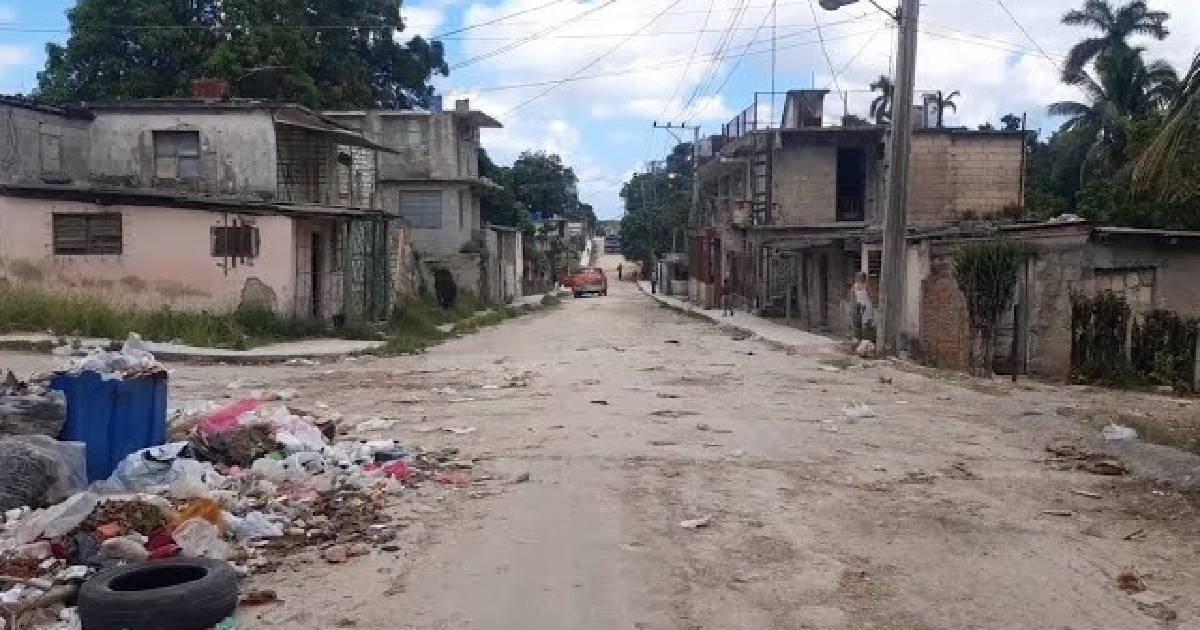
A resident and activist from Mantilla, a neighborhood in Havana's Arroyo Naranjo district, captured a revealing moment on video: inspectors and hydraulic system workers suddenly appeared to restore the long-disrupted water supply, just days after word spread about a potential visit from Miguel Díaz-Canel.
The video, shared by Martí Noticias on Facebook, was recorded by Osmany Poveda. With evident frustration, Poveda criticizes what he perceives as the hypocrisy of the system.
"We've gone two years without water through the pipes, and now, just because they say Díaz-Canel might come, inspectors and workers show up to fix the issue," he remarked.
The footage shows workers adjusting the hydraulic system's valves while Poveda narrates the situation.
Community's Struggles Highlighted
Poveda emphasizes the hardship faced by Mantilla's residents, including children, the elderly, and vulnerable individuals, who have endured this shortage: "Two years, it's unbelievable, with children, seniors, vulnerable people, it's a huge disrespect," he stated.
His conclusion underscores the pattern he sees: "All problems get solved in less than two days, of course, all because they say Díaz-Canel is coming."
A History of Water Protests
Mantilla has a long history of protests over water shortages. In June 2026, residents reported a week without water, leading to a protest on July 5, blocking Calzada de Managua after over two months without regular supply. Authorities responded temporarily by sending water trucks.
The situation in Mantilla is not unique. Havana has experienced a worsening water crisis throughout 2026. In April, around 200,000 Habaneros faced disruptions; by May, the National Institute of Hydraulic Resources confirmed 376,055 affected, and by July, Aguas de La Habana specialists reported the number had risen to over 500,000.
On August 21, a malfunction in the 78-inch pipeline from the South Basin left six Havana municipalities without water: Plaza de la Revolución, Diez de Octubre, Cerro, Centro Habana, Habana Vieja, and parts of Boyeros.
Presidential Visit Sparks Action
Díaz-Canel's visit introduces another dimension to the narrative. On Friday, he inspected the Paso Seco water source in Boyeros to oversee emergency work meant to maintain the capital's water flow. The Cuban presidency acknowledged the supply situation as "critical," urging rapid solutions.
On the same day, the U.S. embassy in Cuba warned that the island's water distribution infrastructure is "increasingly unstable" and advised its citizens to store water.
The pattern Poveda highlights—emergency solutions triggered by imminent official visits rather than genuine public need—reflects a systemic issue: 87% of Havana's water supply system relies on the electrical grid, and frequent blackouts halt the pumps, turning scarcity into a chronic crisis that only seems to matter when there's a political visit or media attention.
Understanding Havana's Water Crisis
Why did Mantilla go two years without water?
Mantilla experienced water shortages due to systemic neglect and infrastructure issues, compounded by reliance on an unstable electrical grid that frequently interrupts water pumping.
What prompted the sudden restoration of water in Mantilla?
The sudden restoration of water in Mantilla was prompted by rumors of a visit from Cuban President Miguel Díaz-Canel, which led to quick action by local authorities to address the issue.
How widespread is the water crisis in Havana?
The water crisis in Havana is extensive, affecting hundreds of thousands of residents across multiple municipalities, with disruptions increasing throughout 2026.