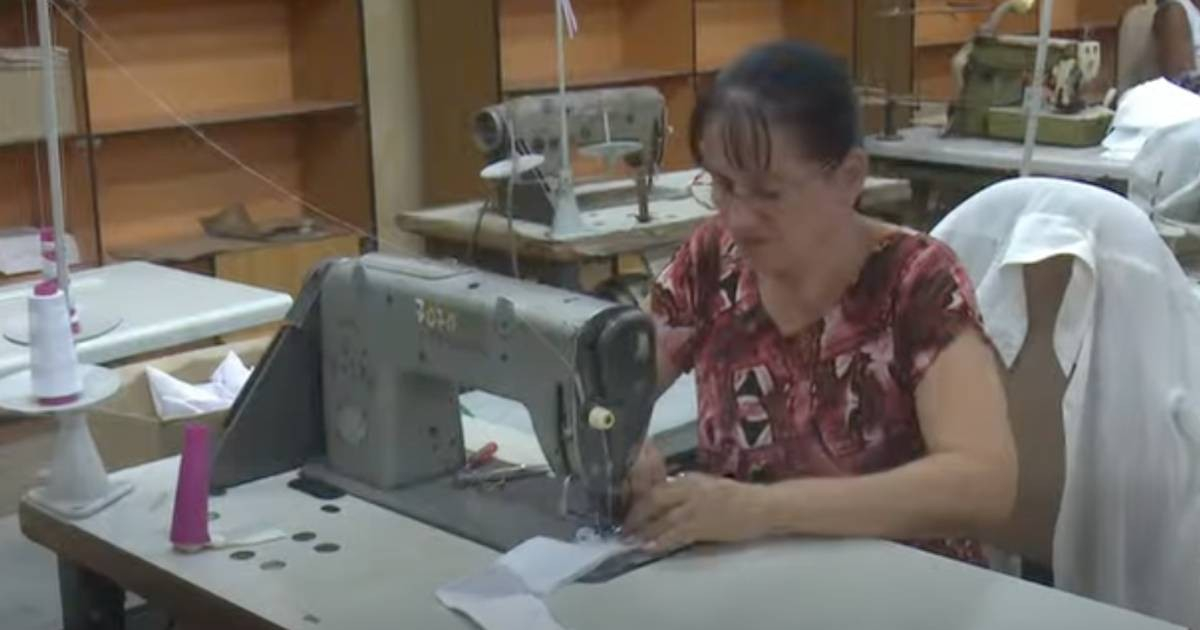
As the 2026-2027 school year approaches, textile workshops in the province of Camagüey are manufacturing school uniforms at a pace dictated by power outages. When electricity is available, the machines operate; otherwise, seamstresses take their work home.
In the garment workshop of Guaymaro municipality, a worker succinctly described the situation: "We work during the hours when there's power. The alternative is for our seamstresses to take small tasks home to get ahead."
At the time of the report, this workshop was producing 2,662 primary school shirts and had already delivered 1,502 to central warehouses and stores.
During the first half of the year, the same workshop completed around 5,000 primary school skirts, all with outdated equipment kept running through sheer effort.
"We have a commitment to the country, to the people, those children who are starting classes now and to whom we haven't been able to deliver their uniforms on time. We are here as soon as the power is on, but working three or four hours is not enough to meet consumer needs," acknowledged one of the operators at the Guaymaro workshop.
In Sibanicú municipality, another workshop is operating on Saturdays, Sundays, and overtime to catch up on delays. "We are working on the 2026-2027 uniforms, which are for high school, secondary, and pre-university. While we are working there, we work on Saturdays, Sundays, and extra hours," explained a worker from that group.
Private Sector Collaboration
Due to the state industry's inability to meet demand alone, the provincial government has instructed to seek collaboration with the private sector.
A Camagüey entrepreneur responded to the call and organizes her day in two shifts: "In the mornings, we fulfill our demand, and in the afternoon, we collaborate with the state order," producing primary school shirts, skirts, and shorts for the state.
Nationwide Uniform Shortfall
The task is daunting: production must cover enrollment for over 700 educational institutions in the province. Nationally, the outlook is even bleaker.
The demand for uniforms is around 3.6 million garments, but production reached only between 2.2 and 2.3 million, meaning only 20% of the national enrollment will receive new uniforms at the start of the school year.
The Ministry of Education announced that no child will be excluded from classes for not having a uniform and that dress requirements will be relaxed, a measure reflecting the severity of the shortage.
Challenges Beyond Uniforms
The 2026-2027 school year begins on September 1 under conditions that authorities themselves describe as "exceptional," with fewer class hours and territorial adjustments for in-person attendance.
Camagüey also faces a shortage of nearly 3,000 teachers to serve more than 95,000 students across 690 schools, and in July, teachers in the province reported going two months without receiving their salaries.
The power crisis affecting every stitch in Camagüey's workshops is the same that in August 2026 left between 65% and 68% of the country simultaneously without electricity during peak demand hours, according to Infobae, turning the production of a simple school uniform into a race against power outages.
Impact of Power Outages on School Uniform Production
How are power outages affecting school uniform production in Camagüey?
Power outages have forced workshops to operate only when electricity is available, leading seamstresses to take unfinished work home to meet deadlines.
What measures are being taken to address the uniform shortage?
The government is seeking collaboration with the private sector, and the Ministry of Education has announced flexibility in dress requirements to ensure no child is excluded from classes.
What is the current production capacity compared to the demand for uniforms?
Current production meets only 20% of the national demand, with around 2.2 to 2.3 million garments produced out of a 3.6 million demand.