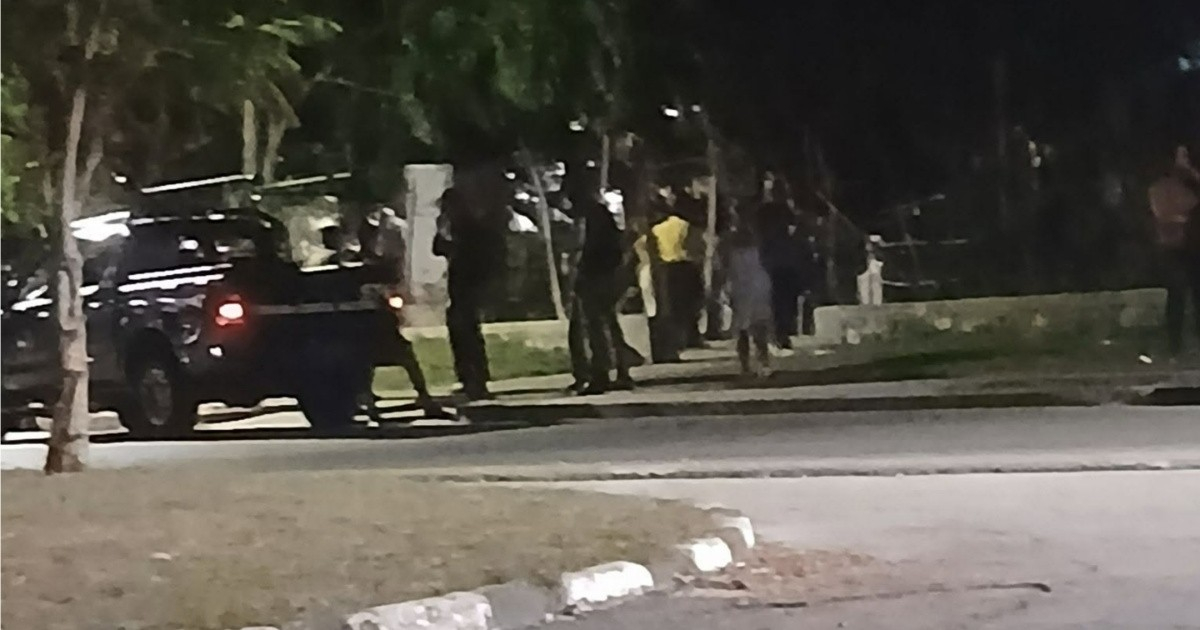
On Friday night, the streets of the Havana neighborhood of Jaimanitas saw the presence of black beret squads, which residents perceive as the regime's preemptive militarization in anticipation of potential protests over prolonged power outages.
The situation was highlighted on Facebook by resident Yunia Figueredo, who pointed out that the neighborhood had been without electricity for over 24 hours, while prioritized circuits like Mayanima and the so-called "calle de punto 0" remained continuously lit.
"All they know is repression while we are suffering. Our food is spoiling; we have nothing to cook with, not even wood is available. Thinking about gas is a luxury few can afford, and water is out of the question," Figueredo expressed in frustration.
Just five days earlier, on August 24, locals had blocked Fifth Avenue and engaged in pot-banging protests against another lengthy blackout and water shortages.
During that incident, a MININT lieutenant colonel arrived with plainclothes agents to try and quell the protest, while a vehicle, allegedly linked to the institution, rammed into demonstrators.
As a dispersal tactic, authorities reconnected the neighborhood's power circuit amid the confrontation, a maneuver repeated elsewhere in Havana.
Earlier on July 6, Jaimanitas had already witnessed a wave of unrest when residents blocked the same thoroughfare after more than 24 hours without power. A few days later, Reuters reported similar demonstrations in Jaimanitas and Santa Fe amid a nationwide collapse of the electrical grid.
The uneven distribution of power outages has consistently fueled public outrage. Entire neighborhoods remain in darkness while prioritized circuits maintain electricity, which residents attribute to political favoritism in energy allocation.
The pattern of militarization in response to blackout protests is a documented strategy across Cuba by 2026. The regime has deployed the so-called "black berets" — the National Special Brigade of MININT — to Santiago de Cuba, San Miguel del Padrón, and various points in Havana.
In August, residents of San Miguel del Padrón reported the presence of armed soldiers escorting Empresa Eléctrica trucks, in a control scheme that intensifies when outages exceed 24 hours or when there are calls for pot-banging protests.
Jaimanitas, situated in the Playa municipality along Fifth Avenue, has emerged as one of the most active centers of civic resistance against blackouts by 2026.
Cuban Power Outages and Public Protests
What triggered the military presence in Jaimanitas?
The military presence in Jaimanitas was triggered by the regime's anticipation of protests due to extended power outages exceeding 24 hours.
How have residents of Jaimanitas reacted to the power outages?
Residents have blocked major roads and engaged in pot-banging protests to express their frustration over the prolonged blackouts and lack of water.
What is the significance of prioritized circuits in Havana?
Prioritized circuits in Havana maintain continuous electricity, leading to accusations of political favoritism in energy distribution, which exacerbates public resentment.