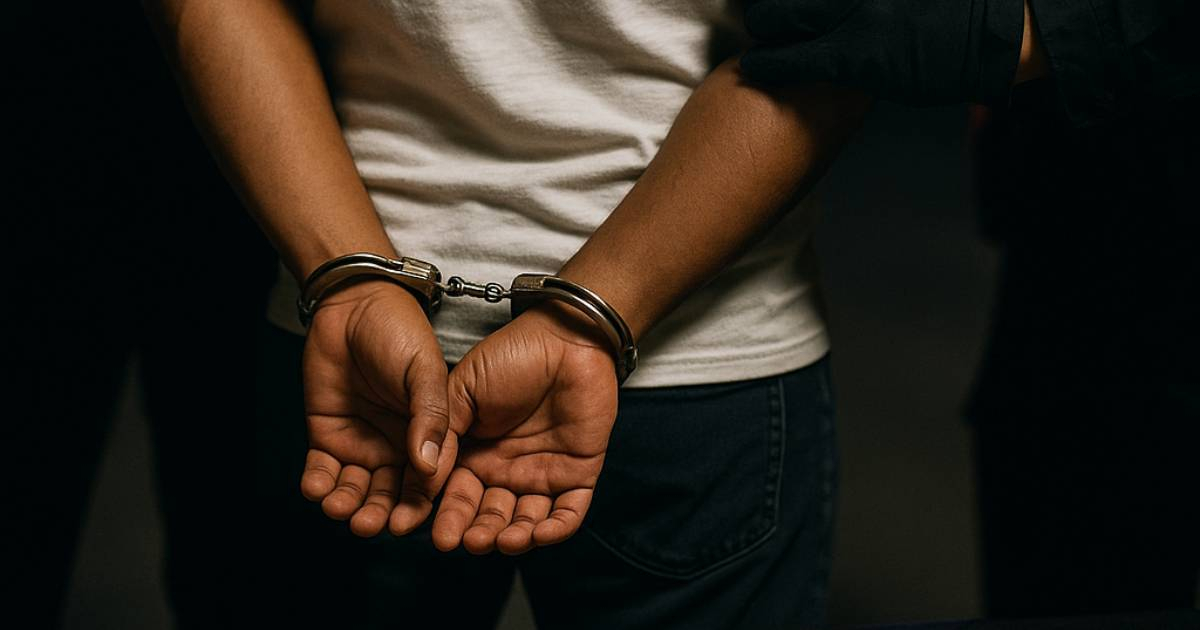
A Nigerian national living in Houston, Texas, has been sentenced to nearly eight years in federal prison for orchestrating an international network that laundered over $3.1 million from romantic scams, business email fraud, and pandemic unemployment insurance fraud.
Oluwasegun Baiyewu, aged 40, received a 95-month prison sentence on Friday, as declared by a federal court. According to the U.S. Department of Justice, Baiyewu spearheaded this conspiracy with at least six accomplices operating in both the United States and Nigeria.
Complex Scheme of Money Laundering
The laundering operation involved a seemingly straightforward yet elusive method: illicit funds were used to purchase salvaged and used vehicles within the U.S., which were then shipped to Nigeria.
The network members communicated through encrypted messaging apps like WhatsApp, complicating tracking efforts.
Targeting the Vulnerable
The conspirators targeted funds from various organized international scams, including romantic schemes, pandemic unemployment insurance fraud, and identity theft through email impersonation. These scams primarily impacted elderly and vulnerable individuals across the United States.
Operating from May 2020 to October 2021, this period coincided with a surge in unemployment insurance fraud due to extensive federal relief programs during the COVID-19 pandemic.
High-Profile Victims and Convictions
One notable incident involved a Puerto Rican renewable energy company being tricked into transferring approximately $280,000 to the fraudsters’ bank accounts. Baiyewu then used some of these funds to purchase vehicles in the U.S., which he exported to Nigeria for his accomplices’ benefit.
Following a 22-day trial in San Juan, Puerto Rico, a federal jury found Baiyewu guilty in August 2025 of conspiracy to commit money laundering. He is the fifth person convicted in this case, joining Oluwaseun Adelekan, Temitope Omotayo, Ifeoluwa Dudubo, and Temitope Suleiman.
Victims of the scheme were located in California, Illinois, Washington, Nevada, Puerto Rico, and Missouri.
Investigation and Broader Context
The case was investigated by the United States Postal Inspection Service, the Department of Labor's Office of Inspector General, and the FBI Cyber Task Force in San Juan.
This pursuit of criminal networks is part of the Department of Justice's Cyber-Enabled Scams Initiative (CSI), which mobilizes specialized prosecutors to expedite the prosecution of cyber financial crimes. This initiative is a component of the Scam Center Strike Force, launched in November 2025.
The strategy of using physical exports from the U.S. as a conduit for moving illicit funds abroad is not unique. On the same Saturday, a Russian citizen in South Florida was found guilty of illegally exporting nearly one million dollars in aviation parts to Russia, violating federal sanctions.
The scale of the issue is evident in the FBI's Internet Crime Complaint Center's annual report: in 2025, romantic scams resulted in losses of $929.3 million among U.S. citizens, while business email fraud accounted for $3.05 billion, contributing to a record total of $20.877 billion in cybercrime losses reported that year.
Key Insights into Cybercrime and Fraud Schemes
What was the primary method used by the laundering network?
The network primarily laundered money by purchasing used and salvaged cars in the United States and exporting them to Nigeria.
Who were the main targets of these scams?
The scams disproportionately affected elderly and vulnerable individuals across the United States.
Which agencies investigated this case?
The investigation was carried out by the United States Postal Inspection Service, the Department of Labor's Office of Inspector General, and the FBI Cyber Task Force in San Juan.