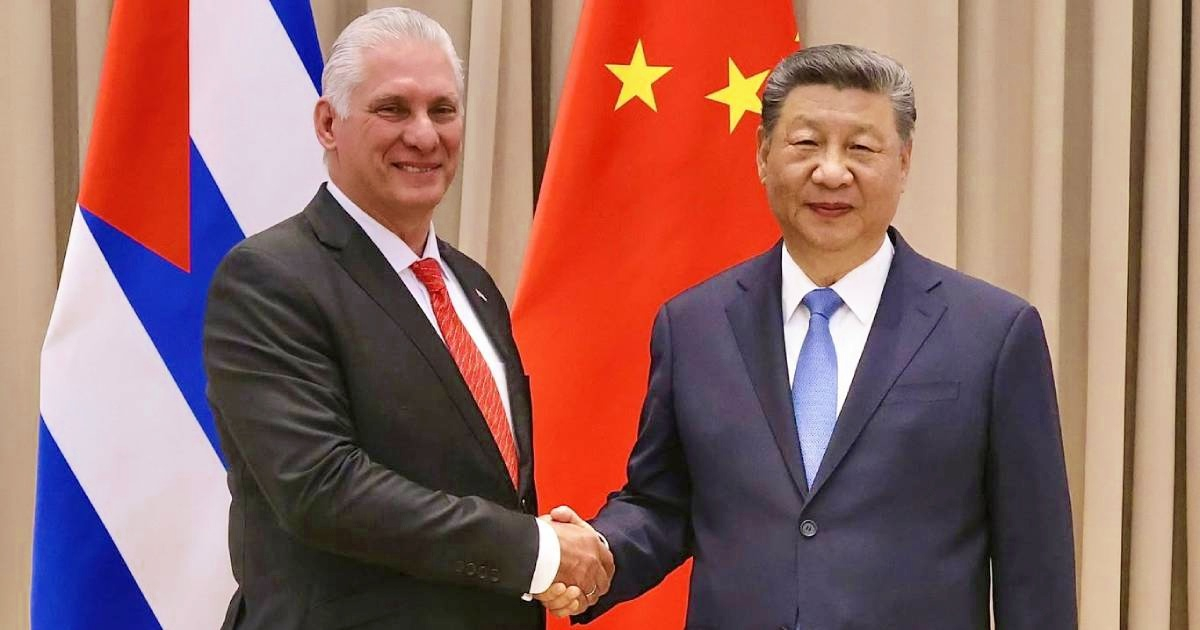
In a recent opinion piece for The Hill, analyst Gordon G. Chang urges the U.S. government to take swift action to prevent China from becoming a lifeline for the Cuban regime. He warns that the presence of Beijing's intelligence operations on the island poses a direct threat to American national security.
The article, titled "Don't Let China Rescue Cuba," cites the July report from the State Department, "Cuba: The Capital of 21st Century Communism," along with insights from military and academic experts consulted by Chang.
Espionage Operations in Cuba
The State Department report is explicit in its findings: China is actively operating three of the 18 known signal intelligence facilities in Cuba, which represents a significant threat to U.S. military operational security. The document labels the island as one of Beijing's most crucial foreign listening posts, highlighting China's persistent intelligence-gathering activities there.
According to the Center for Strategic and International Studies, four sites in Cuba are linked to Chinese signal intelligence: Bejucal—featuring a large, newly completed circular antenna near Lourdes, west of Havana—Wajay, Calabazar, and El Salao. Bejucal was once the largest Soviet listening station outside the USSR, and Chang suggests that China took control of this infrastructure following the Soviet Union's collapse.
R. Evan Ellis from the U.S. Army War College informed Chang that China might have operated listening posts in Cuba since 1993, describing the intelligence relationship as "deep and enduring." Ellis cautions that Beijing is unlikely to relinquish its hold easily.
"Having been caught off guard by Venezuela, China is watchful of U.S. military action in Cuba but is likely to hold onto its valuable electronic and signal intelligence facilities until forcibly removed," Ellis stated.
Sanctions and Energy Pressure
The article comes shortly after the State Department sanctioned Waldo Pérez Cortés, Cuba's senior military representative in China, along with five other Cubans and five entities—including Tecnoimport, Duna S.A., and the Union of Military Industry—for facilitating the acquisition of military equipment from China to Havana.
Secretary of State Marco Rubio was forthright in announcing these measures: "The United States will not tolerate a pariah state hosting military, intelligence, and terrorist operations hostile to our doorstep."
Chang acknowledges that U.S. pressure has had tangible effects: Cuba faces massive blackouts partly due to a near-total energy blockade since January 2026, exacerbated by the cessation of Venezuelan oil shipments. However, he notes that the root cause of the electrical crisis predates this, with outages starting in 2024 due to decades of the regime's mismanagement.
China's Response and the Risk of Rescue
Instead of retreating, China has ramped up its support for the Cuban regime. Just a day after the sanctions, the Chinese ambassador in Havana announced the donation of an additional 5,000 solar panels to Cuba. Earlier in 2026, Beijing had already pledged $80 million and up to 90,000 tons of rice.
Chinese Foreign Ministry spokesperson Guo Jiakun dismissed Washington's accusations and demanded the lifting of sanctions, asserting, "The cooperation between China and Cuba is legitimate and transparent."
What Do Experts Suggest?
Retired Air Force General Blaine Holt offers a tangible strategy in the article. "We can apply similar tactics in Cuba as China does to us in the South China Sea: actions that remain below the threshold of war. Create discomfort. Pierce them with a thousand cuts," Holt suggests.
He also advocates for measures that cut off essential support for Chinese personnel in Cuba, such as restricting flights to and from the island.
The State Department's report describes Cuba as the junction where "the ambitions of Moscow, Beijing, and Tehran converge" and as a "force multiplier" for a coalition openly hostile to the U.S. Since January 2026, the Trump administration has imposed more than 240 new sanctions against Cuba. Chang leaves us questioning whether this pressure will suffice while Beijing remains willing to extend a hand to the regime.
Understanding China's Role in Cuba's Intelligence Operations
Why is China's presence in Cuba a threat to U.S. security?
China's intelligence facilities in Cuba are considered a significant threat because they can gather sensitive information and potentially interfere with U.S. military operations.
How has the U.S. responded to China's activities in Cuba?
The U.S. has imposed sanctions on Cuban individuals and entities facilitating military acquisitions from China, and it continues to apply political and economic pressure on the Cuban regime.
What measures are suggested to counter China's influence in Cuba?
Experts suggest actions that create difficulties for Chinese operations, such as restricting flights and cutting off logistical support, to challenge their presence without direct confrontation.