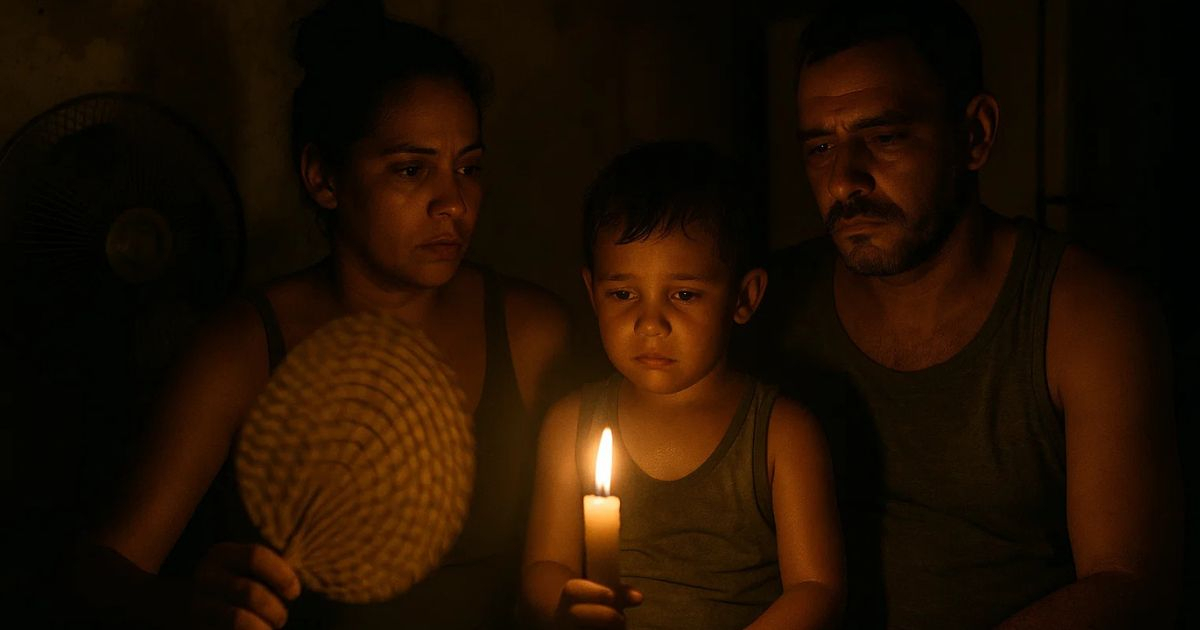
Yasser Sosa Tamayo, a writer and activist from Santiago de Cuba, raised concerns this Friday about the true cost of power outages in Cuba. He argues that the greatest impact is not measured in megawatts but in the precious hours of life lost by citizens striving to meet basic needs.
Posting on Facebook, Sosa remarked, "A blackout doesn't just stop electricity; it halts life," a sentiment that resonated with many, drawing numerous comments from people who shared his views.
According to Sosa, the electrical crisis forces millions of Cubans to spend much of their day searching for water, preserving food, cooking, or enduring the heat. These tasks overshadow activities such as working, studying, creating, resting, and caregiving.
"When a nation compels its people to dedicate a large portion of their day to basic survival, it's not just depriving them of resources. It's stealing their time," he declared.
Sosa emphasized that these lost hours are irretrievable once power returns. "Electricity might come back at eight in the evening, but those eight hours lost are gone forever," he asserted.
The post also questioned the implications of a crisis that, as Sosa suggests, increasingly leaves little room for future planning. "What future can a nation build when its present is being consumed?" he asked.
Comments echoed the hardships faced by Cubans during extended power cuts. One individual recounted enduring 26-hour blackouts followed by just one hour of power, describing the nights of darkness, hunger, heat, and mosquitoes as pushing ordinary Cubans to their breaking point.
Another person summed up the crisis with, "It's no longer about the hours; it's about how much life we lose each day." A third comment mirrored this sentiment, stating, "In that loss of time, we are losing our lives."
Sosa delved deeper into the discussion in the comments, asking followers how many hours of their lives they had spent waiting for electricity, fetching water, preserving food, or dealing with "something that should be basic."
"It's not just about the electricity. It's about that time nobody can return to us," he wrote.
"They can't live another life to repay or make up for all the harm they've caused," a Cuban woman commented, referring to the government's poor handling of the energy crisis.
The post comes at a time when Santiago de Cuba's energy crisis has reached alarming levels. The National Electric System has collapsed multiple times this year, with outages lasting over 24 hours in many areas.
In June, Santiago's Electric Company admitted it couldn't guarantee even two hours of power daily after restructuring the outages into nine blocks.
Minister of Energy and Mines, Vicente de la O Levy, acknowledged in late July before the National Assembly that some communities had gone up to 105 consecutive days without electricity, attributing part of the issue to the theft of dielectric oil from transformers.
Even photovoltaic streetlights installed as a temporary measure in the eastern city were stolen shortly after being placed on main avenues.
It's not the first time Sosa has tackled this subject deeply. In late July, he commented, "The worst thing to happen to Cuba wasn't the blackouts. It was the moment we stopped questioning if this was life," a statement that circulated widely on social media, garnering hundreds of reactions.
In April, he shared the story of a 14-year-old selling pastries in a Santiago park to help his mother. In May, he encountered a 77-year-old grandmother traveling nearly 15 kilometers at dawn pushing a cart to sell okra and survive.
For the activist, all these stories illustrate the same issue he highlights in his reflections—a "blackout" impacting not just the electric grid but the dignity and capacity of a society to reject a reality dominated by daily survival as normal.
Understanding the Impact of Cuban Power Outages
How do power outages affect the daily lives of Cubans?
Power outages force many Cubans to spend significant portions of their days addressing basic needs like finding water, preserving food, and cooking, which detracts from other important activities such as work, education, and rest.
What broader implications do these outages have on Cuban society?
The outages not only disrupt daily life but also impede the ability to plan for the future, as they consume time and energy that could be spent on development and improvement.
What has been the government's response to the energy crisis?
The government has acknowledged the crisis, with officials citing issues like theft of transformer oil and restructuring outages, but many Cubans remain dissatisfied with the inadequate solutions.