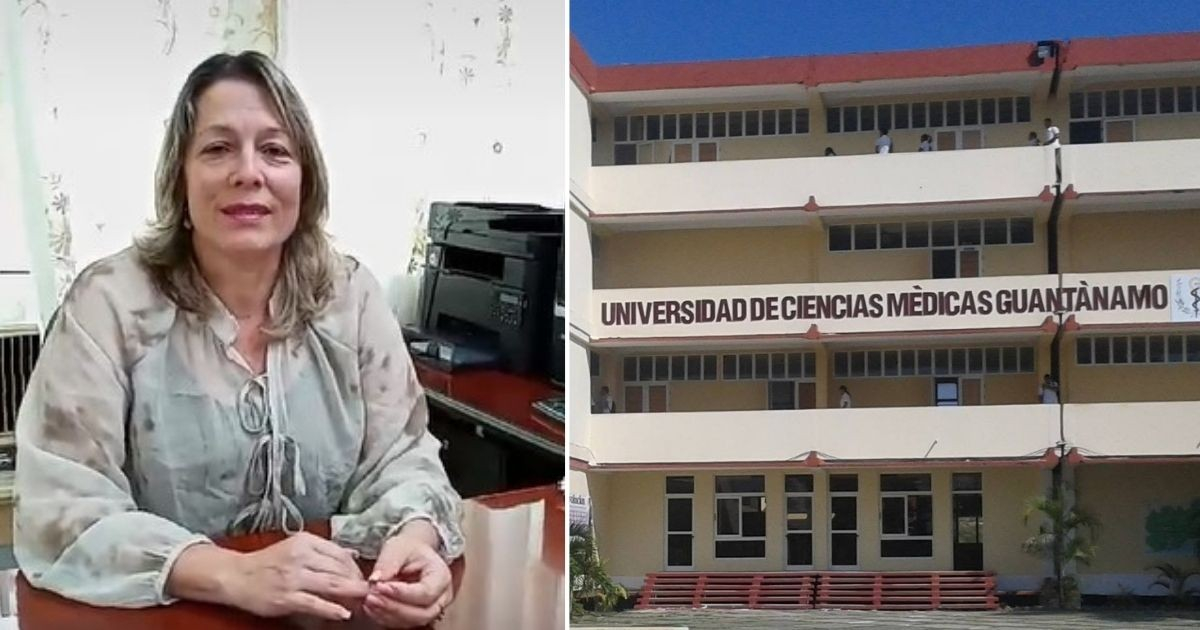
A recent uproar on social media was ignited by allegations of the potential relocation of sixth-year medical students in Guantánamo. The university's president, Yamilé Rodríguez Sotomayor, responded publicly, refuting any directive to "evict" students, although she acknowledged an ongoing reorganization of student housing.
The issue surfaced following a post shared within a Guantánamo Facebook group. A student, identified later by the university president, asserted that sixth-year students were being moved from the dormitory where they had resided for the majority of their academic journey.
The post claimed these students had personally refurbished their rooms, only to be relocated to a new facility deemed inadequate and unsafe. According to the student, the move was to accommodate incoming freshmen, forcing final-year students to vacate their long-term accommodations.
“For five years, sixth-year students have been in the same dorms, in rooms they’ve set up and improved themselves,” the post lamented, labeling the decision as "unjust" and calling for public support to highlight the issue.
University's Official Stance
On Friday, Yamilé Rodríguez Sotomayor, Rector of the University of Medical Sciences in Guantánamo, issued a statement denying any mandates to remove students from their housing.
“Neither the Dean nor the Rector has issued orders to evict any student,” Rodriguez clarified.
She elaborated that the current changes involve reorganizing student accommodations based on academic year and program, with input from the University Student Federation (FEU) and the Union of Young Communists (UJC). However, she acknowledged that some students might not retain their current rooms.
“It's not always feasible for students to remain in their preferred locations due to logistical constraints,” Rodriguez explained.
She addressed the students’ concerns directly, stating, “Dorm rooms are not owned by the residents.”
Communication Challenges and Social Media Criticism
Rodriguez hinted at potential internal miscommunication contributing to the issue. “Misguided responses or lack of information, indiscipline among residents, or deliberate attempts to stir conflict might be at play,” she noted.
The president was particularly critical of how the complaint was broadcast online. She criticized social media as a “meeting place for deceit and cowardice” and questioned why the student chose an anonymous post over direct communication with her office.
She also accused individuals of exploiting such controversies for digital gain, likening them to “vultures” seeking content to fuel algorithms and profit from platforms like Facebook.
“Don’t play into their hands,” she urged, affirming the university’s openness to suggestions, provided they are made with respect. Rodriguez announced her intent to visit the student residences that evening.
Background of Student Protests
This dispute emerges in a context of previous student protests over living conditions at the university. In May 2025, students at the University of Medical Sciences in Guantánamo protested during a blackout, citing issues such as lack of electricity, potable water, and inadequate food.
Reports of alleged threats and intimidation surfaced following those protests, as students demanded better living and studying conditions.
Complaints about living conditions in medical student residences have been echoed across other provinces. In July of this year, international students at the Faculty of Medicine in Santiago de Cuba staged a protest after enduring 24 hours without electricity in their dorms.
Key Questions About the Student Housing Controversy in Guantánamo
What prompted the reorganization of student housing at the University of Medical Sciences in Guantánamo?
The reorganization is aimed at allocating accommodations based on academic year and program, involving the University's Student Federation and the Union of Young Communists.
How did the university president respond to the eviction allegations?
University president Yamilé Rodríguez Sotomayor denied any eviction orders and explained the need for reorganization, while emphasizing that dorm rooms are not owned by students.
What issues have been previously reported by students at the university?
Students have previously protested over poor living conditions, including lack of electricity, potable water, and inadequate food, and reported intimidation following protests.