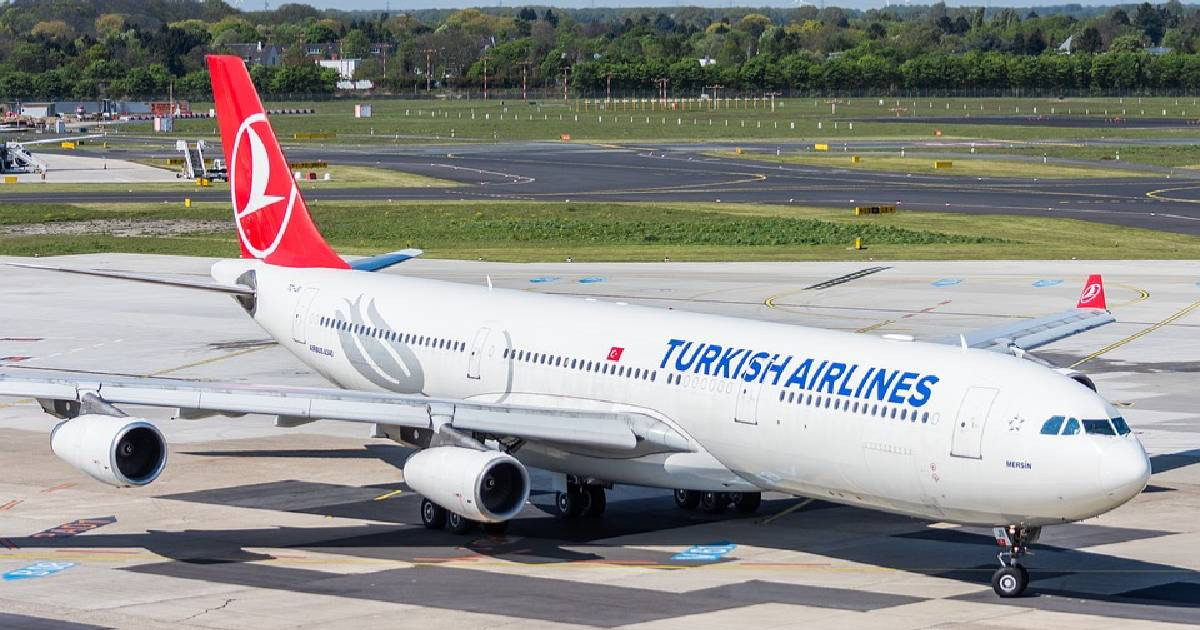
Turkish Airlines has once more halted its flights to Cuba, which were initially scheduled for late October, after briefly making tickets available for the Moscow–Istanbul–Havana route.
"Flights to Havana, which were set to begin on October 25, have been canceled. They were briefly visible in the reservations system but are no longer available for booking," a Turkish Airlines spokesperson confirmed to Diario de Cuba.
The airline clarified that its flights to Moscow continue as planned, with a stopover in Istanbul, and noted that there is no separate Moscow–Istanbul–Havana route.
The canceled itinerary included departures from Moscow's Vnukovo Airport, with a stop in Istanbul and a final destination at Havana's José Martí International Airport.
According to aviation specialist portal Ch-aviation, Turkish Airlines had intended to operate three weekly flights using Boeing 787-9 aircraft.
This cancellation comes just days after the company resumed selling tickets for this connection, a move that had sparked hope for the revival of flights between Russia and Cuba via Turkey.
In mid-August, Turkish Airlines had begun selling tickets for the route starting October 25, with round-trip economy class prices starting at 137,565 rubles, approximately 1,650 dollars.
This latest cancellation occurs five months after the airline suspended the route at the end of March, citing a shortage of Jet A-1 fuel and a drop in tourism demand. The last flight to Havana was on March 29.
The fuel crisis at Cuban airports worsened in February when authorities issued NOTAM A0356/26, warning that nine international airports, including those in Havana, Varadero, Holguín, and Santiago de Cuba, would be without kerosene for at least a month.
This situation led to a wave of suspensions. By April, 11 airlines, including Air France, Iberia, Air Canada, LATAM Perú, and Turkish Airlines, had canceled or reduced their operations to Cuba.
Currently, the Turkish airline only connects to Havana via a layover in Panama, where passengers must transfer to Copa Airlines flights.
The Moscow–Istanbul–Havana route was crucial for Russian tourism to Cuba, a sector that has significantly declined this year. Between January and June, the island welcomed just 387,591 foreign tourists, a 60.7% decrease from the same period in 2025, according to the National Office of Statistics and Information. The Russian market fell by 66.8%, second only to the Canadian decline of 70.3%.
Turkish Airlines' latest reversal further isolates Cuba from international air travel and diminishes the prospects for a tourism rebound in the last quarter of the year.
Impact of Turkish Airlines' Cancellations on Cuba
Why did Turkish Airlines cancel its flights to Havana?
Turkish Airlines canceled its flights to Havana due to a shortage of Jet A-1 fuel and a decline in tourist demand.
How has the fuel crisis in Cuba affected international airlines?
The fuel crisis in Cuba has led to numerous airlines, including Air France and Iberia, canceling or reducing their flights to the island due to the unavailability of kerosene.
What was the significance of the Moscow–Istanbul–Havana route?
The Moscow–Istanbul–Havana route was important for facilitating Russian tourism to Cuba, which has been a significant market despite recent declines.