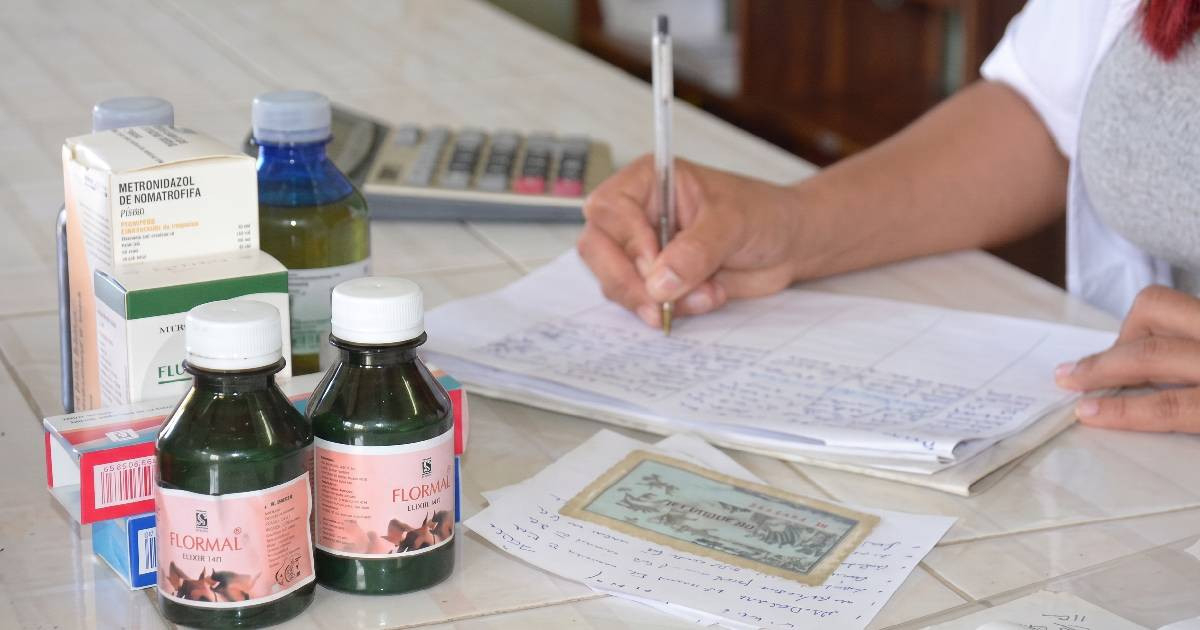
The Cuban government has initiated "Farma Joven" in Havana, a project driven by the Union of Young Communists (UJC) aimed at distributing medications donated by international solidarity brigades to the city's residents. This was reported on Friday by the state-run outlet Juventud Rebelde.
This effort is part of the Community Youth Network and operates through two main channels: a WhatsApp group where residents can send their prescriptions or medical cards to request medications, and door-to-door visits throughout the capital.
Community first aid kits active in local councils serve as the territorial distribution network, while volunteers are divided into digital platform managers and those responsible for physical deliveries, the latter mostly comprising medical students or recent graduates.
"We have a WhatsApp group where people reach out with their prescriptions or medical cards to request medications, but we also conduct visits and deliver medications to any neighbor in need," stated Leanet Proenza del Hoyo, a fourth-year Design student and project coordinator.
The program places a high priority on assisting elderly individuals who have lost access to their regular medications.
"Patience and empathy are crucial as we mainly serve older adults," noted Proenza del Hoyo, who described the primary reward as "the gratitude of the seniors who admit they couldn't access their treatments and now have a chance to stabilize their health, at least to some extent."
Despite being far from a structural solution, Farma Joven acts as a stopgap in a pharmaceutical crisis that the authorities themselves have acknowledged as severe.
In April 2026, state pharmacies were missing 461 out of 651 medications from the National Basic List, meaning over 70% of essential drugs were unavailable.
This shortage is echoed across all provinces: Villa Clara lacked 368 of 636 medications; in Sancti Spíritus, over 300 were missing; and in Ciego de Ávila, the deficit reached 457 due to logistical constraints. BioCubaFarma admitted in July 2026 to facing challenges in providing nearly 300 out of the 395 medications required by the national health system.
Amid this collapse, international donations have become a lifeline for hospitals and patients. The Brazilian Landless Workers Movement delivered 7.6 tons of medications to the Hermanos Ameijeiras Clinical-Surgical Hospital in early August; the Bahamas donated pediatric oncology drugs; and a Chilean group supplied the Juan Bruno Zayas Alfonso Hospital in Santiago de Cuba.
On August 23, the Hermanos Cordové Pediatric Hospital in Manzanillo received medications and medical supplies from supportive organizations.
Farma Joven is part of this emergency ecosystem along with independent initiatives like "Dar es Dar," active for more than five years, which sought public assistance in March 2026 to continue operations.
The key difference is that this new project bears the official stamp of the UJC, indicating the government's attempt to politically leverage the distribution of foreign humanitarian aid through its youth structure.
As the new school year approaches, the project faces the immediate challenge of recruiting more volunteers and expanding its reach, prioritizing those without smartphones or internet access.
FAQs about Farma Joven and Medication Distribution in Cuba
What is the purpose of Farma Joven in Havana?
Farma Joven aims to distribute medications donated by international solidarity brigades to Havana's residents, particularly focusing on the elderly who have lost access to their regular treatments.
How does Farma Joven operate in Havana?
The project operates through a WhatsApp group where residents can request medications by sending their prescriptions, and through door-to-door deliveries managed by volunteers, many of whom are medical students or recent graduates.
What challenges does Farma Joven face?
Farma Joven faces the challenge of expanding its volunteer base and reaching those without smartphones or internet access, particularly as the new school year begins.