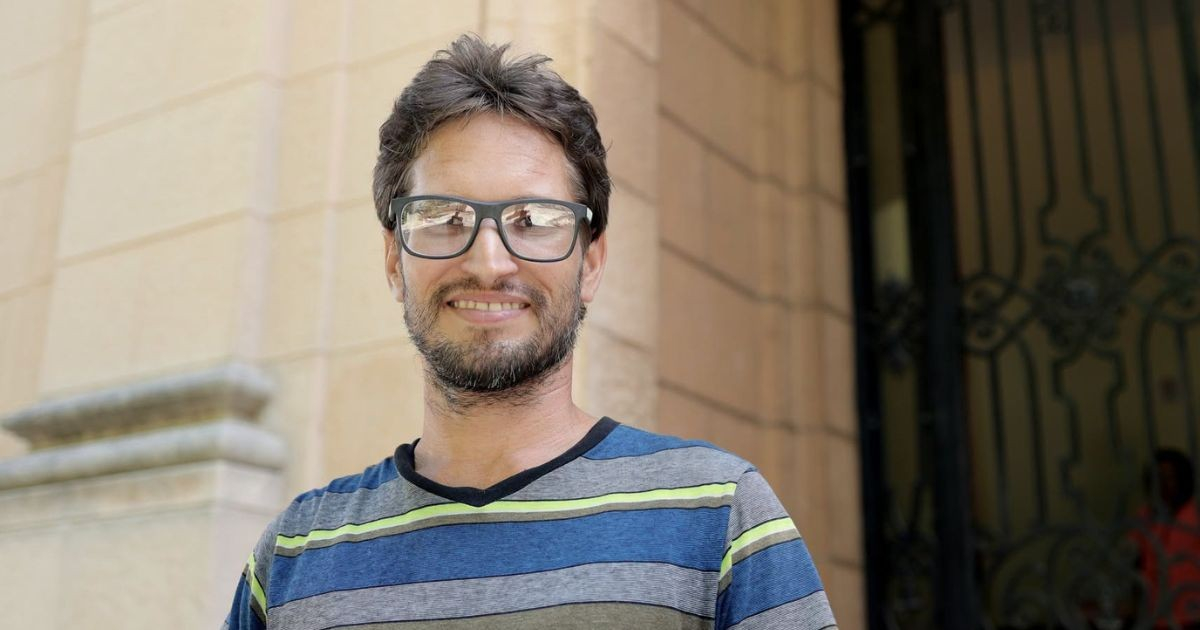
A young Cuban scientist has openly admitted that the majority of his graduating peers have left the country. This significant loss of skilled professionals is largely attributed to low research salaries and the pursuit of better financial opportunities abroad.
Manuel Cruz Rodríguez, who holds a degree in Mathematics and a master's in Numerical Mathematics, shared his perspective in a statement released by Armando Rodríguez Batista, the current Minister of Science, Technology, and Environment (Citma). This was part of a series focused on the Institute of Cybernetics, Mathematics, and Physics (ICIMAF).
Cruz, who also serves as the secretary of the Scientific Council at ICIMAF, candidly discussed the exodus of trained professionals from Cuba and the struggles to retain them within the state-run scientific system.
The Exodus of Talented Professionals
He did not mince words when stating that most of his fellow graduates no longer work in Cuba. Many pursued further education abroad, such as master's or doctoral degrees, while others sought opportunities that would improve their economic circumstances, due to inadequate research salaries.
"They are excellent professionals, highly regarded and sought after elsewhere, and their departure is a significant loss for Cuban science," Cruz lamented.
Institutional Acknowledgment of a Long-Standing Issue
The statement is particularly noteworthy as it comes from the head of the agency responsible for directing Cuba's scientific policy. It acknowledges a problem that has plagued the island's universities and research centers for years: the continuous departure of highly skilled professionals.
The institutional text itself concedes that "enhancing the economic situation of those dedicated to science in Cuba is imperative," recognizing the need to improve compensation in line with their contributions and working conditions.
Personal Challenges and Professional Aspirations
Cruz's personal situation highlights some of these challenges. He expressed hope that conditions in Cuba will improve over the next five to ten years, specifically mentioning the need for reliable utilities and electrical stability to focus on research without distractions.
Despite these challenges, he remains connected to ICIMAF and hopes to pursue a doctorate in a field that captivates him. However, this ambition is balanced with his family responsibilities, as he acknowledges that his young children demand much of his time, which he does not want to compromise.
His wife, also a part of the scientific community, works at the Center for Molecular Immunology (CIM). Cruz is actively involved in their children's care and education, allowing both parents to continue advancing in their careers.
Innovative Approaches Amidst Sector Challenges
Professionally, Cruz is part of a team that uses numerical mathematics and computer simulations to explore multiple options before physical experimentation, a method that conserves materials and other laboratory resources. These models also help anticipate behaviors and mitigate risks in certain technological applications.
Nevertheless, this work progresses in a sector grappling with technological obsolescence, deteriorating work environments, and talent drainage, as acknowledged in the minister's statement.
Widespread Impact of Professional Exodus
The issue of Cuban professionals leaving the country is not new. In January 2023, a professor from the University of Havana made an urgent appeal regarding the departure of teachers and specialists, warning about the loss of valuable personnel and the immense challenge of replacing professionals with years of training and experience.
This problem has also affected scientific areas directly linked to essential services. Cuban meteorologists warned in 2025 about the loss of specialists due to low wages, lack of resources, and professional migration, a particularly concerning scenario in a country regularly exposed to hurricanes, droughts, and other extreme weather conditions.
Moreover, the departure of young individuals is part of a broader demographic trend. Recent data from the Center for Demographic Studies showed that half of the emigrants from Cuba in 2024 were under 35, a crucial group for renewing the country's labor and professional force.
Understanding the Brain Drain in Cuban Science
Why are Cuban scientists leaving the country?
Cuban scientists are leaving due to low research salaries and the pursuit of better economic conditions abroad.
What impact does the exodus of professionals have on Cuban science?
The departure of skilled professionals leads to a significant loss of expertise and knowledge, hindering the development and innovation in Cuban science.
How does the Cuban government view the issue of scientists leaving?
The Cuban government acknowledges the problem and recognizes the need to improve compensation and working conditions for those in the scientific field.