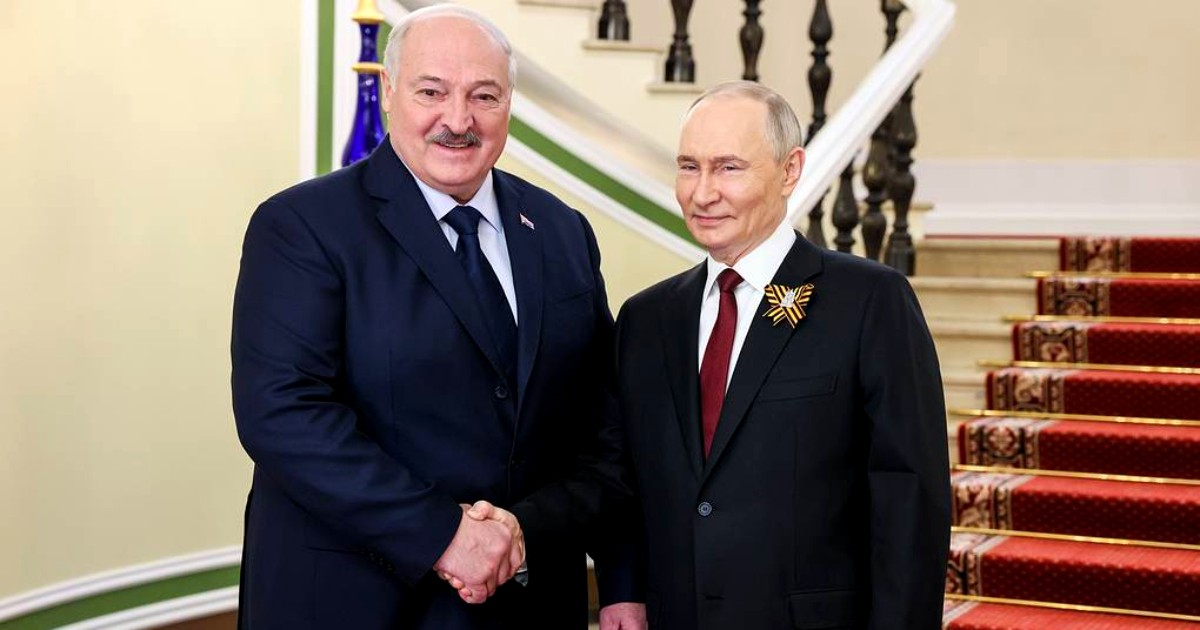
In a surprising move, Belarusian President Alexander Lukashenko has instructed a sudden assessment of his military's combat readiness, coinciding with an unexpected visit by CIA Director John Ratcliffe to Moscow, as reported by the Kyiv Post.
Alexander Volfovich, Secretary of the Belarus Security Council, announced that a brigade will leave its usual station for undisclosed missions. "We won't disclose details yet," Volfovich stated, noting that the tasks will depend on the military command and the General Staff's decisions.
The exercise will focus significantly on strategies to engage a potential adversary, drawing doctrinal insights from "experiences in the military conflicts in Ukraine and Iran," according to Volfovich himself. The stated aim is to evaluate whether Belarusian units are capable of functioning under modern combat conditions.
Military Tensions and International Speculations
Despite concerns raised by the announcement, Volfovich urged the public not to assume that "something extraordinary is happening."
The timing of this military check aligns with Ratcliffe's presence in Moscow, which did not go unnoticed. The CIA director arrived in the Russian capital on Tuesday on a previously unannounced trip—the first known visit by a CIA head since William Burns met with Vladimir Putin in November 2021. The Kremlin confirmed "intelligence service contacts" took place, although it denied any meetings with President Putin, who was reportedly briefed later by spokesperson Dmitri Peskov.
The Wall Street Journal, citing informed sources, suggested the visit might be related to U.S. intelligence concerning potential upcoming actions by Putin. According to the report, Russian forces recently conducted mobilization readiness drills in the Kaliningrad region and other areas to test military infrastructure's capacity to receive, equip, and sustain new recruits. U.S. intelligence has also gathered indications that Putin might be testing NATO's resolve.
Strategic Implications for Belarus
Former U.S. Deputy Director of National Intelligence, Beth Sanner, interpreted Ratcliffe's visit as a direct warning to Moscow: "The objective might have been to convey: we know your plans, and you better not proceed with them."
This week's readiness verification marks the third surprise inspection of the Belarusian military this year, following similar checks in January and February of 2026. It occurs amid increasing militarization in Belarus: in early August, the commander of the Special Operations Forces, Alexander Ilyukevich, announced the creation of a new airborne assault brigade in the Gomel region, roughly forty kilometers from the Ukrainian border, with a permanent base planned for 2027.
Previously, the WSJ reported that Putin exerted pressure on Lukashenko to open a new front against Ukraine and considered utilizing Belarusian territory for operations against NATO states, including drone launches.
Belarus has already permitted Russia to use its land as a launch pad during the initial invasion of Ukraine in February 2022 and has hosted Russian tactical nuclear weapons since 2023. In May 2026, the two nations conducted joint exercises focused on these nuclear arms.
Ukrainian President Volodymyr Zelensky has warned about Belarus's construction of military infrastructure near the border as a potential threat, while French President Emmanuel Macron cautioned Lukashenko during a phone call in May about the risks of Belarus being drawn into the conflict.
Lukashenko acknowledged in June that Belarus is "very militarily vulnerable" and reiterated that the country would only engage in war if directly attacked.
Key Questions About Belarus' Military Readiness
Why did Lukashenko order a military readiness check?
Lukashenko ordered the check to evaluate the combat readiness of Belarusian forces, emphasizing strategies against potential adversaries, amid increasing militarization and geopolitical tensions.
What was the significance of the CIA Director's visit to Moscow?
The unannounced visit by CIA Director John Ratcliffe to Moscow was significant as it involved intelligence discussions, possibly related to upcoming actions by Russia, and was interpreted as a warning from the U.S. to Moscow.