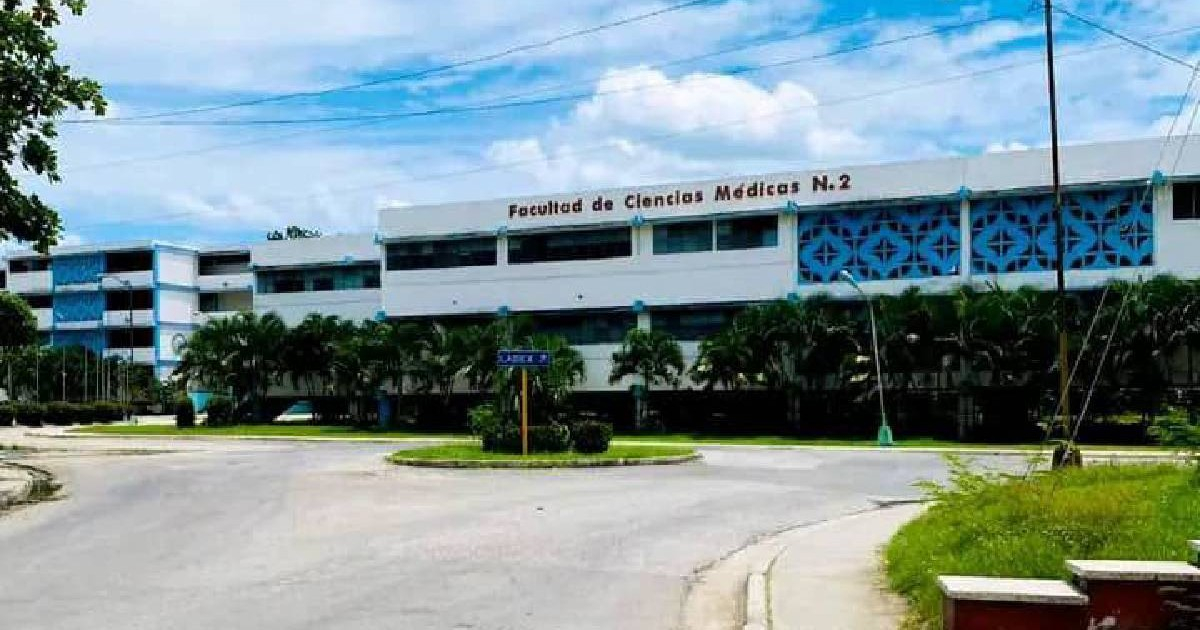
Medical students in their early years from Songo-La Maya, Palma Soriano, and other municipalities in Santiago de Cuba have raised concerns over the decision to centralize their education at Medical Sciences Faculty No. 2 in the provincial capital. This move necessitates their relocation and living in dormitories to continue their studies.
The reports, gathered anonymously by journalist Yosmany Mayeta Labrada due to the students' fear of potential backlash, highlight the severe impact on families already struggling economically.
Based on the students' calculations, a week in Santiago de Cuba—considering transportation, food, and basic necessities—could exceed 5,000 Cuban pesos per person.
"We are poor, the transportation system is terrible, the economy is in shambles, and food is a whole other issue," one student expressed in a message to the journalist.
The dilemma is stark: "Do we study or eat? Do we pay for transport or buy food? Do we continue with medical school or quit because our families can't afford to support us?"
Adding to the financial burden are the conditions of the student dormitories, which the students themselves describe as dilapidated: bathrooms are closed off and classrooms lack shutters since Hurricane Melissa hit eastern Cuba between October and November 2025, damaging over 2,100 educational institutions nationwide.
What has particularly outraged the students is the response they claim to have received from Dean Yanet Victoria.
In conversation screenshots shared with Mayeta Labrada, the dean reportedly stated, "These decisions aren't made unilaterally; they're thoroughly analyzed for pros and cons. Everyone studies in their own time. I was a student during very tough times too."
The students reject this reasoning, arguing that past generations facing hardships is not a valid justification for enduring conditions they consider untenable.
This measure also contradicts the Ministry of Higher Education's announcement just two days prior, which stated that Santiago de Cuba universities would start the semester with blended and distance learning options to minimize travel, a policy seemingly at odds with the local decision.
This complaint is not an isolated incident. Throughout 2026, Santiago de Cuba's medical students have led a series of protests: in March, they reported water shortages and food scarcity in dormitories; in May, they opposed the suspension of hospital practices for "Defense Preparation" activities; in June, protests spread across several provinces demanding the cancellation of final exams due to inadequate conditions; and in July, international students staged a pot-banging protest after more than 24 hours without electricity at the faculty.
Despite everything, the students are determined not to abandon their studies: "We don't want to quit medicine," they reiterate in their messages.
The authorities at Santiago de Cuba's University of Medical Sciences have yet to publicly comment on the measure or the conditions highlighted by their students.
Key Concerns of Medical Students in Santiago de Cuba
What is the main issue faced by medical students in Santiago de Cuba?
The centralization of education at Medical Sciences Faculty No. 2 requires students to relocate and live in dormitories, imposing significant financial and logistical burdens on them and their families.
How have students responded to the centralization decision?
Students have expressed their dissatisfaction through anonymous reports and have participated in a series of protests highlighting various inadequacies in their living and study conditions.
What has been the university's response to the students' concerns?
As of now, the authorities at Santiago de Cuba's University of Medical Sciences have not issued any public statements regarding the students' grievances or the centralization decision.