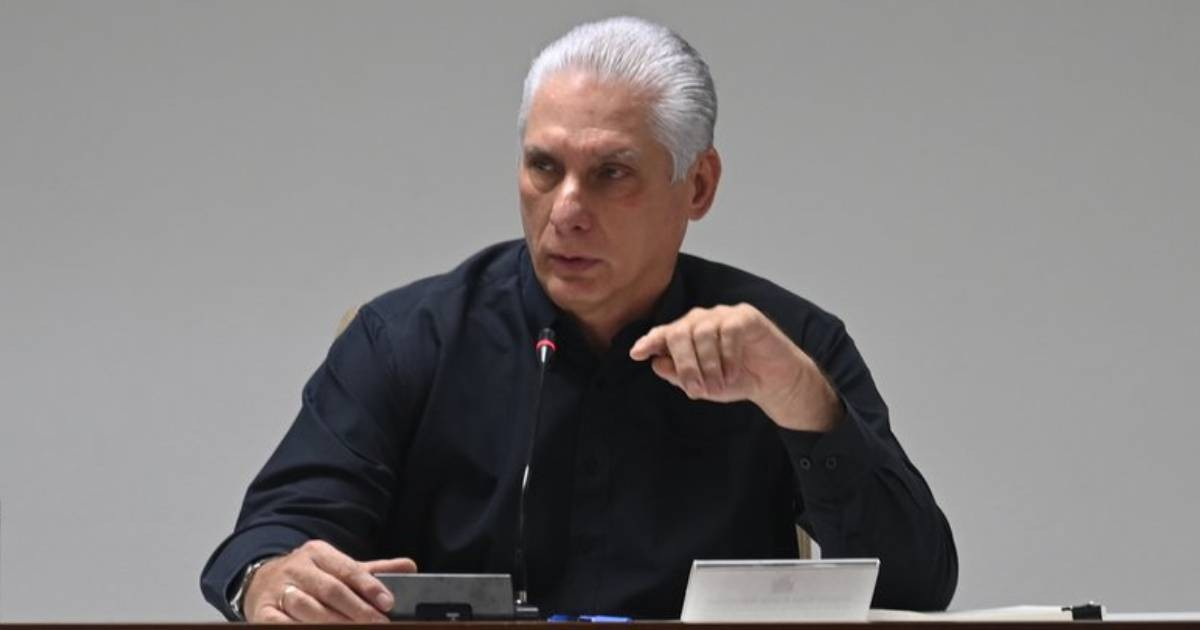
This Tuesday, Cuban leader Miguel Díaz-Canel assembled representatives from the nation's private sector, offering promises of increased dialogue while simultaneously issuing a stern warning about pricing, tax evasion, electronic payments, and other practices deemed illegal by the regime.
"This sector cannot become a haven for illegalities, tax evasion, speculation, corruption, hoarding, or price setting disconnected from reality," Díaz-Canel declared, according to the official website of the Cuban Presidency.
The meeting drew entrepreneurs from various industries, including food, agriculture, energy, transportation, and legal consultancy. The government heralded it as the beginning of ongoing dialogue between state and non-state economic players amid the implementation of 176 economic and social measures approved last June.
Accompanying Díaz-Canel were high-ranking officials from the Communist Party and the government, such as Roberto Morales Ojeda, the Communist Party's Central Committee Secretary of Organization. Other notable attendees included Óscar Pérez-Oliva Fraga, Deputy Prime Minister; Jorge Luis Broche Lorenzo, head of the economic department of the Central Committee; and Lázara Mercedes López Acea, President of the National Institute of Non-State Economic Actors.
Crackdown on Businesses Rejecting Electronic Payments
A particular point of contention was the refusal of many private businesses to accept electronic payment methods, which Díaz-Canel criticized as "detrimental," announcing a crackdown to resolve this issue.
This warning comes at a time when authorities have ramped up inspections and penalties against the private sector. In Central Havana alone, 232 businesses were audited in a single day, resulting in 15 permanent closures and over 360 fines. Similarly, in Las Tunas, an operation led to 22 business closures, eight license revocations, and fines exceeding 1.2 million pesos.
Despite tightening controls, Díaz-Canel emphasized the importance of keeping communication channels open with entrepreneurs. "Without systematic dialogue, we cannot understand each other's thoughts or build consensus," he stated.
He also urged that the success of projects should not be measured solely by their financial returns, but by their impact on "a family's dinner table, youth employment," and the development of municipalities.
Private Sector Expansion: A "Concession" in Transition
Entrepreneurs acknowledged facing ongoing "prejudices and obstacles" at intermediate levels of administration. During the meeting, they presented business and community projects, highlighting the need to advance towards alternative energy sources among other priorities.
The meeting occurred just a day after Díaz-Canel admitted in an interview with the Brazilian newspaper Folha de S.Paulo that the expansion of the private sector is not "an ideal of socialism," but rather a "concession" during a transition period. However, he denied that these reforms signal a shift towards capitalism.
This contradiction underscores much of the current economic policy: while the 176 measures approved in June eliminate the 100-worker limit for small and medium enterprises, allow private banking, and enable foreign investment opportunities for non-state actors, the government simultaneously increases inspections, fines, and closures on these very businesses.
Díaz-Canel concluded the meeting by asserting that economic changes should involve everyone's participation and be directed "towards the people's well-being and the country's development."
The gathering once again highlights the precarious balance Havana seeks to maintain: the need for the private sector to sustain a crisis-ridden economy, while insisting on keeping it under tight state oversight.
Understanding the Challenges Facing Cuba's Private Sector
Why is the Cuban government increasing inspections on private businesses?
The Cuban government is intensifying inspections as part of a crackdown on practices it deems illegal, such as tax evasion and refusal to accept electronic payments, to ensure compliance with economic regulations.
What challenges do Cuban entrepreneurs face?
Cuban entrepreneurs face challenges such as prejudices and administrative obstacles, along with intensified inspections and fines, which complicate their ability to operate efficiently and innovate.
How is the Cuban government balancing private sector growth with state control?
The Cuban government is trying to balance private sector growth with state control by allowing some economic freedoms while maintaining strict oversight to ensure alignment with socialist policies.