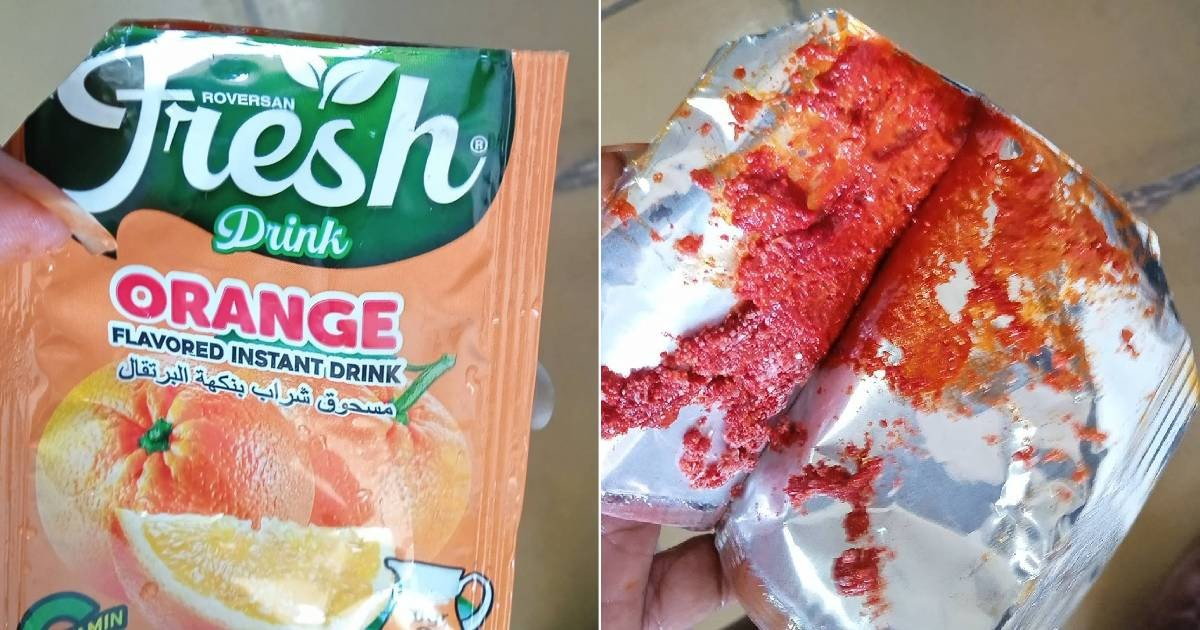
With just days until the 2026-2027 school year commences on September 1, Cuban mothers are taking to social media, expressing outrage over the inability to secure even a simple package of powdered drink mix in decent condition for their children's snacks.
The frustration has been particularly vocal in the Facebook group "Cuban Mothers for Change," where a photo of a Roversan Fresh orange-flavored drink mix packet circulated, serving as a stark representation of the deteriorating state of school nutrition in the country.
"What are the children going to have for a snack if not even bread with oil is available?" questioned Kenia Palacio, one of the mothers in the group. Her query captures the desperation of countless families struggling to find affordable options as the school year approaches.
This is not merely a rhetorical question. Recent data from the World Food Programme revealed that 48.5% of Cuban students aged six to eleven receive no meals or snacks at school, underscoring the collapse of a system that, in theory, should provide free meals to students.
The Impact of Economic Policies on School Nutrition
The predicament worsened following the Ministry of Finance and Prices' Resolution 150/2026, which removed retail price caps on several basic imported food items.
As a result, essentials like oil soared to 4,000 pesos and sausages to 1,200 pesos, turning once modest options like bread with oil or sausage into luxuries.
Estimates shared on social media suggest that ensuring breakfast and snacks for a child could surpass 10,000 Cuban pesos monthly, a prohibitive cost for most families.
Challenges Beyond School Snacks
School snacks are just one of the hurdles Cuban mothers face as the academic year begins. Extended power outages, water shortages, lack of uniforms, and scarcity of school supplies complete a daunting picture, leading many parents to declare they won't send their children to school without minimum conditions being met.
“We won’t send our children to school if minimal conditions aren’t ensured,” they warned in recent posts.
Though the crisis isn't new, its rapid intensification is alarming. In June, the Minister of the Food Industry admitted that over 100,000 children weren't receiving their daily milk, prompting the WFP to launch an emergency project on July 1 in five eastern provinces to support 12,677 children across 74 educational centers.
According to official Cuban policy, secondary school students should receive a free drink—such as soy yogurt or a fortified beverage—and a solid food item each day. However, this promise has been unmet for years: by 2018, less than 40% of secondary students consumed the state-provided snack, and by 2024, extreme measures like requiring students to bite their bread in class to prevent resale were introduced.
As the new school year approaches, the sight of a sachet of orange drink powder with Arabic text has become a potent symbol of decline: when even that is unattainable, Cuban mothers are left questioning what future awaits their children in the classroom.
Understanding Cuba's School Nutrition Crisis
What is the current state of school nutrition in Cuba?
School nutrition in Cuba is in crisis, with nearly half of students aged six to eleven receiving no meals or snacks at school, despite government promises of free nutrition.
How have economic policies impacted food availability in Cuba?
Recent economic policies, such as the removal of retail price caps on essential imported foods, have driven up costs for basics like oil and sausages, making them unaffordable for many families.
What other challenges do Cuban families face as the school year begins?
In addition to food shortages, Cuban families are dealing with long power outages, water scarcity, a lack of school uniforms, and insufficient educational supplies.