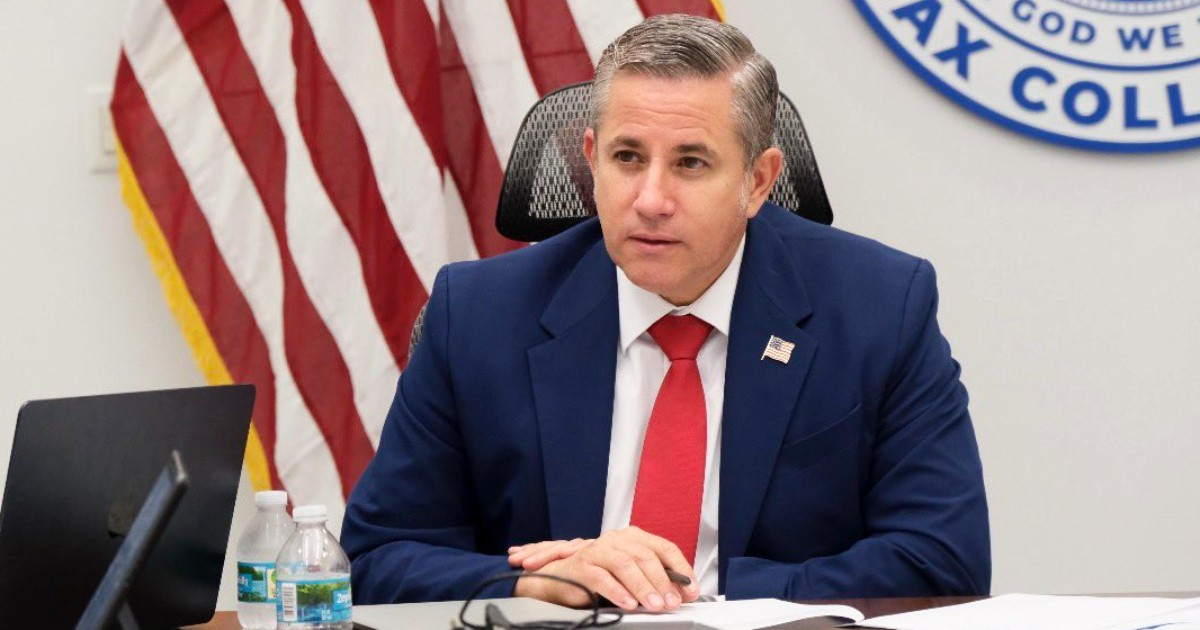
Dariel Fernandez, the tax collector for Miami-Dade County, has publicly expressed his support for the sanctions announced that day by the Trump administration against individuals and entities connected to the Cuban dictatorship's influence and subversion networks abroad.
These measures, enacted under Executive Order 14404 signed by President Donald Trump on May 1, 2026, specifically targeted three leaders of the Cuban Institute of Friendship with the Peoples (ICAP), including its president Fernando González Llort, along with nine Cuban state entities. Among these were the Ministry of Construction of Cuba and organizations within the mining, metallurgy, and foreign trade sectors.
Targeting Key Figures and Entities
Fernandez was particularly pointed in his remarks about González Llort: "He is not merely a functionary of Cuba's communist dictatorship. He was convicted for his role in the Wasp Network, a Cuban intelligence operation that infiltrated the United States with a focus on South Florida."
González Llort, known as one of the so-called "Cuban Five," served 15 years in a U.S. prison before being released in 2014 as part of the thaw in relations between the Obama and Castro administrations. He has led ICAP since 2017, an organization the State Department describes as central to the regime's foreign influence apparatus.
Unveiling Long-Hidden Connections
According to Fernandez, the designation of ICAP leaders exposes a connection the regime has tried to disguise for decades: "Cuba's communist dictatorship cannot hide its political indoctrination and subversive activities under the guise of friendship, cultural exchange, or international solidarity while denying the Cuban people the same freedoms it seeks to exploit in democratic countries."
The tax collector also criticized the sanctioned economic entities: "These government institutions and state-controlled entities do not exist to generate prosperity for the Cuban people. They help fund and sustain a communist system that has remained in power through censorship, surveillance, political imprisonment, and repression for over six decades."
Consistent Advocacy Against the Regime
The statement aligns with the report "Cuba: The Capital of Communism in the 21st Century," published by the State Department on July 20 under the leadership of Secretary Marco Rubio, which documents decades of espionage, subversion, and international ideological influence by the Cuban regime.
Fernandez, Miami-Dade's first elected tax collector in more than sixty years, has maintained a steadfast stance since taking office in November 2024. In January 2026, he alerted Trump and Rubio to national security risks linked to business licenses with Cuba; in February, he declared "there is no dialogue with Cuba"; in June, he revoked licenses from three companies exporting cement to Cuba without federal authorization; and last Saturday, he responded to Senator Chris Van Hollen by asserting that the Cuban people do not suffer from Trump or Rubio, but from "a communist-socialist dictatorship."
Clarifying the Sanctions' Intentions
In his latest statement, Fernandez was clear about the scope and purpose of the sanctions: "These are not aimed at the Cuban people. They target the individuals, institutions, and networks that uphold Cuba's communist dictatorship and keep the Cuban people oppressed."
"The goal must remain clear: to protect the United States from hostile foreign influence, hold Cuba's communist dictatorship and its operatives accountable, free Cuba's political prisoners, and support a future where the Cuban people can live under democracy, economic freedom, and the rule of law," Fernandez concluded.
Understanding the Impact of Sanctions on Cuba
What are the main targets of the sanctions announced by the Trump administration?
The sanctions target key leaders of the Cuban Institute of Friendship with the Peoples (ICAP), including its president Fernando González Llort, as well as nine Cuban state entities involved in construction, mining, metallurgy, and foreign trade.
Why is Fernando González Llort a significant figure in this context?
González Llort is notable because he was part of the Wasp Network, a Cuban intelligence group that infiltrated the U.S. He served 15 years in a U.S. prison and currently leads ICAP, a key organization in Cuba's foreign influence efforts.
How does Fernandez view the role of the sanctioned entities?
Fernandez sees these entities as mechanisms to sustain Cuba's communist regime, which has remained in power through oppressive means rather than contributing to the prosperity of the Cuban people.