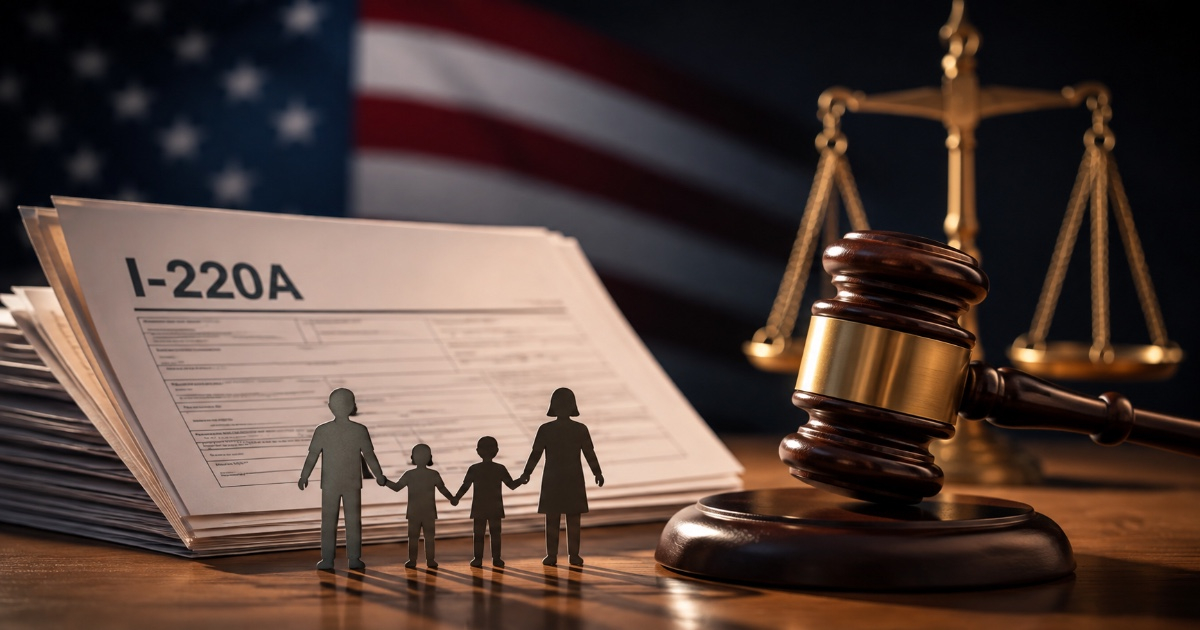
A Miami federal court has rescheduled a critical hearing to September 2, initially set for this Wednesday at the Wilkie D. Ferguson Jr. building downtown. The decision could significantly affect the legal status of hundreds of thousands of Cuban immigrants holding the I-220A document, who are currently in a precarious immigration limbo in the United States.
The case, overseen by Judge Jacqueline Becerra, has been postponed. Attorney Mark Prada, representing the plaintiffs, explained that the delay likely stems from scheduling conflicts within the judge's calendar. "For some reason, the judge needed a bit more time; perhaps another case took longer than expected—something quite common at this court level," Prada shared with Café Fuerte.
Multiple Cases Under Review
This hearing involves more than a single lawsuit. The judge will review three cases with pending motions, including the main case: Bello-Rubio vs. Department of Homeland Security (DHS). This case was filed by 992 Cubans who were issued an I-220A upon crossing the Mexican border.
A favorable ruling could potentially resolve the status of approximately half a million people who currently lack a defined immigration status in the U.S. The central issue is whether the I-220A—an order of release under supervision from U.S. Immigration and Customs Enforcement (ICE)—can be equated to a parole, specifically the I-94 form that triggers the Cuban Adjustment Act of 1966, allowing its holders to apply for permanent residency after one year and one day in the U.S.
Legal Challenges and Future Implications
The judge is set to hear government motions seeking to dismiss the lawsuits, arguing that the court lacks jurisdiction to grant the legal remedies requested by the plaintiffs, according to Prada. The DHS also contests that an I-220A can be retroactively converted into parole by a court order. Meanwhile, the plaintiffs are pushing for the case to be certified as a class action, which would extend any favorable decision to all Cubans in similar circumstances.
Alongside Prada, attorneys Claudia Cañizares from Canizares Law Group LLC and Maitte Barrientos from Catholic Charities Legal Services will participate in the hearing.
Background and Ongoing Developments
This legal battle has a complex history. In February 2026, the Eleventh Circuit Court of Appeals in Atlanta overturned immigration board decisions concerning two Cuban women with I-220A and sent the cases back for further administrative review.
Earlier this year, Prada also argued before the Second Circuit in New York to have the document recognized as an admission record; that decision is still pending. In July, Cubans with I-220A started receiving deportation orders after attending ICE appointments or immigration court hearings, heightening anxiety among those affected.
Attorneys are advising their clients to temper expectations for the September 2 hearing. "This hearing is neither the beginning nor the end of anything; it's just part of the ongoing process," stated attorney Willy Allen. He added, "I don't anticipate final outcomes, but rather a constructive step towards clarifying the path to legalization for all Cubans with I-220A."
FAQs on I-220A and Cuban Immigrants
What is the significance of the I-220A document for Cuban immigrants?
The I-220A is an order of release under supervision issued by ICE, but it does not grant a defined immigration status. Its significance lies in the ongoing legal debate about whether it can be equated to a parole, which would allow holders to apply for U.S. permanent residency under the Cuban Adjustment Act.
How could the upcoming court decision impact Cubans with I-220A?
A favorable court decision could potentially resolve the immigration status of approximately 500,000 Cubans by equating the I-220A with a parole, thereby enabling them to apply for permanent residency in the U.S.
What are the challenges faced by attorneys representing Cuban immigrants with I-220A?
Attorneys are challenged by government motions to dismiss the lawsuits and claims that the court lacks jurisdiction to grant the requested legal remedies. They are also pushing for the case to be recognized as a class action to benefit all similarly situated Cubans.