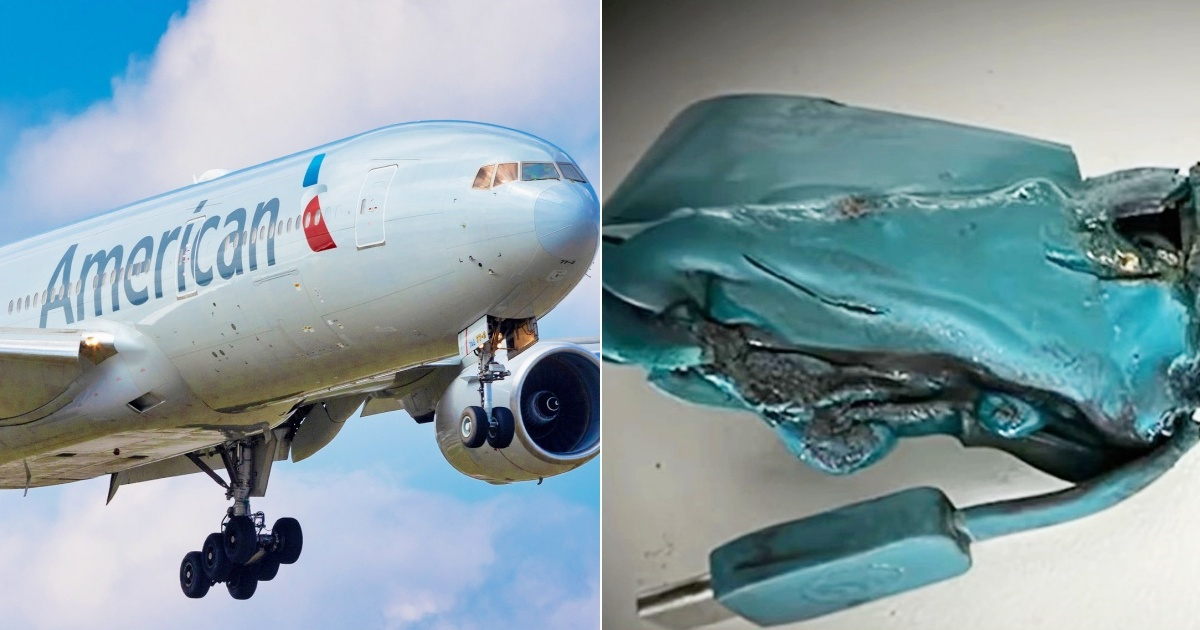
A passenger sustained injuries last Friday when a laptop battery caught fire on American Airlines flight 2398, an Airbus A321 traveling from Atlanta to Dallas. The incident filled the cabin with thick smoke as the aircraft neared its destination.
According to passenger Jessica Irgens, who spoke to CBS News, the fire erupted approximately 30 minutes before landing.
The laptop belonging to another traveler began to emit smoke and then burst into flames, causing panic among the 133 passengers on board.
Passenger Accounts and Crew Response
Irgens, who was seated two rows behind the incident, recounted the alarming scene: "I saw the smoke first, and then it all happened very quickly. He was trying to push it away from himself into the aisle."
"It was absolutely terrifying," she added.
The crew managed to contain the fire using a thermal containment bag, while the pilot communicated with air traffic controllers, stating: "Fire in the cabin, toward the rear of the plane. The flight attendants are trying to put it out now."
In a subsequent communication, he mentioned: "I believe we have between four and five passengers burned by the laptop. The laptop is contained roughly in the center of the aircraft."
Safe Landing and Medical Assistance
The Airbus A321 landed safely at Dallas Fort Worth International Airport (DFW) at 6:55 p.m. local time, taxiing to the gate on its own power where emergency personnel awaited as per protocol.
Despite the pilot's report of potential burn injuries, the airline officially confirmed that only one passenger received medical attention on-site and was released.
An American Airlines spokesperson told the BBC: "Flight 2398 landed safely at DFW following reports of smoke from a customer's device. We commend our crew for their professionalism and swift response in containing the device."
Irgens described the condition of some passengers: "There were two people with their hands in ice bags, visibly shaken."
The Federal Aviation Administration (FAA) has launched an investigation into the incident.
Rising Concerns Over Battery Safety
The underlying issue in such incidents is known as thermal runaway, a process where a battery experiences an uncontrollable temperature increase, releasing flammable gases. The FAA warns that this can occur without prior notice due to damage, overheating, water exposure, overcharging, or improper packing.
This incident is not isolated. The agency documented at least 58 verified lithium battery incidents on flights in 2026 involving smoke, fire, or extreme heat; in 2025, that number reached 97.
In the past two decades, laptops have been involved in 84 recorded cases.
Just weeks earlier, a Swiss International Air Lines flight from Zurich to New York was diverted to Bangor, Maine, after a headphone charger case trapped in a business class seat overheated and began to smoke. That flight carried 208 people and resulted in no injuries.
American Airlines has encountered similar episodes before: in July 2024, flight AA2045 from San Francisco to Miami was evacuated on the ground when a laptop caught fire, resulting in three minor injuries.
In July 2025, another Miami-bound flight experienced a similar incident.
FAA Guidelines on Battery Transportation
The FAA's regulations state that spare lithium batteries should only be transported in carry-on baggage, never in checked baggage.
Rechargeable lithium-ion batteries are limited to 100 Wh per unit without prior approval, and those exceeding 160 Wh are prohibited on passenger aircraft.
The FAA's investigation into the flight 2398 incident remains open, and its findings could lead to new recommendations for transporting electronic devices on commercial aircraft.
Frequently Asked Questions About Battery Safety in Aviation
What causes thermal runaway in batteries?
Thermal runaway occurs when a battery undergoes an uncontrollable rise in temperature, releasing flammable gases. It can be triggered by damage, overheating, water exposure, overcharging, or improper packing.
How does the FAA regulate the transport of lithium batteries?
The FAA mandates that spare lithium batteries be carried in hand luggage only. Rechargeable lithium-ion batteries must not exceed 100 Wh per unit without prior approval, and those over 160 Wh are banned on passenger flights.
What steps did the crew take during the laptop fire incident?
The crew contained the fire using a thermal containment bag and the pilot kept air traffic controllers informed about the situation, ensuring the safety of everyone on board.