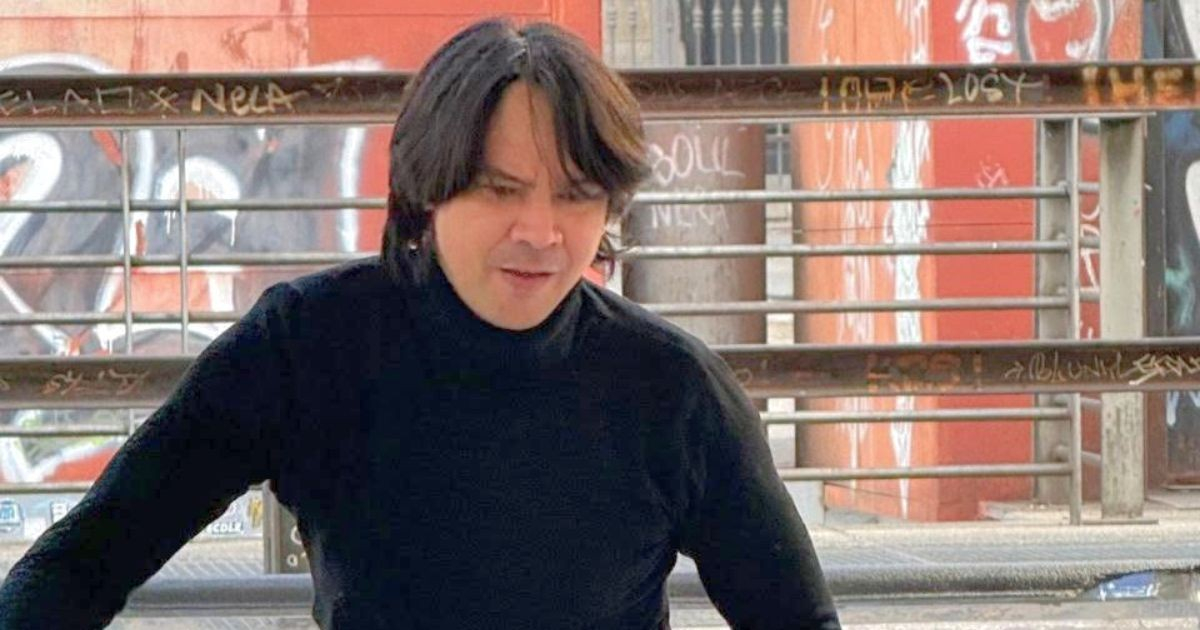
Cuban playwright and activist Yunior García Aguilera published a thought-provoking column in 14ymedio on Saturday, highlighting how internal division and mutual attacks among Cubans represent a significant barrier to achieving democracy on the island.
Writing from Madrid in his column titled "All Against All" within the series "Cuba and the Night," García reflects on the situation: "Some days, you log into Cuban social media and it feels like democracy is just around the corner, but it can't reach us because everyone is too busy attacking one another. The regime watches the spectacle with delight."
Since seeking exile in Spain's capital in November 2021 following the crackdown on the Civic March for Change on November 15, García points out that discrediting efforts no longer require the official apparatus. "Now, a portion of the dirty work is done for free from Miami, Madrid, Havana, or anywhere with Wi-Fi. Official cyber warriors barely need to lift a finger. We provide the fuel for discrediting ourselves."
To bolster his argument, García draws a historical parallel, noting how Cuban independence heroes like Céspedes, Martí, Maceo, and Gómez also faced slander and internal betrayals from their own comrades.
Carlos Manuel de Céspedes was ousted as President of the Republic in Arms in 1873 by his own colleagues, had his correspondence intercepted, and died isolated in San Lorenzo. García imagines how modern scrutiny would have impacted him: "Céspedes probably wouldn't have lasted a week against today's algorithms."
In the case of Máximo Gómez, distrust came not only from Spanish foes but also from fellow independence fighters. Martí parted ways with him in 1884, fearing a military dictatorship, and in 1899, the Assembly of Cerro removed him from command of the Liberation Army. "Thirty years fighting for Cuba, but still he had to prove he was Cuban enough," García writes.
As for José Martí, García suggests he would have fared even worse. Veteran Enrique Collazo instigated a controversy accusing Martí of cowardice and opportunism. Rumors surrounded his relationship with Carmen Miyares, and today, debates continue over the paternity of María Mantilla. "To the marble Martí, we write verses. To the living Martí, we likely would have demanded a DNA test," García muses.
Antonio Maceo faced particularly venomous internal attacks, being accused by fellow soldiers of both favoring black troops and plotting to establish a "black dictatorship" in a future republic. García indicates that today's algorithms wouldn't even need to fabricate a racist angle; his own comrades would have provided it on a silver platter.
García clarifies that he does not seek to shield anyone from criticism: "Democracy thrives on criticism. What it doesn't need is our habit of turning every disagreement into an accusation of treason, every mistake into proof of infiltration, and every personal flaw into grounds for political execution."
In his "Cuba and the Night" writings, García has offered profound insights in recent months. In July, he dismantled the regime's supposed achievements, portraying Cuban dystopia as a system that labels resignation as hope, poverty as resistance, and collapse as continuity. In April, he urged rebuilding the republic on civil, pluralistic, and legal foundations.
The playwright concludes this piece with a powerful image summarizing his thesis: "We demand the next leader possess Maceo's courage, Martí's intelligence, Céspedes' selflessness, and Gómez's military prowess, yet without the character of any of the four. We're not waiting for a leader. We're waiting for a statue. Meanwhile, we amuse ourselves by executing the living."
Insights into Cuba's Political Landscape
Why does Yunior García believe internal division is a barrier to democracy in Cuba?
Yunior García argues that internal division and mutual attacks among Cubans distract from the pursuit of democracy, allowing the regime to maintain power while people discredit each other.
How does García use historical figures to support his argument?
García draws parallels between current division and historical instances of Cuban independence leaders like Céspedes, Martí, Maceo, and Gómez facing slander and internal betrayals.
What is García's view on criticism within a democracy?
García believes that while democracy requires criticism, it should not devolve into turning disagreements into accusations of treason or errors into political executions.