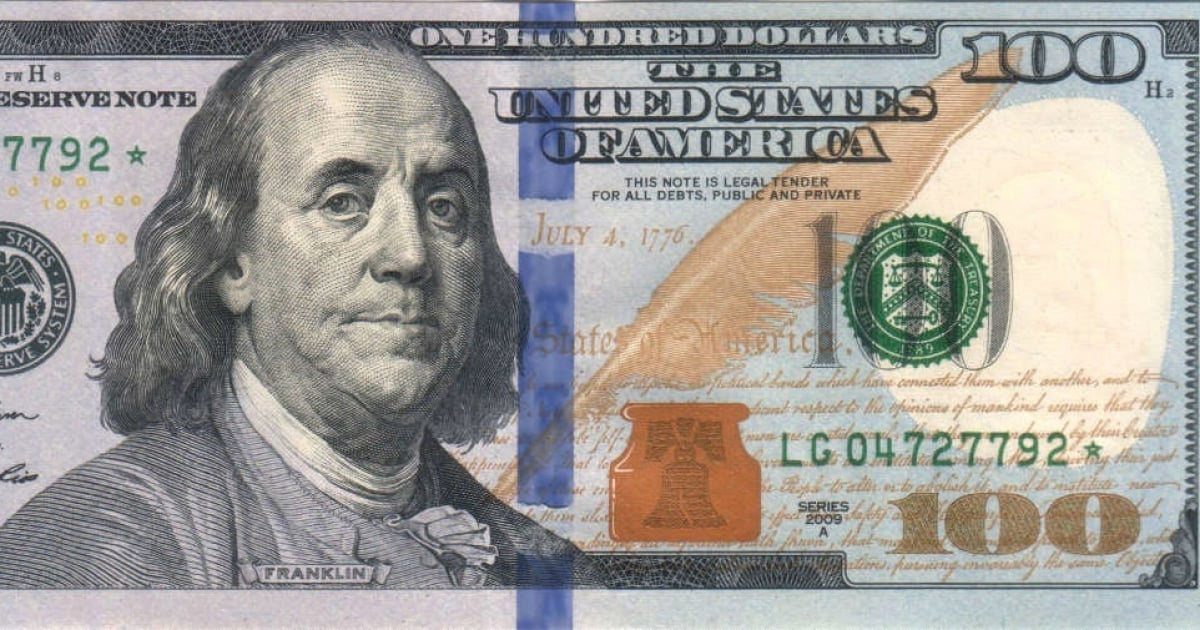
A café employee in Ciego de Ávila reportedly fell victim to a scam involving a counterfeit 100-dollar bill, which forced her to cover the loss out of her own pocket. This incident, as detailed in a social media post, has sparked significant reactions online.
Yeilan Pérez shared the warning in a Facebook group called "Revolico Ciego de Ávila," claiming that a man visited the café near the train tracks and successfully paid with what appeared to be a fake bill.
“This individual is out there scamming with counterfeit money, particularly targeting the elderly who are more likely to fall for his tricks,” Pérez stated, along with sharing images of the alleged scammer.
The affected employee, a long-time worker at the café, had to replace the 100 dollars—a substantial amount given Cuba's current economic climate.
“She had to repay 100 dollars at her job. This situation has put her on medication. You all know how hard it is to earn 100 dollars here,” Pérez lamented.
Security cameras captured footage of the suspect, and according to Pérez, the incident has been reported to the police.
Community's Reaction and Similar Incidents
The post prompted others to share similar experiences. One woman recounted that the same man attempted to pay her with fake dollars at her workplace.
“When I pointed out the bills were counterfeit, it became obvious he was a fraudster because his surprise seemed faked,” she shared.
Another local testified that around a month ago, two people attempted to sell him 200 dollars, which turned out to be counterfeit. They fled when he realized the scam.
Family Involvement and Broader Implications
Among the responses, a user identifying as the alleged scammer's brother revealed that the individual is struggling with a drug relapse. He requested the café contact him, offering to repay the lost money.
Another relative, claiming to be the uncle, acknowledged the severity of the issue, suggesting that while he doesn't want the young man imprisoned, jail might be the only way for him to receive treatment, given that the psychiatric facility is closed.
Beyond the individual culpability, some questioned the origin of the fake bills. “Where do the counterfeit dollars come from? Who supplies them?” one commenter asked. Another noted that simply repaying the 100 dollars wouldn't solve the underlying issue, urging an investigation into the source of the counterfeit money and its distribution chain.
Widespread Issue of Counterfeit Currency
This incident isn't isolated in Ciego de Ávila. In late July, another local business reported a young man attempting to pay with what seemed like a U.S. dollar bill but was actually prop money used for theatrical or film productions. The fake bill could easily be mistaken for real cash if not examined closely, especially during quick transactions.
The problem isn't confined to Ciego de Ávila. In January, a woman in Unión de Reyes, Matanzas, was caught trying to pay with a counterfeit 100-dollar bill at a café. Authorities found 16 more fake bills of the same denomination on her, totaling 1,700 dollars in counterfeit money.
Similarly, this August, two young individuals were arrested in Guantánamo for allegedly attempting to pay with a counterfeit 2,000-peso bill.
To avoid falling victim to such frauds, it's advisable to check security features on 100-dollar bills, including the 3D blue security ribbon, Benjamin Franklin watermark, security thread, and color-shifting ink.
Understanding Fake Currency in Cuba
How can you identify a counterfeit 100-dollar bill?
To spot a fake 100-dollar bill, examine features like the 3D blue security ribbon, the watermark of Benjamin Franklin, the security thread, and the color-shifting ink when tilting the bill.
What actions are being taken against counterfeiters in Cuba?
Authorities are investigating reported cases and attempting to trace the source of counterfeit money. Community members are also encouraged to report any suspicious activity to the police.