This past Sunday, the state-run company Aguas de La Habana reported a significant disruption in the water supply affecting several municipalities in Cuba's capital. The issue, described as a "complex breakdown in the hydraulic infrastructure," necessitated an emergency shutdown of the main conduit of the Central System.
According to a Facebook post by the company, the breakdown involves a rupture in the 78-inch pipeline of the Cuenca Sur supply source, along with three major leaks at the same site. The municipalities impacted include Plaza de la Revolución, Diez de Octubre, Cerro, Centro Habana, Habana Vieja, and parts of Boyeros.
The company assured the public that "teams of skilled technicians and operators are positioned to carry out the repair work," focusing on critical areas such as Manresa, Espina de Pescado, and wells 9 and 12.
Nevertheless, Aguas de La Habana did not provide a timeline for when the issue would be resolved, urging residents to show "understanding and patience during the complex repair operations."
Recurring Water Supply Challenges
This latest incident is not an isolated occurrence. Just nine days earlier, a 1,000 mm pipeline break in the Sistema del Gato left Regla, Habana del Este, San Miguel del Padrón, Guanabacoa, and Diez de Octubre without water service.
Throughout 2026, water supply disruptions have been a persistent challenge. In April, more than 200,000 residents of Havana experienced irregular access to water due to power outages that halted pump operations. By May, the president of the National Institute of Hydraulic Resources reported that 376,055 people were affected in the capital, a number that Aguas de La Habana specialists later increased to over 500,000 in July.
Infrastructure Decay and Mismanaged Investments
The structural decay of the water system is acknowledged even by sources outside the regime. A report from Diario de Cuba, based on findings from ICEX, a Spanish Ministry of Economy agency, highlighted that "a significant portion of the pumped water never reaches its destination due to the deterioration of distribution networks."
Despite announcing investments of over 88 million pesos in 2025, the regime's efforts have been sluggish, prioritizing hotel facilities, which are now mostly empty, over networks that supply the population, as reported by Diario de Cuba.
Emergency Measures and Market Responses
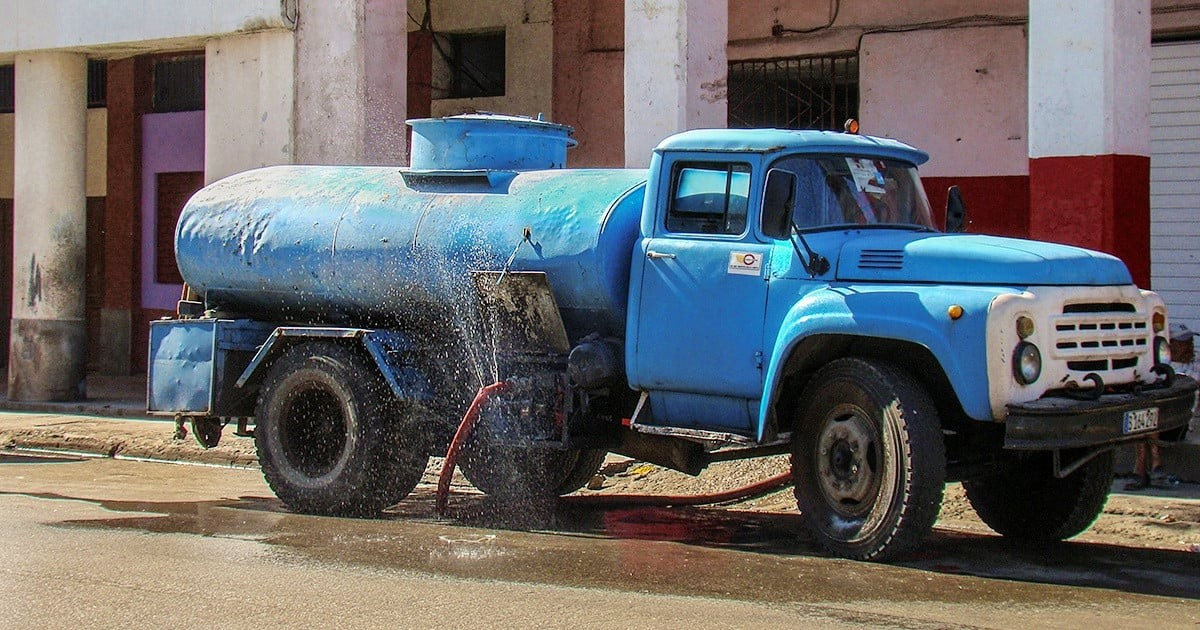
In response to the collapse of the regular system, the government turned to the military in July, using water trucks to supply critical areas like El Cotorro, and in August, installed 20 manual pumps in Habana del Este as an emergency measure. Meanwhile, in the parallel market, private water trucks are being sold for between 18,000 and 60,000 Cuban pesos.
The severity of the problem is evident in a 2026 survey by Cubadata, which included 1,807 participants across the country: 46.6% face water shortages daily or several times a week, and 71.4% at least once a week. Only 9.3% reported no issues with water supply.
Understanding Havana's Water Crisis
What caused the recent water supply disruption in Havana?
The disruption was due to a complex hydraulic infrastructure breakdown involving a rupture in the 78-inch pipeline and three significant leaks at the Cuenca Sur supply source.
Which areas of Havana are most affected by the water crisis?
Municipalities such as Plaza de la Revolución, Diez de Octubre, Cerro, Centro Habana, Habana Vieja, and parts of Boyeros are among the most impacted by the water supply issues.
How has the government responded to the water supply challenges?
The government has used military trucks to deliver water to critical areas and installed manual pumps as emergency measures. However, investments have been slow and mismanaged, with a focus on hotel facilities over public distribution networks.