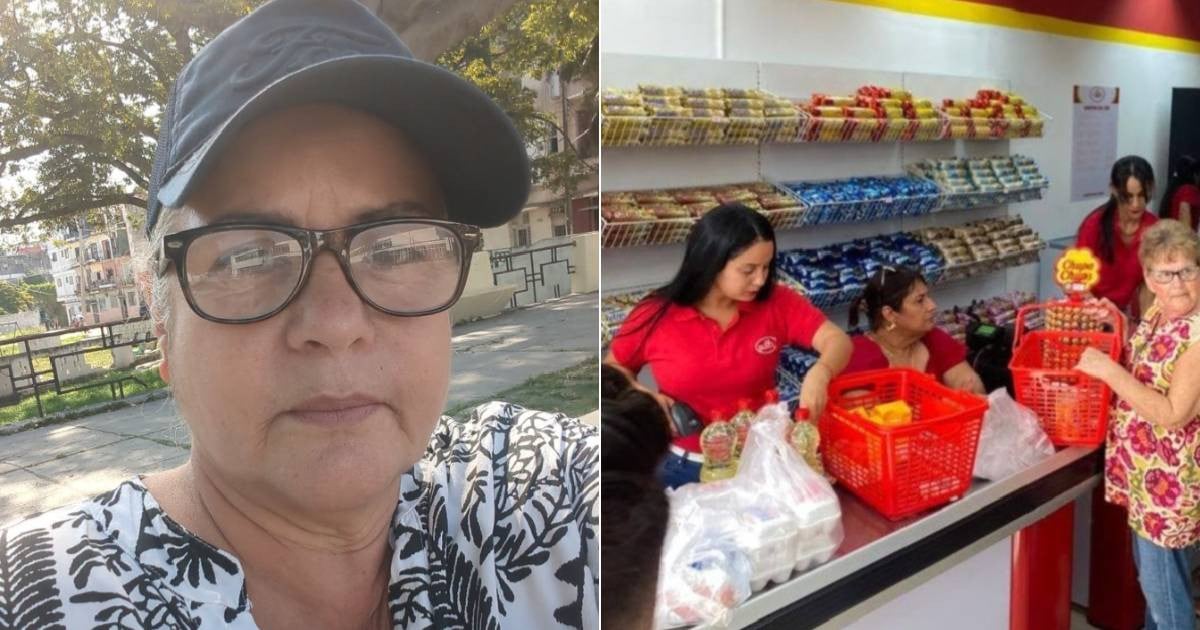
Television host and announcer Laritza Camacho openly criticized the Cuban government on Sunday for condemning so-called unfair prices implemented by various economic players, despite these businesses requiring official authorization to operate.
In a Facebook post, Camacho drew a parallel between the situation and a Monopoly game where players progress and acquire properties without establishing the necessary infrastructure to sustain them.
In her view, this scenario ultimately pits Cubans against one another and further deteriorates the country's economic conditions.
Government's Erratic Economic Moves
Camacho's critique extended to the purchase of sugar mills, banks, hotels, and factories, lamenting the insufficient investment, in her opinion, in railways, water, and electricity.
She warned that the lack of infrastructure hampers the ability to transport goods and maintain economic activities.
The announcer also targeted the government's economic policies and their inconsistent decisions. She mentioned the approval of new decrees that might later be deemed mistakes and rescinded, while questioning the official defense of socialism.
Consequences of Current Policies
Camacho argued that current policies create conflict between Cubans running small businesses and those purchasing from them. She believes this situation harms the merchants themselves and benefits those whose primary agenda is to retain power.
Her criticism also reached President Miguel Díaz-Canel, whom she described as "the man who makes the most mistakes" and "the defender of continuity," referring to the persistence of issues that, according to her, define the country's situation.
Wider Impact on Society
Camacho broadened her criticism to sectors such as the economy, health, sports, and education, expressing regret over the decline of what she called her "little piece of Caribbean island."
Elsewhere in her post, Camacho questioned why establishments with what she considers abusive prices often feature foreign music and do not sell Cuban-made products for Cubans.
"Cuba has become priceless, and indeed it's an abuse," she declared, concluding her post by holding the government accountable for a significant portion of the costs, as she sees it, burdening the population.
Public sentiment on social media mirrored her views. "All they know is to bring down those fighting to survive, and thanks to them, some can eat; if the State met needs, there wouldn't be resellers," commented one user.
Another suggested, "Encourage providers, transform, and build a real, functional wholesale market, and the problem is solved."
Recent Economic Developments
In June, the Ministry of Finance and Prices' Resolution 150/2026 lifted price caps for chicken, oil, powdered milk, pasta, and sausages; in July, it did the same for rice.
However, just weeks later, provincial governments unilaterally reinstated controls, unleashing a wave of inspections, fines, and closures.
In Villa Clara, authorities penalized businesses for selling eggs at 4,200 pesos each when the official cap was 110 pesos, and oil at 4,000 pesos per liter, with the maximum set at 2,500 pesos, according to reports from that province.
In Las Tunas, a week of inspections resulted in 22 businesses being shut down and eight licenses revoked, with fines exceeding 1.2 million pesos.
The economic backdrop exacerbates the situation. Official year-on-year inflation reached 20.70% in July, with food and beverages rising 26.36% year-on-year.
Meanwhile, the average official salary hovers around 7,074 pesos monthly, equivalent to about 12-15 dollars, compared to the approximately 96,000 pesos needed to cover basic needs.
Economist Pedro Monreal noted recently that the 176 economic measures approved in June were nullified within less than two months due to provincial price control interventions.
Monreal harshly summarized the scenario: "Markets always end up blowing a raspberry at bureaucratic prices, reminding officials that it is not the Official Gazette or their Excel spreadsheets that govern, but reality."
Understanding Cuba's Economic Challenges
What did Laritza Camacho criticize about the Cuban government's economic policies?
Laritza Camacho criticized the Cuban government's condemnation of so-called unfair prices by economic players, pointing out the problematic infrastructure and inconsistent policy decisions that lead to economic deterioration and social division.
How has the Cuban government's recent price control measures impacted businesses?
Recent price control measures have led to inspections, fines, and closures of businesses, complicating the economic landscape and contradicting previously lifted price caps, leading to significant market disruptions.
What economic challenges are currently affecting the Cuban population?
Cuban citizens face significant challenges due to high inflation, a low average salary compared to basic needs, and inconsistent government policies, exacerbating living conditions and economic stability.