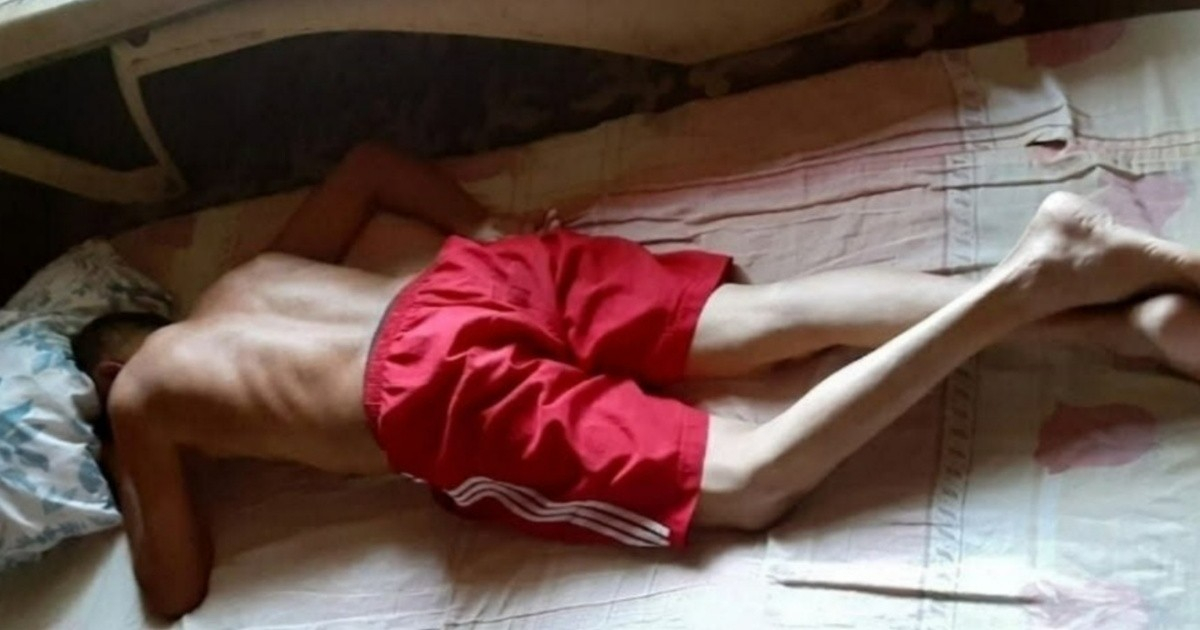
Cuban activist Guillermo del Sol has reached a critical point, marking his 66th day on a hunger strike at his home in Santa Clara. With his heart under extreme stress and living without electricity for five days, his protest demands the release of 18 political prisoners, putting his life in severe danger, as reported by Martí Noticias.
The family clinic doctor, who regularly checks on him, warned that his heart muscle could fail at any moment. His body is consuming itself for energy, leading to his heart being weakened as it is used as a protein source.
Del Sol's health is in a dire state: blood sugar levels near two, blood pressure at 150/100, extreme thinness with skin clinging to his bones, and visible veins.
The Impact of Heat and Lack of Electricity
Adding to his physical deterioration is the oppressive heat without any ventilation. "I can hardly sleep because of the heat. This is the fifth day without electricity," the activist shared with Martí Noticias.
Del Sol suffers from type 2 diabetes, severe hypertension, asthma, heart disease, and thrombosis, making such a prolonged hunger strike particularly dangerous for him.
A History of Extreme Measures
This isn't his first hunger strike. In 2019, he went 55 days without food, ending in an emergency hospitalization at the Arnaldo Milián Castro Provincial University Hospital in Santa Clara, with blood pressure at 160/100.
Demands for Political Prisoner Releases
The current protest, initiated in 2026, was partly triggered by the revocation of Leonel Tristá García's parole. García, a July 11th protester, was sentenced to eight years by the Villa Clara Tribunal and returned to Guamajal prison.
Del Sol's demands include the release of Mayelín Rodríguez Prado, Donaida Pérez Paseiro, Saylí Navarro Álvarez, Félix Navarro Rodríguez, José Gabriel Barrenechea Chávez, and 13 other inmates. Jonathan David Muir Burgos, initially among those listed, has already been freed.
A Legacy of Resistance
Despite pleas from family and friends to stop his protest, Del Sol remains resolute. He recalls the execution of his uncles and his father's 20-year political imprisonment, underscoring his commitment to resistance.
The case has garnered international attention. On August 19, Spanish politician Rocío Monasterio announced her sponsorship of Del Sol in the #ApadrinaUnPresoPolítico campaign by the Casla Institute, noting that although he is not imprisoned, he is on a hunger strike at home.
The backdrop is one of unprecedented political repression: according to Prisoners Defenders, Cuba recorded more than 1,260 political prisoners in May 2026, setting a historical record.
"I would rather face this government with weapons than lie here wasting away, but somehow, the situation in Cuba needs to be highlighted," Del Sol concluded.
Key Facts About Guillermo del Sol's Hunger Strike
What are the health risks Guillermo del Sol faces during his hunger strike?
Guillermo del Sol is at risk of heart failure due to his body consuming itself for energy, which weakens his heart. He also suffers from diabetes, severe hypertension, asthma, heart disease, and thrombosis, all of which make his condition particularly dangerous.
What demands is Guillermo del Sol making with his hunger strike?
Guillermo del Sol is demanding the release of 18 political prisoners, including Mayelín Rodríguez Prado, Donaida Pérez Paseiro, Saylí Navarro Álvarez, and Félix Navarro Rodríguez.
How has the international community responded to Guillermo del Sol's protest?
The international community, including Spanish politician Rocío Monasterio, has taken notice. Monasterio announced her sponsorship of Del Sol in the #ApadrinaUnPresoPolítico campaign, highlighting his situation even though he is not imprisoned.