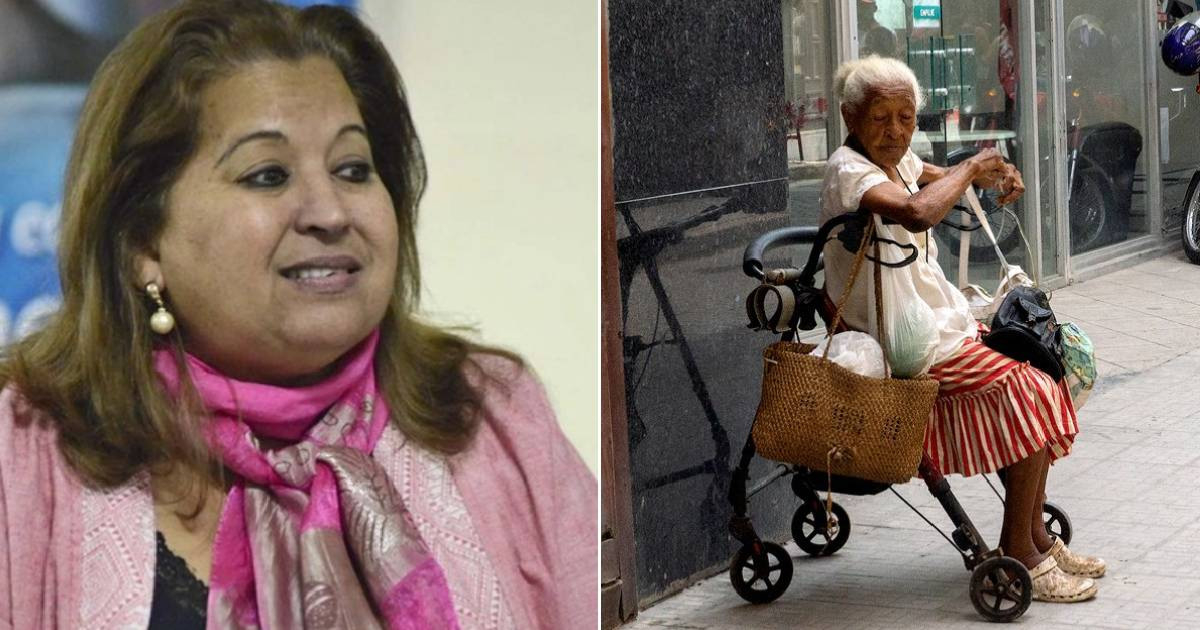
The Federation of Cuban Women (FMC) commemorates its 66th anniversary this Sunday amidst a dire crisis described by its general secretary, Teresa Amarelle Boué, as a mounting situation of necessities, ranging from prolonged blackouts and water shortages to challenges in obtaining and preserving food.
In an official statement released by the state media outlet Prensa Latina, Amarelle emphasized the need for the FMC to intensify its efforts within communities. She acknowledged the pressing conditions necessitate strengthened initiatives such as family agriculture, food preservation, sewing brigades, and community solidarity.
"It's not just the blackout; when there's no power, there's also no water," stated the leader, highlighting that families must purchase food daily to prevent spoilage. The organization, she explained, is providing guidance from culinary experts on how to preserve food effectively.
Community Efforts and Solidarity
Amarelle shared her observations from visiting families facing complex situations, noting how medications circulate among neighbors and how some people share food and prepare communal meals. The FMC, she added, is promoting community projects to alleviate hardships and foster solidarity.
On the employment front, Amarelle Boué acknowledged a "significant employment gap" and identified integrating women into the workforce as a priority. The organization is launching projects in collaboration with micro, small, and medium-sized enterprises (MSMEs), non-agricultural cooperatives, and state-owned companies.
Empowering Vulnerable Women
Regarding women in vulnerable situations, the FMC's strategy is clear: "We must teach vulnerable women to overcome their circumstances," Amarelle asserted, rejecting mere assistance and advocating for support that enables them to advance.
She cited the ESPUmás project, a joint initiative with the Ministry of Domestic Trade, which has provided employment to women facing familial challenges. Initially, some women generated income from home, later expanding to sewing workshops and other services.
Amarelle Boué also acknowledged measures aimed at supporting mothers of children with severe disabilities and those caring for dependent family members, mostly women. However, she admitted that some proposals remain unfulfilled due to lacking budgets and resources.
The Strain of Persistent Crises
The difficulties detailed by Amarelle occur against a backdrop of prolonged energy and supply crises. Cuba has experienced several partial and total collapses of its National Electric System this year, with blackouts exceeding 24 continuous hours in numerous areas.
Recently, a content creator in Manatí, Las Tunas, shared a video criticizing the Cuban regime's energy promises with irony and frustration. Like hundreds of thousands of women on the island, she cooks with charcoal due to the absence of electricity and liquefied gas.
The electricity shortage also disrupts water supply. Official data indicates that roughly 2.7 million Cubans lack regular access to potable water. Complaints about water shortages have surged, forcing women to improvise rainwater collection systems after days without supply. Some areas have gone over nine months without piped water, an unsustainable situation for many who cannot haul water containers.
The healthcare system is similarly burdened. Approximately seven in ten essential medications are unavailable, with Ciego de Ávila recently operating with only 10% of required drugs.
Adding to the crisis is the rising cost of basic goods following the removal of retail price caps on oil, chicken, and powdered milk. Reports from various provinces indicate oil reaching 6,000 pesos and an egg carton 4,500 pesos in the informal market.
Gender Violence and Economic Struggles
Amarelle Boué recognized the FMC's challenges in ensuring the operation of specialized gender violence counseling centers. She acknowledged operational issues due to a lack of trained staff, insufficient outreach, or organizational problems in certain municipalities.
The issue is exacerbated by reports from the Alas Tensas Gender Observatory, which recorded 44 femicides in the first seven months of the year, marking a 112% increase compared to the same period in 2025, totaling 359 cases since 2019.
Two days before the FMC's anniversary, leader Miguel Díaz-Canel presided over a ceremony honoring more than 300 women, which drew ridicule on social media. Users questioned the awards' inability to address the shortages of electricity, water, medications, and food plaguing the population.
Amarelle Boué attributed many economic difficulties to U.S. policies and the Trump administration's measures. Nonetheless, she defended the women's resilience, emphasizing their ability to sustain families and communities through solidarity and creativity.
The general secretary asserted that the FMC boasts over four million members, representing 92% of women over 14 years old in the country, highlighting this as the organization's primary strength.
"We will emerge from these tough times," Amarelle Boué concluded. Her assessment, however, acknowledges a reality where blackouts, water scarcity, medication shortages, and food access issues are among the challenges the FMC seeks to address at the community level.
Addressing the Crisis: Key Questions Answered
What are the primary challenges faced by Cuban women according to the FMC?
Cuban women face significant challenges including prolonged blackouts, water shortages, food scarcity, and difficulties in accessing medications, as reported by the FMC.
How is the FMC addressing employment gaps among women?
The FMC is focusing on integrating women into the workforce through projects with MSMEs, non-agricultural cooperatives, and state-owned enterprises to bridge the employment gap.
What initiatives are in place to support women in vulnerable situations?
The FMC promotes initiatives like the ESPUmás project to create employment opportunities for women in challenging situations, aiming to empower them to overcome their vulnerabilities.