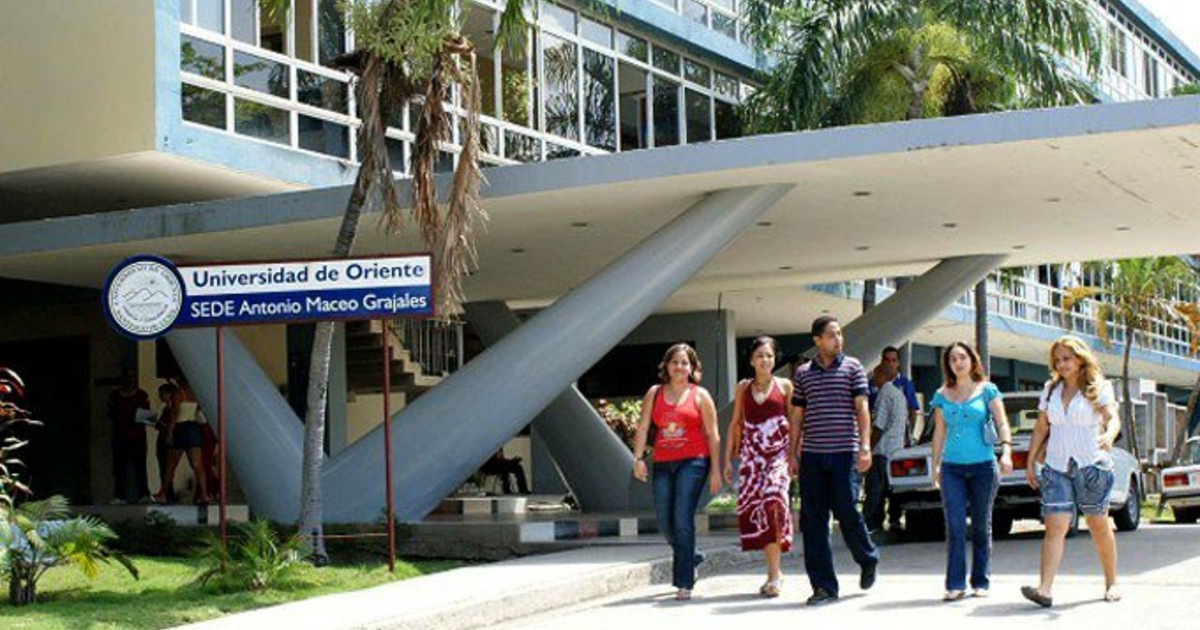
The universities in Santiago de Cuba are set to commence the 2026-2027 academic year on September 1st with a mix of hybrid and remote learning models. This approach includes limited in-person classes, dictated by the severe fuel and transportation shortages affecting the island. The Ministry of Higher Education made this announcement on Friday, outlining the restructuring of Cuba's university system for the upcoming academic cycle.
The ministry highlighted that university education will be organized in a decentralized manner across various regions, blending in-person sessions, distance learning, and face-to-face meetings "whenever feasible," particularly for daytime students.
In-person classes will not be confined to the main campuses of each university. They can also occur at Municipal University Centers (CUM), Municipal University Branches (FUM), and within local production or service entities, thereby expanding the teaching locations and minimizing the need for long-distance travel.
The hybrid course format will include monthly in-person sessions aimed at guiding and assessing learning tasks, while the distance learning courses will continue their usual structure.
Enrollment processes, re-entry, and the confirmation of continuing students will also be decentralized. These can be handled from the students' home regions, either in person or online, at the university or the relevant CUM or FUM in the province or municipality.
This reorganization did not emerge spontaneously. The University of Oriente, the leading higher education institution in Santiago de Cuba, had already shifted to a hybrid model during the second semester of the 2025-2026 academic year, starting March 2, 2026. This period was split into two phases: the first phase was hybrid until April 11, and the second, with increased in-person activities, ran from April 20 to June 27.
The University of Havana also transitioned to a hybrid model in February 2026 for the same reasons: the inability to secure transportation and electricity at educational facilities. The Higher Institute of Art followed suit shortly thereafter.
In March 2026, President Miguel Díaz-Canel publicly acknowledged the situation, stating that "universities must adapt to the energy crisis through hybrid models and community-based reorganization of the educational process."
The regime also canceled the entrance exams for higher education for the 2026-2027 academic year, replacing them with the cumulative high school GPA, and expedited the end of the 2025-2026 school year due to fuel shortages.
The ministry urged students and faculty to stay informed through the official channels of each university, as well as the CUM and FUM in their areas, to understand the local organizational details of the new academic year. This reflects how the specific conditions in each province will ultimately determine the extent of in-person classes that will be feasible.
FAQs about the Hybrid Academic Year in Santiago de Cuba
What learning models will Santiago de Cuba universities use for the 2026-2027 academic year?
Santiago de Cuba universities will utilize a combination of hybrid and remote learning models, with in-person sessions scheduled when possible.
Why have universities in Cuba switched to hybrid learning models?
The switch to hybrid learning models is due to the severe fuel and transportation shortages, making it difficult to maintain regular in-person classes.
How will enrollment processes be handled under the new system?
Enrollment processes will be decentralized, allowing students to manage them from their home regions, either in person or online.