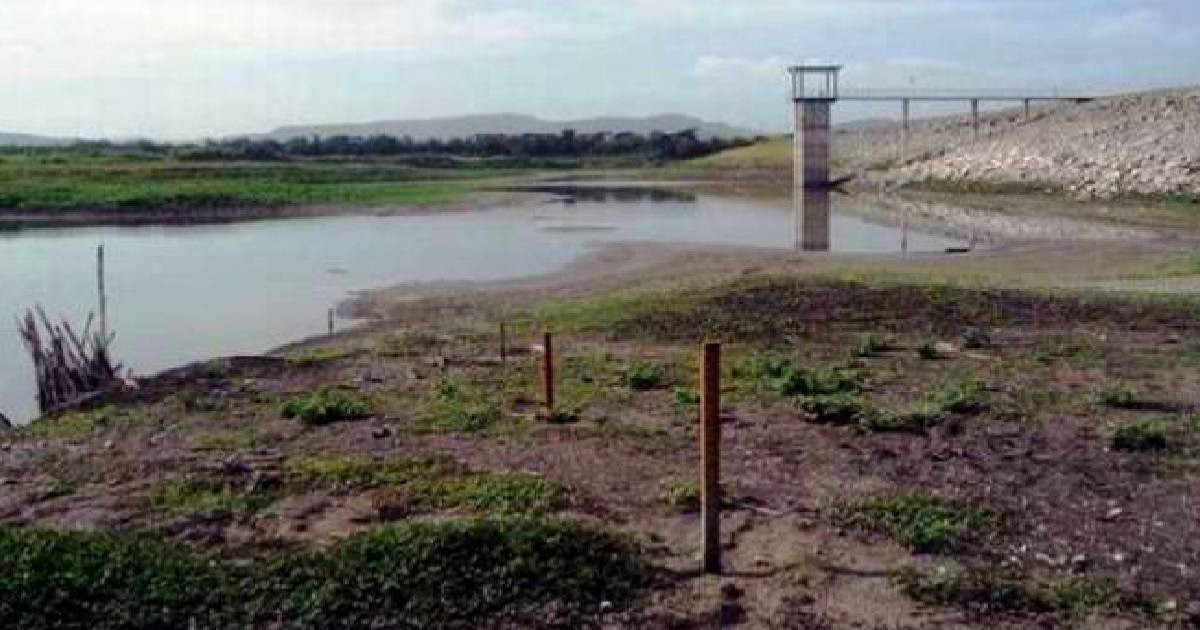
The Agrometeorology Group within the Department of Applied Meteorology at the Camagüey Meteorological Center has described the current meteorological drought in the province as "complex". The prolonged absence of rainfall combined with rising temperatures has significantly reduced soil moisture levels during the first 20 days of August.
A recent update shared on the institution's social media platforms highlighted that in July, every part of the region experienced significant rainfall deficits, classified as severe to extreme. This information was reported by the official newspaper Adelante on Saturday.
Beatriz Martínez Pérez, the Director of the Camagüey Meteorological Center, detailed that from May to July, the entire area faced a lack of rainfall, with only 0.2% experiencing moderate drought while 99.8% fell into the severe to extreme category.
The long-term outlook is equally concerning. Between August 2025 and July 2026, drought affected 88.2% of the province: 27.6% was mild, 23.0% moderate, and 37.6% severe to extreme.
"This clearly shows how the insufficient rainfall has progressively expanded the drought processes," Martínez explained.
Meteorologist Ibriany Arredondo Arencibia warned that the water supply index is "insufficient", severely impacting agricultural activities and livestock well-being.
Potential for Forest Fires and Water Supply Challenges
Experts have also raised concerns about a looming threat of forest fires, especially in the northern parts of the region where the drought is most severe.
Given the circumstances, specialists at the Camagüey Meteorological Center urge authorities and producers to optimize available water resources, as predictions indicate that the scarcity will continue in the coming weeks.
The water crisis in Camagüey worsened further due to a major breakdown at the Amistad Cubano-Búlgara reservoir's pumping station, the primary source of urban water supply, which reduced water access for residents and had lasting effects through July.
In June, local authorities advised residents to boil water due to a lack of basic purification supplies.
As of March, drought conditions affected 62% of Cuba's territory, with water reserves at just 38% of their capacity, the lowest level since 2015. Nearly 2.7 million Cubans were without regular access to potable water by May.
The global climate situation exacerbates the forecast. The World Meteorological Organization estimates a more than 90% chance that the El Niño phenomenon will remain active until November. According to researcher Luis Lecha Estela from the Cuban Meteorological Institute, this "could lead to meteorological drought conditions and water stress across the country, with hotter-than-normal summers."
Understanding the Impact of Drought in Camagüey
What is causing the severe drought in Camagüey?
The severe drought in Camagüey is primarily caused by prolonged periods without rainfall and rising temperatures, which have significantly decreased soil moisture levels.
How does the drought affect food production and water supply?
The drought impacts food production by making agricultural activities challenging and reducing crop yields. It also affects water supply by lowering water reserves and complicating access to potable water for residents.
What measures are experts recommending to cope with the drought?
Experts recommend optimizing available water resources and preparing for continuing water scarcity in the coming weeks.