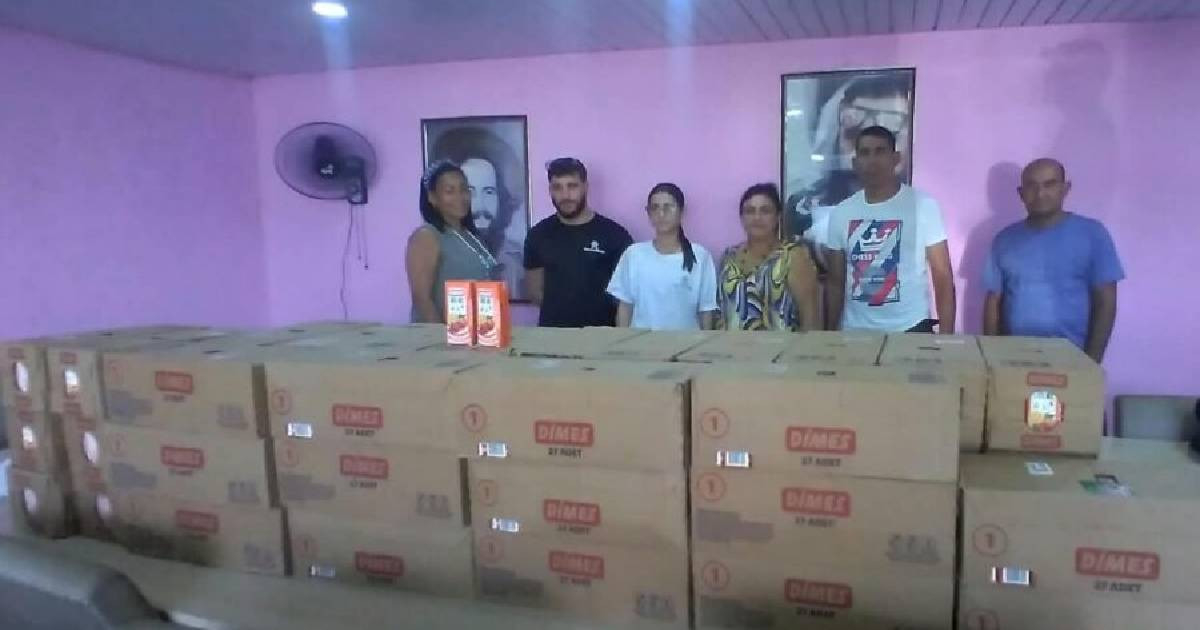
A family-run business has donated 50 boxes of natural fruit juices to the provincial pediatric hospital in Las Tunas, highlighting the critical role the often-criticized private sector plays in addressing basic needs for hospitalized children in Cuba's strained healthcare system.
According to a report from the official digital outlet Tiempo 21, Los Reyes Store, which has been in operation for a year and a half, delivered the juices directly to the hospital's management.
David Reyes Martínez, a member of this private enterprise, led the team during the meeting with hospital authorities.
"Given the current challenges with obtaining compotes, especially for children under two, we were out of stock and had to rely on non-state actors and independent producers who supply us with fruit through donations or purchases," stated Yaneisi Salinas Medina, the hospital's director.
Salinas described the contribution as an "invaluable help" and also expressed gratitude to non-governmental organizations that have provided supplies and medications throughout the year.
Earlier this year, the Mártires de Las Tunas provincial pediatric center received donations from the Canary Islands Network for Solidarity with Cuba, underscoring a growing reliance on external aid that has intensified month by month.
"Solidarity is crucial in the current difficult situation, particularly for large and significant institutions like this one that serve the child population," explained Camila de Los Ángeles García Matos, a medical student and representative of Los Reyes.
García noted that the business had previously supplied hygiene products to the Gustavo Aldereguía polyclinic's maternity home, with plans to continue regular donations.
"As long as we can, we will assist various institutions... we aim to provide help systematically, even if not in large quantities, because every little bit helps in these challenging times," she emphasized.
The hospital director mentioned that the facility is open to negotiating with non-state actors under the framework of the 176 economic transformations approved in June, provided that the food is pre-certified by hygienists, according to the source.
In June, a private company in Sancti Spíritus delivered diapers to hospitals and elder care homes. That same month, a private worker in Matanzas donated an electric tricycle for transporting dialysis patients.
This Friday, a private business inaugurated the first Community Feeding Home in Ciego de Ávila province.
In April, the Food Monitor Program reported that nearly 97% of the Cuban population lacked adequate access to food, and more than 100,000 children were not receiving their daily milk ration.
In February, Public Health Minister José Ángel Portal Miranda acknowledged that the healthcare system is on the brink of collapse.
FAQs on Private Sector Contributions to Cuban Healthcare
Why are private contributions vital to Cuban hospitals?
Private contributions are essential because the Cuban healthcare system is struggling to meet basic needs due to shortages, thus relying on external aid and private donations to fill these gaps.
What challenges are Cuban hospitals currently facing?
Cuban hospitals face significant challenges, including shortages of essential supplies like compotes for children, lack of adequate access to food for the population, and a healthcare system nearing collapse.
How has the private sector been supporting Cuban healthcare?
The private sector has supported Cuban healthcare by donating supplies such as fruit juices, hygiene products, and even equipment like electric tricycles for patient transport, playing a critical role in sustaining healthcare services.