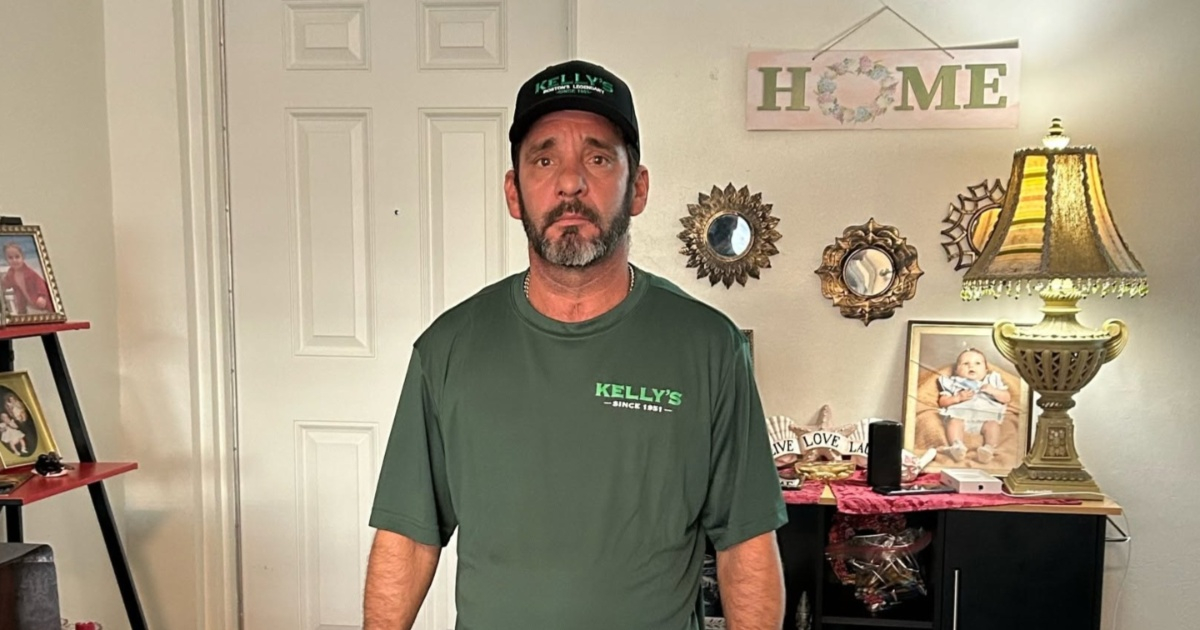
Caridad, the mother of 49-year-old Leonardo Sánchez Fernández from San Miguel del Padrón, expressed her distress in a phone interview with CiberCuba. She revealed that her son, deported last Thursday by the U.S. Immigration and Customs Enforcement (ICE), is now held in Equatorial Guinea without documents, legal aid, and in a precarious health condition.
Living in Lehigh Acres, Lee County, Florida, Leonardo was part of the initial group of deportees sent to Liberia under an agreement between Washington and Monrovia, signed in September 2025. Upon arrival, those who refused to disembark were promised a return to the United States. However, the plane made a stopover in Equatorial Guinea, where they were forcibly removed. Leonardo was among the five individuals in this situation.
The Health Risks for Leonardo
Leonardo's case is particularly alarming due to his medical background: he has undergone stomach surgery and has a skin graft in that area. According to his mother, guards pushed him off the plane, causing him to fall and worsen his condition.
He was taken from the hotel where he is detained with three other Cubans to a hospital, where he is now receiving intravenous fluids. "His organs are displaced due to a recent surgery, and his condition is now critical," Caridad shared, visibly worried.
Legal Residency and Deportation
Leonardo entered the United States in 2010, holding valid legal residency until 2030. However, unspecified offenses reportedly led to the loss of his residency and Social Security. Six months ago, ICE detained him. "He fulfilled all his obligations. He owes nothing to justice," his mother insisted.
Without any identification, passport, or consular support, Leonardo remains confined. His mother reported that the guards at the alleged hotel threaten to shoot anyone approaching the fence surrounding the property.
Caridad's anguish is summarized in an unanswered question: "Why are they sending people who aren't murderers or criminals there? Why?"
Accounts from Other Deportees
Another Cuban from the same group, Carlos Rodríguez López, recounted the arrival in Equatorial Guinea to his wife via video call: "About 50 police officers awaited us, didn't say anything, just forced us off the plane. Everyone was masked, and we were shoved into a van and brought to a hotel."
"We are essentially kidnapped here and have no idea who to contact or what will happen to us. We can't leave this hotel," he explained during a call to his wife, mentioning Leonardo's health concerns.
Third-Country Deportations: Migrants' Plight
This incident is part of the Trump administration's controversial policy of deporting migrants to third countries with which they have no ties. An agreement was made for Liberia to accept up to 1,200 foreign nationals within 12 months.
Liberian Justice Minister Natu Oswald Tweh stated that the government reviewed the list of migrants prior to their arrival, noting that most had committed immigration-related offenses. Tweh added that deportees could apply for asylum in Liberia or leave whenever they choose.
Additionally, the U.S. signed an agreement with Equatorial Guinea on October 2, 2025, involving a $7.5 million payment from the State Department. From November 2025 to July 2026, at least 53 individuals from 10 different countries were dispatched to Malabo on three ICE flights.
In February 2026, a federal judge in Massachusetts ruled this third-country deportation policy illegal, although the decision is temporarily on hold.
Understanding the Implications of Third-Country Deportations
What are third-country deportations?
Third-country deportations involve sending migrants to a nation other than their origin or the U.S., often without any prior connection to that country.
Why is Leonardo Sánchez Fernández's situation critical?
Leonardo's health is at risk due to a recent stomach surgery and skin graft. His condition worsened after being pushed during deportation, and he is now hospitalized without proper documentation or legal assistance.
Has the policy of deporting to third countries faced legal challenges?
Yes, a federal judge in Massachusetts declared this policy illegal in February 2026, but the ruling is currently suspended.