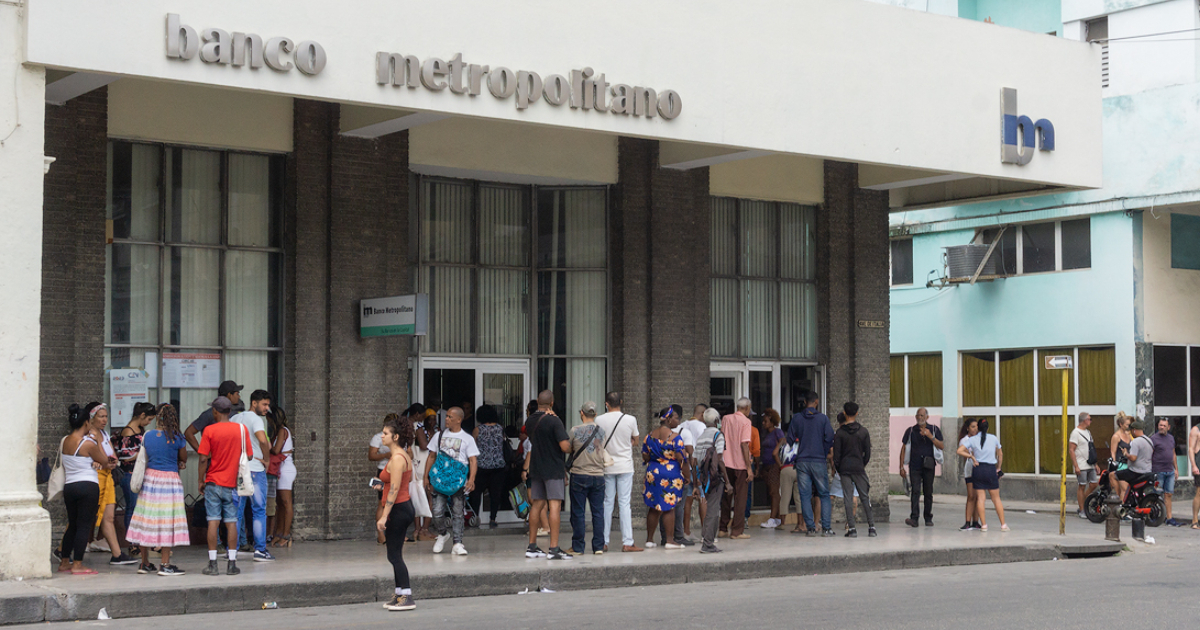
The National Assembly of People's Power (ANPP) has instructed the Cuban government and the Central Bank of Cuba to implement fresh strategies to enhance banking services for citizens. This directive, outlined in Agreement X-171, was approved on July 29 and made public in the Official Gazette No. 67 Ordinary of 2026.
Endorsed unanimously, the regulation signed by Juan Esteban Lazo Hernández, the president of the legislative body, was passed during the Seventh Ordinary Session of the Tenth Legislature, held at Havana's Convention Palace. This decision was made under the authority of Article 108, section d), of the Cuban Constitution.
The impetus for the agreement came from a proposal by a deputy during June's Extraordinary Session. Following this appeal, the ANPP scrutinized data presented by Juana Lilia Delgado Portal, the Central Bank's chairwoman, regarding the current status of banking and its impact on the populace.
The initial directive requires the Central Bank to provide an updated report to the Council of State in August detailing the measures and actions underway to improve banking services for the public.
The second mandate tasks the Government of the Republic with instructing provincial and municipal administrations to bolster initiatives aimed at enhancing these services.
The third directive charges the National Assembly's Economic Affairs Commission with monitoring the process and assessing its outcomes during its December 2026 session.
These new measures follow three years after mandatory banking was imposed, during which time the system has deteriorated, restricting Cubans' access to cash and financial services.
Currently, a mere 3.77% of transactions in Cuba are digital, and over half of the country's ATMs are either out of service or empty.
The cash shortage has forced some traditional banking functions to shift to private businesses. In Guantánamo, 113 establishments are handling pension payments for over 3,000 retirees due to banks' inability to provide the service. Meanwhile, in Sancti Spíritus, some businesses impose surcharges of up to 40% for payments made via transfer.
In July, the Central Bank announced corrective measures, including reducing the commission charged to businesses from 1.5% to 0.8%, removing the 5,000 Cuban peso limit for cash payments, and enabling real-time crediting of transfers within the same bank.
The banking agreement was one of several documents ratified during the July 29 session, alongside the Labor Code, Housing Law, Agricultural and Forestry Land Law, and the Law on the Organization of the Central State Administration, among other policies later published in the Official Gazette No. 67.
In December, the Economic Affairs Commission will assess the effectiveness of the measures, marking the first formal institutional review of the ANPP's directives.
Impact of Cuban Banking Reforms
What prompted the National Assembly's new directives on banking?
The directives were prompted by a deputy's proposal during an extraordinary session and were based on an analysis of the banking system's status and its effects on the population.
What are some of the corrective measures introduced by the Central Bank?
The Central Bank's measures include reducing business commissions, eliminating cash payment limits, and enabling real-time transfer crediting within the same bank.
How has the cash shortage affected traditional banking functions in Cuba?
Due to cash shortages, some banking functions have shifted to private businesses, with establishments in Guantánamo handling pension payments and Sancti Spíritus businesses imposing surcharges on transfers.