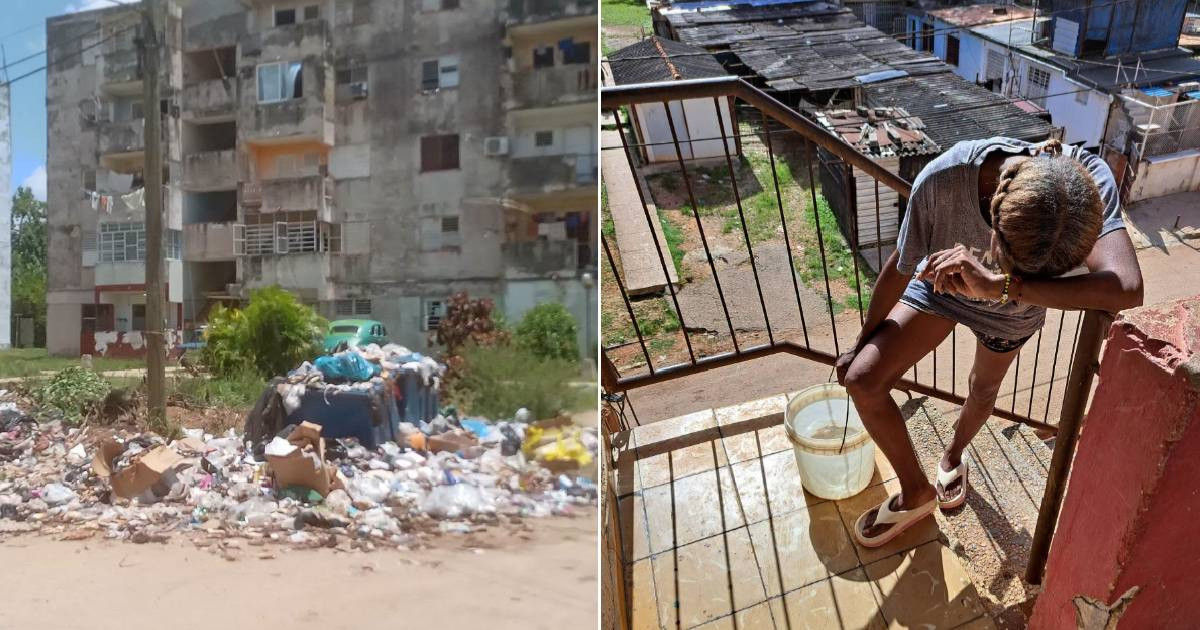
A Cuban citizen by the name of Alexis Torriente took to Facebook this Friday to deliver a scathing critique aimed at Prime Minister Manuel Marrero Cruz. In his extensive post, Torriente exposes systemic corruption and highlights the dire water shortages affecting the Mulgoba neighborhood in the Boyeros district of Havana, while addressing the broader collapse of public services across Cuba.
In the viral social media post, Torriente directly challenges the Prime Minister, quoting his own words: "Manuel Marrero Cruz, you said that corruption must be pointed out. Here it goes... all yours."
Back in April, Marrero called for a "firm hand" against theft and corruption, and by June, he acknowledged before the National Assembly that "we have never denied our own mistakes and shortcomings."
Accompanying his message, Torriente included photos pointing to government buildings in Boyeros, such as the Municipal Administration Council, Municipal Directorate of Finance and Prices, Municipal Directorate of Labor and Social Security, and a food distribution unit, as institutions that he claims fail to serve the public.
Water Crisis: A Growing Concern
The most pressing issue raised by Torriente is the ongoing water crisis: "Mulgoba has been without water for weeks, and no one is taking responsibility. You go to the Boyeros party office, and a barefoot woman claims she has no office and ends up directing me to the municipal government. Everyone covers for each other, and no one answers," he asserted.
This complaint coincided with a major pipeline failure at the Cuenca Sur water source, leaving six Havana municipalities—Plaza de la Revolución, Diez de Octubre, Cerro, Centro Habana, Habana Vieja, and parts of Boyeros—without a clear timeline for water restoration.
The water scarcity Torriente describes is neither new nor isolated. As of May, official figures indicate that approximately 2.7 million Cubans lack consistent access to potable water, with several million more receiving it sporadically.
Escalating Frustrations Among Citizens
In Boyeros, the Lola water source ceased operations on June 16 due to power outages, affecting Mulgoba and other areas. By July, over half a million Havana residents were grappling with the water crisis, up from 200,000 in April.
Torriente’s message escalates from specific grievances to a broader political call to action: "This has gone from resistance to humiliation, and from humiliation to genocide, damn it."
He also called on Cuban military personnel to recognize themselves as part of the populace rather than a tool of the Communist Party, warning police officers that "one day everything will change, and you will be held accountable."
"No more abuse of power. No to corruption. No more hunger. No more lies," he concluded.
Widespread Discontent Reflected in Comments
The comments on Torriente's post paint a broader picture of citizen dissatisfaction from various parts of the country. A resident of Vedado mentioned being "without water for over a month" and that complaints "remain on paper."
From Manzanillo, Granma, another comment noted that "it's been years since we've known what a functioning aqueduct is."
A third voice summarized the widespread indignation: "Leaders with their bloated red bellies drinking bottled water while our children have insoluble water to drink and bathe."
Many commenters agreed that dialogue is no longer an option. "The people can't endure any more, as every day we're asked for more sacrifices and more resilience... we need change, we need to rebuild our country, free elections, the ability to work, study, and live in peace," one respondent wrote.
For Torriente and those who engaged with his post, these sentiments starkly contrast with the impunity they describe daily: "Corruption is institutionalized. Cuba needs change. Cuba needs freedom because it is held hostage."
The Boyeros district has been a hotspot for complaints this year. In July, residents of Calabazar caught electricians from the Electric Union selling electricity illegally.
Weeks earlier, women from Guanabacoa stood guard at night to prevent workers from removing the transformer from their block without proper authorization, suggesting a potential act of corruption.
Frequently Asked Questions About the Water Crisis in Boyeros, Havana
What are the main issues Alexis Torriente raised in his Facebook post?
Torriente's post denounces institutionalized corruption, water shortages in the Mulgoba neighborhood, and the general collapse of public services in Cuba.
How many Cubans are affected by the water crisis?
As of May, around 2.7 million Cubans lack regular access to potable water, with several million more receiving it intermittently.
What was the response of the government to the water crisis in Boyeros?
There has been no clear timeline for water restoration following a major pipeline failure affecting several Havana municipalities, including Boyeros.