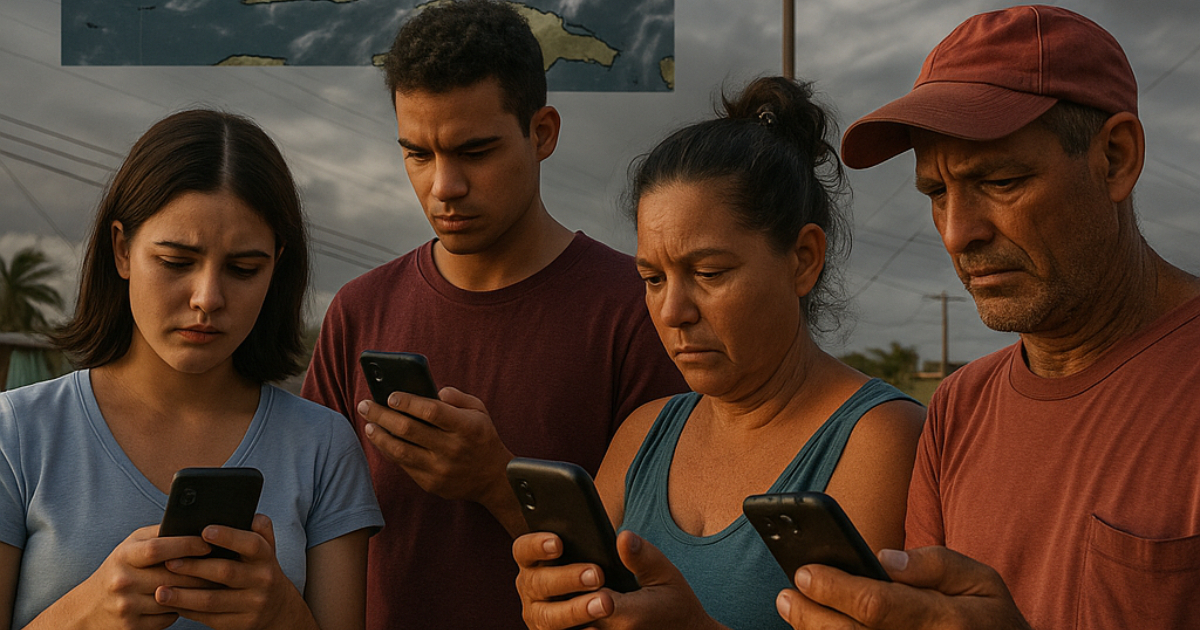
Four days after causing widespread panic across nine provinces with a completely unfounded earthquake alert, ETECSA has finally admitted its role in the incident, attributing it to a "technical-human error" made by its specialists.
The delayed explanation and peculiar terminology sparked a wave of mockery and criticism on ETECSA's official Facebook page.
"Every day you outdo yourselves. Now you've really done it," remarked one user in the comments, encapsulating the frustration many Cubans feel towards the persistent failures of the state-run telecommunications monopoly.
Public Outrage Over Delayed Response
Citizens were particularly irked by the four-day delay in providing an explanation.
"Bravo, it only took you four days to admit someone messed up. Brilliant," wrote one Facebook user sarcastically.
The Curious Case of a "Technical-Human Error"
The term "technical-human error" also drew attention. "I've never heard that in all my years of study. I spent six years in tech school for nothing; apparently, working with too many logarithms is now called a technical-human error," joked another commenter with a technical background.
Reactions ranged from sarcasm to disbelief. "Now you've really done it: technical-human error, I'm off to check the dictionary to see what that means," one user quipped.
Unanswered Technical Questions
Some technical inquiries remained unresolved. One user reported receiving the alert on an Android device without a SIM card, WiFi, or Bluetooth active: "How could it receive that alert? Why was it not received on any iPhone?" they asked.
Others questioned ETECSA from the start about the false seismic warning, and even comedian Ulises Toirac criticized ETECSA following the incident.
ETECSA's Official Statement and Response
ETECSA, in a statement, explained that "the messages were issued due to a technical-human error by our specialists conducting network tests."
The company also stated that measures have been taken against those responsible and that efforts are underway to prevent a recurrence.
Background and Broader Implications
The false earthquake alert caused panic in Cuba on August 18, when thousands of mobile phone users received a notification of an earthquake that no official entity had issued.
The National Seismological Research Center (CENAIS) immediately debunked the alert. Its head, Enrique Diego Arango Arias, was unequivocal: the alert "has no basis in any officially issued warning," and the seismological station network recorded no activity to support it.
Both the Civil Defense and the U.S. Geological Survey (USGS) dismissed the possibility of any real seismic activity on the island.
In the early days, there was speculation that Android's earthquake alert system might be behind the message, but Google confirmed it was not responsible: the tech platform neither detected nor sent any earthquake alert in Cuba that day.
This episode adds to a series of failures by the state telecommunications company this year, including a national mobile phone outage on August 3, a fiber optic cut affecting the Nauta payment system on August 17, and numerous mobile network disruptions due to power outages in July and August.
Understanding the ETECSA Incident
What caused the false earthquake alert in Cuba?
The false earthquake alert was caused by a "technical-human error" during network testing by ETECSA specialists.
How did ETECSA respond to the false alert incident?
ETECSA admitted the error, attributed it to a mistake by their specialists, and stated that measures have been taken to prevent future incidents.
Were there any real earthquakes in Cuba during the false alert?
No, there were no real earthquakes in Cuba at the time of the false alert, as confirmed by CENAIS and the USGS.