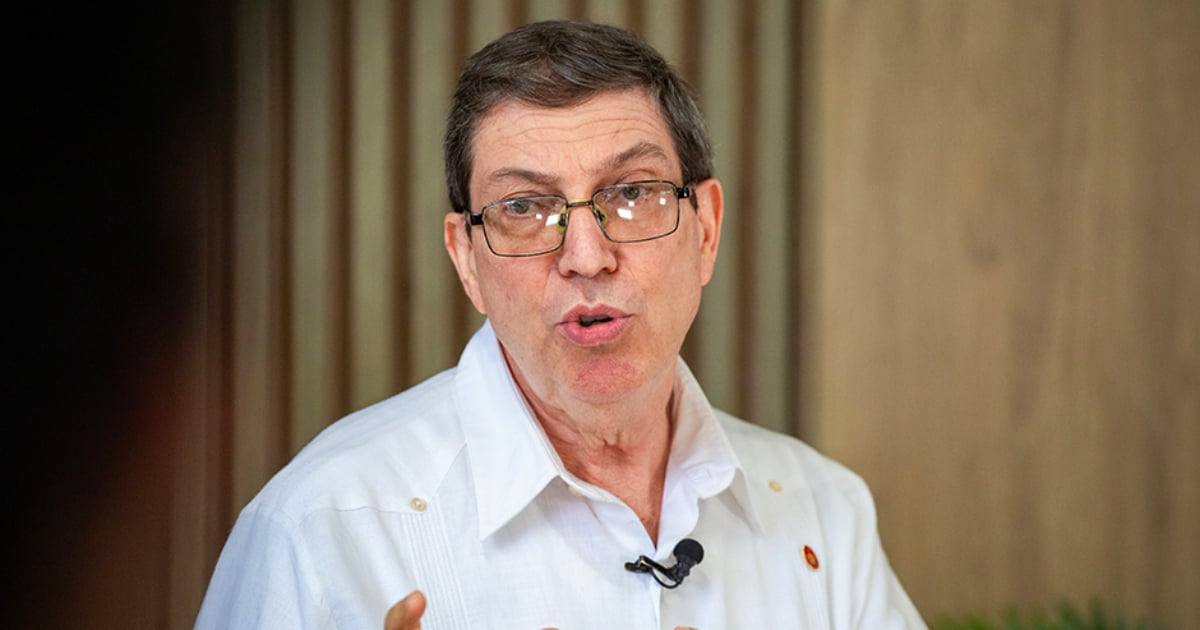
This past Friday, Cuban Foreign Minister Bruno Rodríguez Parrilla marked the International Day of Remembrance and Tribute to the Victims of Terrorism by posting a message on X. In his statement, he portrayed Cuba as a victim of terrorism and condemned "all its forms and manifestations." This statement starkly contrasts with Cuba's status as a state sponsor of terrorism, as designated by the U.S. Department of State.
Rodríguez claimed that Cuba "has been a victim of terrorism that was organized, financed, and trained on U.S. soil" and paid homage to the official figures provided by the regime: 3,478 fatalities and 2,099 individuals maimed due to alleged terrorist acts against the Cuban people, data which lack independent verification.
The statement was made while Havana remains on the Department of State's blacklist, a position it has held since the Trump administration reinstated the designation in January 2025, just days after the Biden administration had removed it.
U.S. Accusations and Cuba's Response
In June of this year, Secretary of State Marco Rubio testified before the Senate, asserting that Cuba "has sponsored terrorism" and has supported "nearly every violent left-wing terrorist group" in the Western Hemisphere, specifically naming the ELN and FARC.
A month later, in July, the Department of State released a report labeling the regime as "the capital of 21st-century terrorism," according to media coverage of the document.
Supporting this designation, Washington points out that Cuba has provided sanctuary since 1984 to Joanne Chesimard—also known as Assata Shakur—convicted of murdering a New Jersey police officer named Werner Foerster, and to William Morales, a bombmaker for the armed group FALN linked to attacks in New York.
Historical Context and Recent Developments
In May 2025, Rubio mentioned that the Department of State had identified 11 fugitives wanted by U.S. authorities who were found residing on the island.
Leaked diplomatic cables from WikiLeaks in 2010 further documented that Cuba allowed members of ETA, FARC, and ELN to "rest" and receive medical treatment on its soil.
Rodríguez has repeatedly countered these accusations. In June, he dismissed the charges against Raúl Castro regarding the 1996 downing of two Brothers to the Rescue planes, in which four people died, as a "farce."
In July, he accused Rubio of attempting to "reinstate" an aggressive policy against Cuba.
The contradiction is clear: the same government that proclaims itself a victim of terrorism is accused by Washington of sheltering convicted terrorists, supporting armed groups, and, according to a July 2026 U.S. official report, being the primary hub of terrorism in the current century.
Understanding Cuba's Terrorism Sponsor Status
Why does the U.S. consider Cuba a state sponsor of terrorism?
The U.S. designates Cuba as a state sponsor of terrorism due to its history of providing safe haven to individuals like Assata Shakur and William Morales, as well as its alleged support for groups such as the ELN and FARC.
How has Cuba responded to these accusations?
Cuban authorities, including Bruno Rodríguez, have dismissed the accusations as baseless, labeling them as political maneuvers and emphasizing Cuba's own experiences as a victim of terrorism.
What are the implications of Cuba's designation as a terrorism sponsor?
This designation impacts Cuba's international relations and economic activities, as it subjects the country to sanctions and restricts its access to international financial systems.