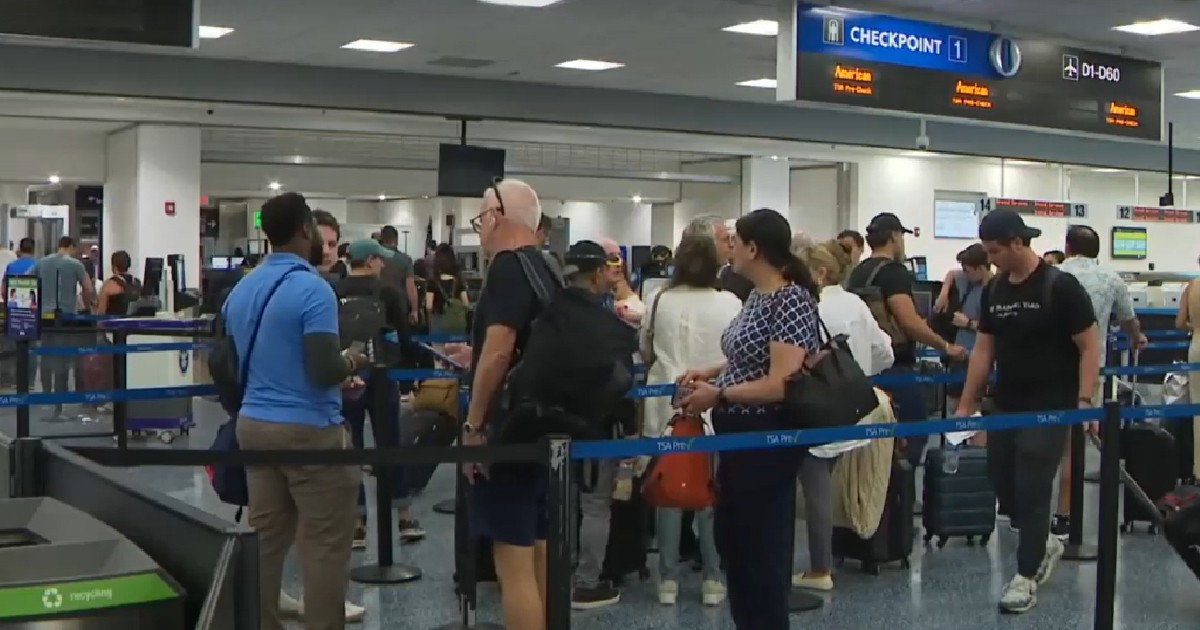
U.S. citizens who traveled to Cuba to partake in events commemorating Fidel Castro's centennial were detained and subjected to secondary inspections by Customs and Border Protection officials upon their arrival at Miami International Airport, as reported by the Associated Press citing anonymous U.S. officials.
The operation occurred over the weekend of August 16-17, following the attendance of over 1,500 delegates from 63 countries at the first International Colloquium "Fidel: Legacy and Future," held in Havana from August 10-13, marking the centenary of the Cuban dictator.
Several travelers intercepted during this operation had their cell phones, laptops, and tablets confiscated for inspection, although the status of these devices was unclear at the time of reporting.
Authorities were prepared to subject dozens of activists to intensified questioning, but far fewer met the criteria established for such procedures.
All those detained were eventually released and allowed entry into the country, although authorities warned that those who engaged in transactions with Cuban government entities—including restaurants, hotels, and stores—might face legal consequences if a future investigation determines they violated existing sanctions.
Prior Operations and New Sanctions
The Miami operation was not the first of its kind in 2026; in March, at least 16 activists from the Nuestra América Convoy were detained and questioned for about three hours at the same airport after returning from Cuba, with phones and equipment confiscated.
Last Thursday, the Treasury and State Departments announced a new round of sanctions against nine Cuban state enterprises in the mining, metals, and construction sectors, including the Empresa de Níquel Comandante Ernesto Che Guevara, the Geominero Salinero Business Group, and the Ministry of Construction.
The measures also targeted three leaders of the Cuban Institute of Friendship with the Peoples (ICAP): its president Fernando González Llort, first vice president Noemí Ramona Rabaza Fernández, and North America director Leima Martínez Freire.
Political Reactions and Accusations
González Llort has a history with U.S. justice: he was arrested in 1998 and convicted in 2001 for his role in the Cuban intelligence network known as the Wasp Network, which infiltrated exile groups in Miami. He served about 15 years in U.S. prisons before returning to Cuba in 2014.
This week, Secretary of State Marco Rubio accused ICAP of sponsoring "a vast subversive network in the United States aimed at identifying, recruiting, and radicalizing" U.S. citizens, directly linking the Havana colloquium to this strategy.
"Just days ago, the regime attempted to exploit the 100-year mark of the communist and despot leader Fidel Castro to revitalize this subversive network by bringing a new brigade of international sympathizers to Havana to establish connections with regime officials," Rubio declared in a statement.
Rubio further stated that "the Trump administration will not stand idle while a hostile foreign power seeks to exploit our freedoms—which none of their people enjoy—by deceiving and corrupting American citizens with lies, espionage techniques, and other misdeeds."
He also warned that foreign banks and companies maintaining ties with sanctioned entities risk being designated themselves.
Cuban Response and Legal Implications
Cuban Foreign Minister Bruno Rodríguez Parrilla rejected the new sanctions, accusing them of hindering the transport of food, medicine, and medical devices to Cuba, mostly purchased by small and medium-sized Cuban private enterprises.
The sanctions announced Thursday fall under Executive Order 14404, signed by President Donald Trump on May 1, 2026, marking the fourth round of punitive measures since then against the Cuban regime in military, financial, energy, mining, and construction sectors.
Any U.S. citizen detained and released at the airport could still face legal proceedings if ongoing investigations determine they engaged in prohibited transactions during their stay on the Island.
Understanding U.S. Sanctions on Cuba
What prompted the detention of American travelers returning from Cuba?
The detention was prompted by the travelers' participation in events commemorating Fidel Castro's centennial, which raised concerns about potential violations of U.S. sanctions against engaging with Cuban government entities.
What are the potential legal consequences for those who engaged in transactions with Cuban entities?
Travelers who engaged in transactions with Cuban government entities could face legal consequences if investigations reveal that they violated U.S. sanctions, which prohibit such interactions.
How has the U.S. government responded to Cuban activities in the United States?
The U.S. government has imposed sanctions on Cuban entities and accused them of running a subversive network within the United States, as well as exploiting American freedoms through deception and espionage.