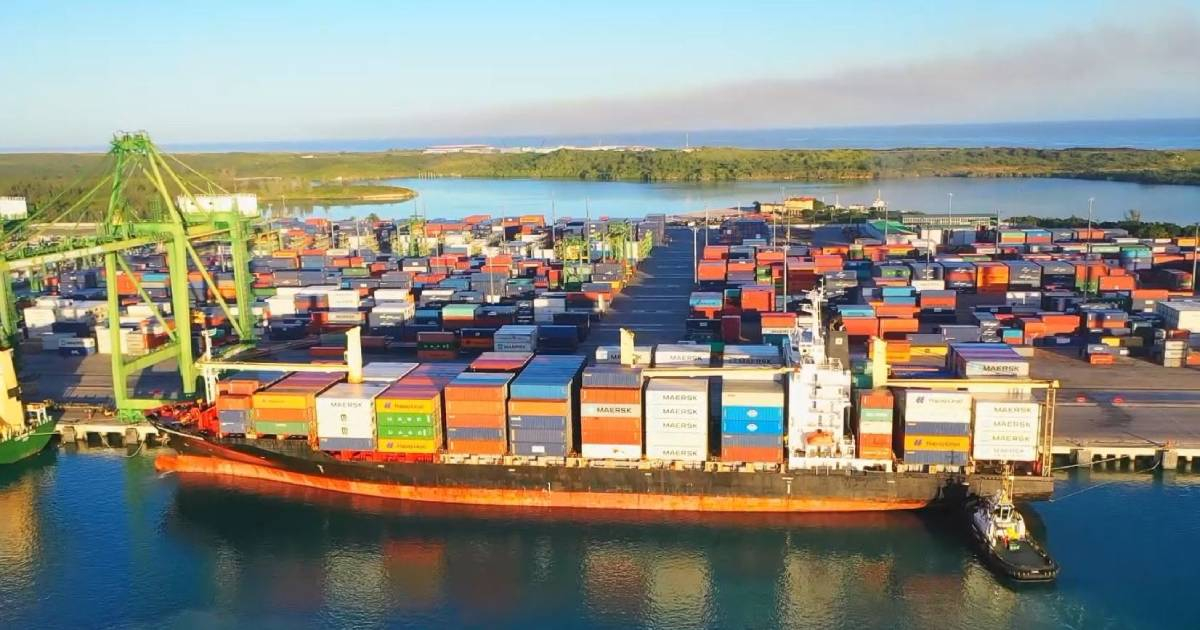
The U.S. Department of the Treasury expanded its punitive measures against Cuba on Thursday, targeting nine entities and three individuals by adding them to the Specially Designated Nationals and Blocked Persons (SDN) list. This move directly impacts the island's foreign trade, imports, and mining sectors.
The sanctions fall under Executive Order 14404, signed on May 1, 2026, which permits the imposition of blocking sanctions against those operating within Cuba's strategic industries, such as energy, defense, metals, mining, and financial services.
Among the blocked Cuban entities are Transimport, Consumimport, Coratur (Tourism Supply Corporation), Acorec (Agency for Commercial Representation Contracting), Acinox Comercial, Metalcuba, Geominsal (Geominero Salinero Business Group), the Comandante Ernesto Che Guevara Nickel Company, and the Ministry of Construction (MICONS).
For the first time, the MICONS has been targeted as a government entity rather than a state-owned enterprise, setting a new precedent with its inclusion in this list.
Established in 1962, Transimport specializes in importing heavy vehicles, parts, and accessories, while Consumimport handles the importation of general consumer goods. Coratur supplies the tourism sector and is linked to the Ministry of Foreign Trade and Foreign Investment. Metalcuba is involved in the import, export, and commercialization of metals, and Geominsal manages the state's geomining and salt operations.
The Treasury also sanctioned three individuals associated with the Cuban Institute of Friendship with the Peoples (ICAP): Fernando González Llort, Leima Martínez Freire, and Noemí Ramona Rabaza Fernández.
González Llort, who has led ICAP since March 2017, is a former Cuban spy known as one of the "Cuban Five," who served a 15-year sentence in the U.S. for espionage before returning to Cuba in 2014. The State Department labeled him as a "convicted Cuban spy" in 2026, and he received public praise from Díaz-Canel just a day before these sanctions were announced.
The imposed sanctions result in the freezing of assets under U.S. jurisdiction and prohibit any transactions with individuals or companies subject to U.S. law.
This move is part of a broader, incremental strategy by the Trump administration implemented since May 2026. Previous rounds had already targeted entities such as MINFAR, MININT, GAESA, CUPET, MINTUR, and numerous state-owned companies.
The July 13 round included GECOMEX, ANTEX, Caudal S.A., and six other entities, while the August 6 round added Tecnotex, Tecnoimport, EMI Yuri Gagarin, and Duna S.A.
ICAP had already been sanctioned on June 4, 2026, due to its alleged role in intelligence and counterintelligence activities. The new designations of its officials further tighten the restrictions around the organization.
Additionally, Thursday's Treasury actions included sanctions for drug trafficking against an Ecuadorian cocaine network linked to violent gangs and Mexican cartels, as well as designations related to Hezbollah, the Iranian Revolutionary Guard, and a general license associated with Russia, highlighting the global scope of the Trump administration's sanctions campaign.
Impact and Details of U.S. Sanctions on Cuba
What are the implications of the sanctions for Cuban entities?
The sanctions result in the freezing of assets under U.S. jurisdiction and prohibit any transactions with individuals or companies subject to U.S. law, severely impacting the operations of the targeted Cuban entities.
Who are the individuals sanctioned by the U.S. Department of the Treasury?
The sanctioned individuals include Fernando González Llort, Leima Martínez Freire, and Noemí Ramona Rabaza Fernández, all connected to the Cuban Institute of Friendship with the Peoples (ICAP).
Why was the Ministry of Construction (MICONS) included in the sanctions list?
MICONS was included as part of the sanctions due to its involvement in strategic sectors of the Cuban economy, marking the first time it has been designated as a government entity rather than a state-owned company.
How does Executive Order 14404 authorize these sanctions?
Executive Order 14404, signed on May 1, 2026, allows for the imposition of blocking sanctions against those operating in strategic sectors of the Cuban economy, such as energy, defense, metals, mining, and financial services.