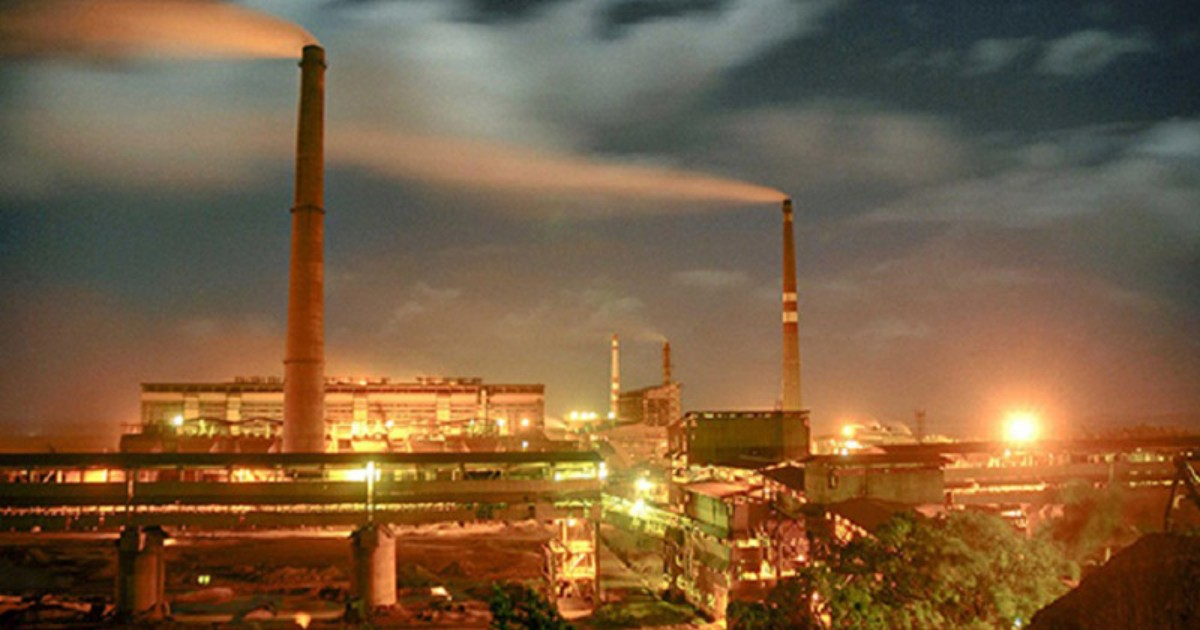
The United States government unveiled a fresh wave of sanctions on Thursday, targeting entities linked to the Cuban regime. This latest measure focuses on the state-run steel sector and companies involved in foreign currency acquisition, such as ACINOX COMERCIAL S.A. and ACOREC S.A.
The U.S. Department of the Treasury has escalated its sanctions campaign against the Cuban regime by adding new entities and individuals to the Specially Designated Nationals List.
The Office of Foreign Assets Control (OFAC) has included ACINOX COMERCIAL S.A., a Cuban state-owned enterprise involved in the production and export of basic iron and steel. Founded in 1990, it is part of the ACINOX steel group, with steel billets being its main export product.
This action also targets ACOREC S.A. (Agency for Commercial Representation Contracting), a state enterprise for human resource provision established in 1991. Washington has identified this sector as a mechanism for the Cuban state to earn foreign currency through the export of labor.
Both entities were designated under Executive Order 14404 (EO14404), a legal framework signed by President Trump in 2026 that allows for sectoral sanctions against individuals and companies operating in strategic areas of the Cuban economy, including metals and mining, energy, defense, and financial services.
On an individual level, OFAC has sanctioned three officials associated with the Cuban Institute for Friendship with the Peoples (ICAP): Fernando González Llort from Santiago de Cuba; Leima Martínez Freire from Havana; and Noemi Ramona Rabaza Fernández from Bayamo, Granma.
ICAP is the state body responsible for public diplomacy and relations with foreign organizations. Its inclusion on the list aims to curb the regime's ability to exert influence beyond the island.
The designations announced on Thursday are part of an escalating series of actions that have intensified since May 2026.
The initial designations under EO14404 occurred on May 7, when GAESA and Moa Nickel S.A., a joint venture with Canadian firm Sherritt International and Cuba's General Nickel Company, were sanctioned. By June 5, the deadline for foreign companies to cease operations with sanctioned Cuban entities had passed, with secondary sanctions as a looming threat.
Subsequent rounds on July 13 and August 6 widened the scope of restrictions, adding new entities and individuals tied to the regime's economic-military apparatus.
The pressure from secondary sanctions has had tangible impacts: Australian company Antilles Gold halted its Cuban operations, and Sherritt International issued warnings about the risks to its activities on the island.
The Cuban regime has complained to international organizations about losses exceeding $47 million in one year for the ACINOX group, attributing this to the pressures of the U.S. embargo on its foreign suppliers, although these figures lack independent verification.
With this new round of sanctions, the Trump administration is solidifying a strategy aimed at suffocating the Cuban state's financial sources sector by sector, from mining and steel to labor export mechanisms and the regime's diplomatic projection abroad.
Impacts and Implications of U.S. Sanctions on Cuba
What are the main targets of the latest U.S. sanctions against Cuba?
The latest U.S. sanctions target Cuban state-run enterprises involved in the steel sector and foreign currency acquisition, specifically ACINOX COMERCIAL S.A. and ACOREC S.A.
How have these sanctions affected foreign companies operating in Cuba?
The sanctions have prompted companies like Antilles Gold to suspend operations in Cuba, and Sherritt International has expressed concerns about operational risks on the island.
What is the significance of Executive Order 14404?
Signed by President Trump in 2026, Executive Order 14404 provides a legal basis for imposing sectoral sanctions on individuals and companies operating in strategic areas of the Cuban economy.