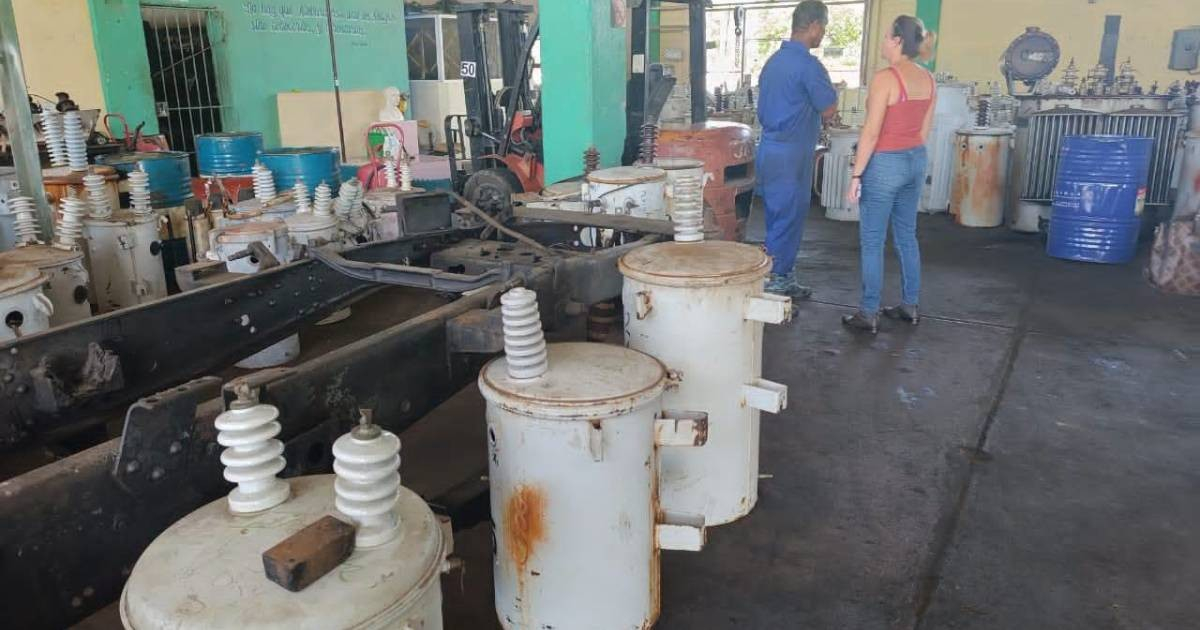
The theft of dielectric oil from a transformer supplying power to a molecular medicine center in Santiago de Cuba has led to more than just an infrastructure setback. The facility was left without service, forcing the crucial medical samples of a critically ill patient to be transported to Granma for processing.
The Electric Company of Santiago de Cuba issued a warning about the severe impact these crimes can have on essential services, particularly medical care. The theft occurred in the early hours of Wednesday, and when a critically ill patient urgently needed tests, the center was unable to process the samples due to the transformer malfunction.
Consequently, the samples had to be sent to another province, requiring fuel, resources, and causing a critical delay in obtaining results, which could be vital for the patient's treatment.
"More importantly, it’s about the time lost for a patient in urgent need of a diagnosis," warned the Electric Company. Dielectric oil is crucial for the insulation and cooling of transformers. Its removal can render the equipment inoperative, directly impacting facilities relying on that power supply.
The situation is exacerbated by the challenges in replacing the stolen material. Since Cuba does not produce dielectric oil and relies on imports, each theft not only disrupts service but also imposes additional costs on an already strained electrical system.
Illegal Trade Undermining Cuba's Electrical Grid
In 2026, the theft of dielectric oil has emerged as the most damaging crime against Cuba's electrical infrastructure. The stolen liquid frequently ends up on the black market, where it serves as a substitute for diesel in tractors and other agricultural machinery. This illicit trade, with prices ranging from 600 to over 1,000 Cuban pesos per liter, has fueled a surge in transformer attacks amid the country's deepening energy crisis.
Santiago de Cuba has seen several recent incidents. On August 17, just days before the Molecular Medicine incident, oil was stolen from two transformer banks in Carolina, San Luis municipality. Days earlier, the theft of about 300 liters in the same area left approximately 17,000 people without power.
The severity and frequency of these thefts have prompted authorities to intensify legal repercussions. Recently, the Popular Municipal Court of Contramaestre in Santiago de Cuba sentenced a man to 12 years in prison for stealing 120 liters of dielectric oil from Bungo la Venta substation. His theft caused a 48-hour blackout for over 2,000 people. The accused was apprehended at dawn, transporting the stolen oil along with tools allegedly used in the crime.
Public Outrage and Calls for Increased Surveillance
The incident at the Molecular Medicine center sparked widespread outrage, with many urging enhanced surveillance of transformers and other vulnerable facilities. Some criticized the authorities' priorities, contrasting the lack of protection for critical infrastructure with the resources allocated to policing protests or cracking down on informal commerce.
This reaction highlights concerns extending beyond the cost of a transformer. In a nation plagued by prolonged blackouts and a healthcare system hampered by shortages, another electrical failure could severely impact services critical to patient health.
In response to the rise in these crimes, the Cuban regime has significantly toughened penalties. The Supreme People's Court's Decision 475/2025 allows specific transformer oil thefts to be prosecuted as sabotage against the National Electroenergetic System under article 125 of the Penal Code. Sentences range from seven to 15 years in their basic form and can escalate to 10 to 30 years, life imprisonment, or even the death penalty under the most severe circumstances.
Despite harsher penalties, thefts continue unabated. Energy and Mines Minister Vicente de la O Levy acknowledged in late July that some Cuban communities have endured up to 105 consecutive days without power due to damaged transformers, admitting that dielectric oil theft directly prolongs these outages.
Impact of Transformer Oil Theft in Cuba
What consequences does the theft of dielectric oil have on medical facilities in Cuba?
The theft can disrupt power to medical facilities, causing delays in processing critical medical samples and affecting patient care.
Why is dielectric oil theft a significant issue for Cuba's electrical system?
Cuba relies on imported dielectric oil for its electrical infrastructure. Theft disrupts services and imposes additional financial burdens on an already struggling system.
How has the Cuban government responded to the increase in oil theft crimes?
The government has increased penalties for oil theft, treating certain cases as sabotage with severe legal consequences.