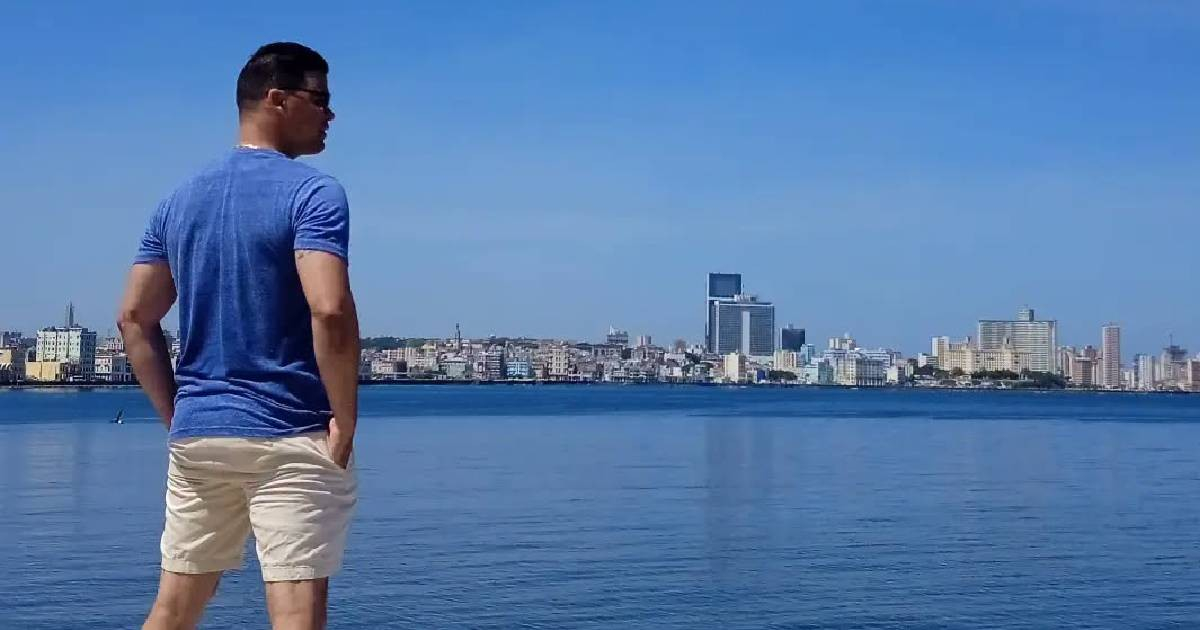
A Cuban named Alejandro Rodríguez Cuervo recently shared on Facebook a poignant reflection about emigration and farewells, striking a chord with those on the island who endure the daily toll of the ongoing exodus. He just bid farewell to another friend who decided to leave, capturing not shock but a learned resignation in his description.
"Goodbyes have become as routine as 'getting by' or 'struggling.' So common that you learn to live with it," writes Rodríguez Cuervo, encapsulating in a single sentence the experience of millions of Cubans whose close-knit circles are gradually breaking apart.
Rodríguez Cuervo doesn't solely attribute the exodus to material shortages, though he acknowledges their existence.
"It's no longer just about the lack of oil or milk (which are indeed scarce), but rather about the narrowing future," he explains. His words touch on something deeper: an existential void that turns each morning into an endless arithmetic exercise, calculating how far the salary stretches, how long the electricity lasts, how soon a medicine arrives.
"Creativity (that which we take such pride in) has turned into a machine for filling gaps," he notes, delivering one of the text's most stark observations.
Embracing Change: Beyond the Physical Baggage
When it comes to those who leave, Rodríguez Cuervo paints a picture that extends beyond suitcases: "Those who depart carry little luggage. They take, however, rituals, customs, gatherings; and upon arrival, they face the harshest chill, that of nostalgia, of the unfamiliar, of starting almost from scratch."
Yet, his reflection also turns inward, focusing on those who stay behind. Each farewell, he says, opens a rift and forces a challenging question: "Every departure confronts us with our own decision to stay, leaving us to wonder if we are brave or merely insecure."
The Ongoing Exodus: A Nation in Transition
This type of testimony is set against an exodus showing no signs of abating. According to official statistics from the National Office of Statistics and Information (ONEI) released in July 2026, approximately 245,264 Cubans emigrated in 2025, reducing the island's population to 9,434,593 inhabitants.
The most affected province was Havana, with 57,433 departures. In 2024, the number was 251,221 emigrants.
Since 2021, over a million Cubans have left the island, marking the largest exodus in the country’s recent history.
Moreover, the demographic crisis is exacerbated by a declining birth rate: in 2025, there were only 68,051 births compared to 134,354 deaths, resulting in a negative natural balance of over 66,000 people.
The official average salary closed 2025 at 6,930 Cuban pesos per month, equivalent to between 10 and 13 dollars at the informal exchange rate, while the basic cost of living exceeds 50,000 pesos according to various estimates. The informal dollar rate hovered around 673 pesos in August 2026.
The Psychological Impact of Migration: Coping with 'El Gorrión'
The phenomenon Rodríguez Cuervo describes is known in psychology as migratory grief. Those who remain accumulate sadness, anxiety, and a sense of loss without having left the country themselves. In Cuba, this nostalgia is colloquially referred to as "el gorrión."
He concludes his reflection with an image that blends resilience with surrender: "Those of us who stay continue to gaze at the sea, drinking in the salt and hope, and striving diligently from here to build a future and a home. Until one day, if no other option remains, we too may decide to emigrate."
Understanding Cuba's Migration Crisis
What are the main reasons behind the Cuban exodus?
The Cuban exodus is driven by a combination of factors, including economic hardship, scarcity of essential goods, and a bleak outlook for the future. It is not only about material shortages but also an existential struggle for a better life.
How has the demographic crisis affected Cuba?
Cuba faces a demographic crisis marked by a declining population due to mass emigration and a falling birth rate. This has resulted in a negative natural balance, further straining the island's socio-economic fabric.
What is the emotional impact of the Cuban exodus on those who stay?
Those who remain in Cuba often experience migratory grief, characterized by sadness, anxiety, and a sense of loss as loved ones depart. This emotional burden is colloquially known as "el gorrión" in Cuba.