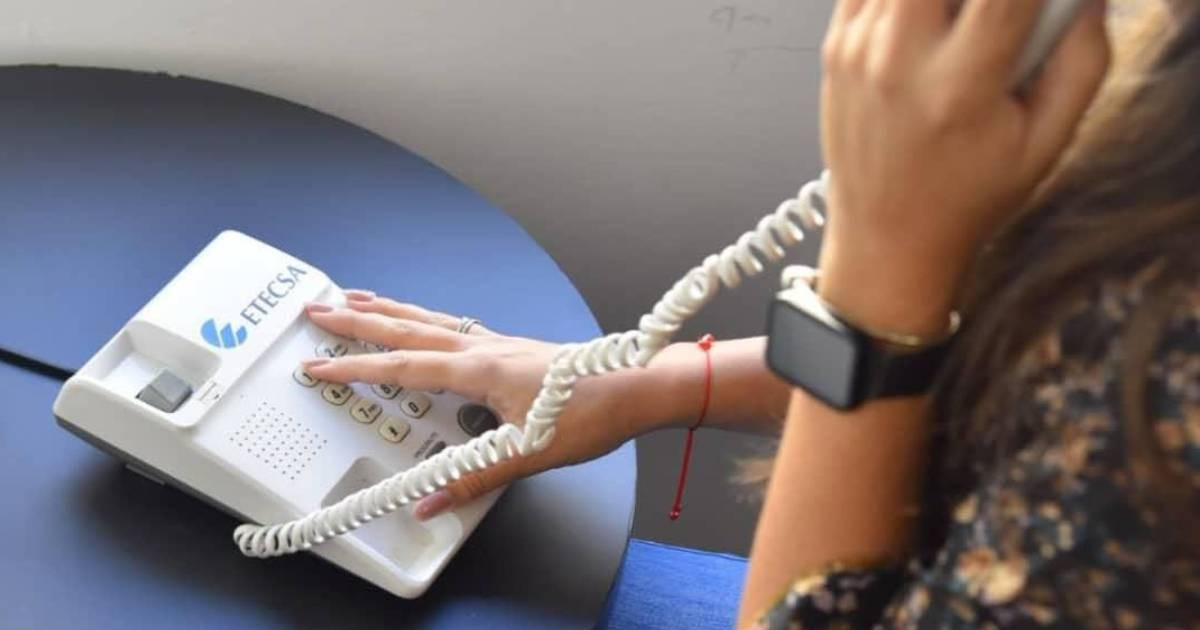
A widespread earthquake alert, which turned out to be a hoax, triggered chaos this Tuesday across at least nine Cuban provinces. Citizens quickly pointed fingers at ETECSA, the state-run telecommunications monopoly, amid growing distrust towards the company.
Shortly after 3:00 p.m., millions of Android phones and tablets blared the seismic alarm in Mayabeque, Granma, Holguín, Matanzas, Havana, Ciego de Ávila, Camagüey, Las Tunas, and Santiago de Cuba. The unexpected alert led to evacuations and pandemonium in several cities.
The National Center for Seismological Research (CENAIS) promptly discredited the alert, confirming there was no basis for its issuance.
Nonetheless, a significant number of Cubans voiced their frustration directly at ETECSA, questioning why the company failed to clarify or manage the situation effectively.
Public Outrage Over Miscommunication
Writer and activist Laritza Camacho expressed her discontent on Facebook, blending irony with criticism of the country's state. "When the phones rang, everything was already shaking. Finding a simple pumpkin in Cuba is like navigating an earthquake, and that’s how it is with everything. You look at the city, walk through it, and are amazed to find life among the rubble," Camacho wrote, before posing the question on many minds: "Who triggered the alarm? ETECSA?"
Although there was a minor earthquake recorded in Ciego de Ávila on the same day, authorities clarified that its characteristics did not match the widespread alarm received on devices.
Technical Glitch or Corporate Negligence?
The most plausible technical explanation points to Google's Android earthquake alert system, which uses the accelerometers of millions of phones as a distributed detection network. When a sufficient number of devices report vibrations consistent with an earthquake, the system automatically issues an alert without local seismological authority intervention. This can result in false alarms when data is ambiguous.
This incident adds to the mounting skepticism towards the state company, which has faced ongoing criticism since the 2025 price hike for failing to enhance service quality despite increased rates.
Comedian Ulises Toirac, who has been leading a public campaign against ETECSA for months, once again criticized the company following the false alarm. Since June 2026, Toirac has repeatedly demanded that ETECSA reinvest the windfall from the price hike into infrastructure improvements—including backup batteries for its towers—or allow private alternatives like Starlink to enter the Cuban market.
As of Wednesday, Cuban authorities had yet to determine the exact cause of the mass notification activation, leaving unanswered the question that remains in the minds of thousands of Cubans.
Understanding the Earthquake Alert Incident in Cuba
What caused the false earthquake alarm in Cuba?
The false alarm likely resulted from Google's Android earthquake alert system, which mistakenly interpreted data from phone accelerometers as indicative of an earthquake.
How did ETECSA respond to the incident?
ETECSA has been criticized for not providing clarity or effective management during the incident, contributing to public frustration and distrust.
Was there an actual earthquake in Cuba that day?
A minor earthquake did occur in Ciego de Ávila, but its characteristics did not align with the widespread alarm that was triggered.