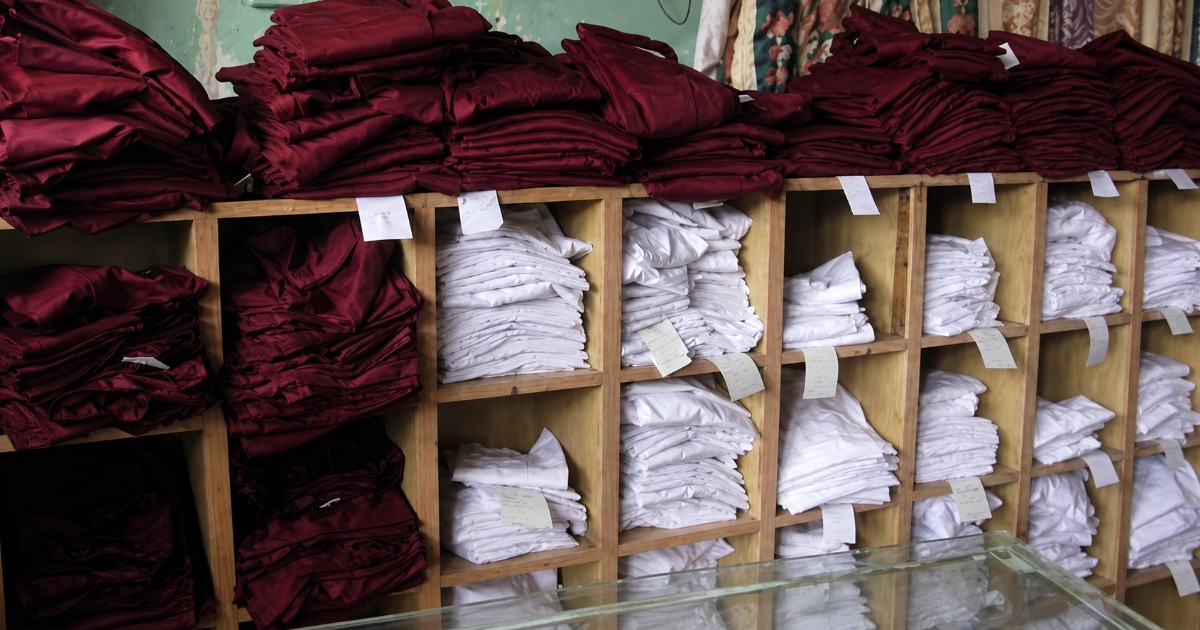
The authorities in Ciego de Ávila have acknowledged that the demand for school uniforms will only be prioritized for preschool, fifth, and seventh grades. Students in other grades will not be covered, sparking criticism from parents and family members, with one user questioning, "What about the other children?"
This situation was highlighted on Wednesday by the provincial newspaper, Invasor, which reported on a meeting to prepare for the 2026-2027 school year. The meeting, led by officials from the provincial Party and Government, addressed logistical, financial, material, organizational, and transportation challenges.
Executives from the Confecciones Trébol Business Unit revealed that approximately 2,700 garments still need to be produced, primarily for primary education, focusing mainly on shorts. The official expectation is to complete this production by next week, just days before the school year starts on September 1.
Concerns Over Uniform Shortage
However, official reports clarified that school clothing demands will be met "only as a priority" for the specified grades, leaving other students without new uniforms. Additional garments have been transferred from Sancti Spíritus, including shirts, with authorities coordinating with commercial entities to make them available to the public as soon as possible.
This announcement triggered immediate questions about what will happen to children whose uniforms from previous years no longer fit. One individual sarcastically remarked, "Amazing achievement. Do the children in ongoing grades not grow, or are the uniforms elastic?"
A mother elaborated that her child will begin second grade with clothes received in preschool: "They gave him a pair of shorts and two shirts. Those pieces no longer fit. Obviously, children grow, they stretch. Until when do we have to keep improvising?" Another parent declared she would not resort to the informal market to solve the problem: "I’m not buying uniforms online, so mine will go in civilian clothes."
Impact on Older Students and Families
The challenges extend beyond the younger students. Questions arose about tenth graders, with one person stating, "I can't understand why students starting tenth grade aren't a priority as well. They've grown since receiving a uniform in seventh grade, and they're in a critical development stage." Another asked, "What uniform will the children starting tenth grade wear to school?"
Some parents expressed concern about potential penalties for students wearing civilian clothes due to the lack of uniforms. "I hope when they attend in casual attire, teachers won't penalize the continuing grades," one user warned.
There was also criticism regarding the proximity of the school year's start amidst incomplete production: "How can they claim all conditions for the new school year are met when the uniform production isn't finished, and then there's distribution and sales?"
Financial Struggles and Educational Challenges
The difficulties in Ciego de Ávila extend beyond attire. The meeting also addressed delays in salary payments to Education employees, which, according to officials, caused "significant tensions" over the past four or five months.
The province's Director General of Education, Luis Enrique Calderón Piñeiro, suggested installing solar photovoltaic kits in boarding schools and homes for children without parental care to facilitate certain nighttime activities amidst energy shortages.
Transportation and fuel shortages are forcing the reorganization of higher education as well. Teaching activities for various careers will be relocated to the Manuel Ascunce Domenech campus in Ciego de Ávila due to difficulties traveling to the main campus of the University Máximo Gómez Báez, located in Modesto Reyes.
Uniform shortages add to a growing list of concerns for Cuban families as the school year approaches: how to ensure students have daily meals. A mother recently questioned what children could bring to school for snacks given the rising costs of basic products. She cited examples such as oil priced at 4,000 pesos and sausages at 1,200 pesos.
The economic strain was also reflected in a personal calculation estimating the cost of covering 30 breakfasts and 30 snacks for a child at 10,160 pesos monthly, excluding lunches, dinners, transportation, medication, shoes, clothing, notebooks, or backpacks.
Incomplete uniforms, food challenges, transportation issues, salary delays, and energy disruptions form part of the backdrop as Ciego de Ávila attempts to commence the new academic year.
Addressing School Uniform and Educational Challenges in Ciego de Ávila
Why are only certain grades prioritized for uniforms in Ciego de Ávila?
Due to logistical and financial constraints, the authorities have decided to prioritize preschool, fifth, and seventh grades for uniform distribution.
What are the major challenges facing the education system in Ciego de Ávila?
The education system in Ciego de Ávila is dealing with uniform shortages, delayed salary payments, transportation issues, and energy shortages.
How are parents reacting to the uniform shortage?
Parents have expressed frustration and concern, questioning how children will attend school without proper uniforms and criticizing the lack of solutions.
What measures are being considered to address energy shortages in schools?
The installation of solar photovoltaic kits in boarding schools and homes for children without parental care is being considered to facilitate nighttime activities.