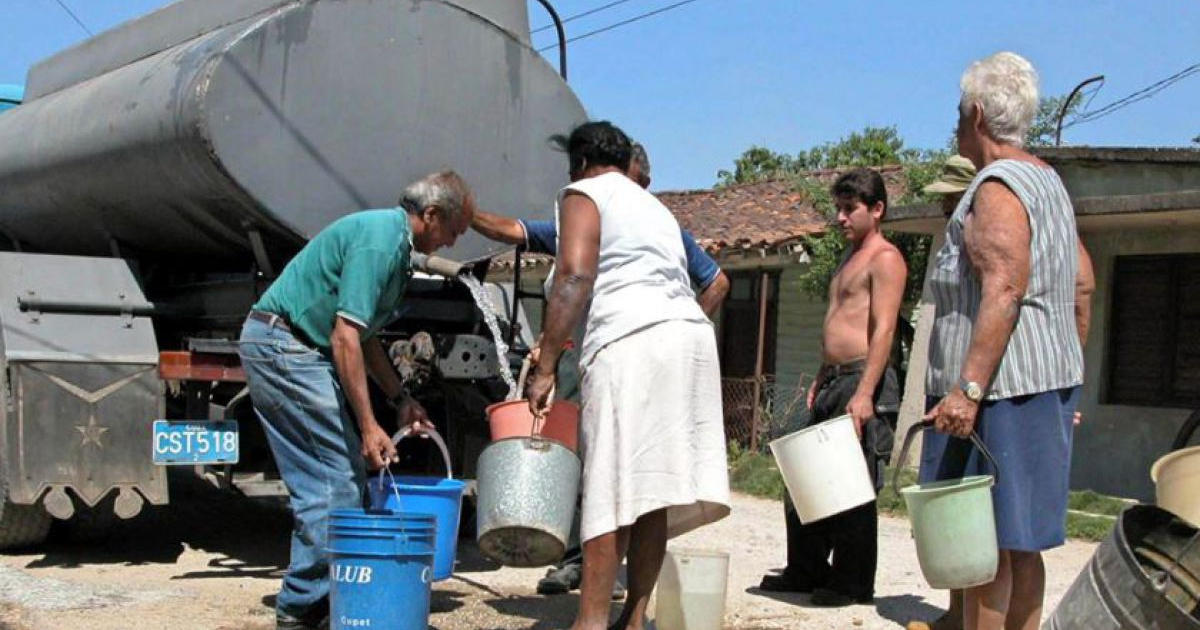
A staggering 70% of Cárdenas residents have been deprived of potable water for up to four days, as confirmed by Juan Correoso Navarro, the municipal director of Hydrology in Cárdenas, during an interview with the local outlet Telebandera.
The primary cause of this major disruption is an electrical failure at the Smith Comas well field, likely triggered by a lightning strike, which incapacitated the substation's transformer and halted water pumping to the city.
"We've been without water for three to four days. The issue affects 70% of the city, and we're trying to manage the situation with water delivery via tanker trucks as best as we can," stated Correoso Navarro, without providing a specific timeline for the full restoration of services.
The breakdown at Smith Comas was reported on August 15, with no immediate repair timeline available. The following day, it was confirmed the substation was completely out of commission. Efforts to recover the damaged transformer included transporting a trailer to Amarilla in central Mejicó.
Simultaneously, efforts are underway to install a new transformer at the Cárdenas 6 station, where a 100-liter-per-second pump was also knocked out by a lightning strike.
"We're now installing a transformer at Cárdenas 6. This was a 100-liter-per-second pump that was halted because it was struck by lightning," explained the official.
Meanwhile, water distribution via tanker trucks remains the sole option, though the director conceded that coverage is limited: "We're maintaining service this way until we can resolve the issues at the well field."
This water crisis compounds an already dilapidated electrical system. On August 15, the theft of dielectric oil from a transformer on Calvo Avenue —the second such incident in eight days on the same circuit— left over 3,900 customers without electricity. The technical report confirmed the entire oil supply had been stolen.
According to data from the Office of the Electric Company (OBET) cited by Telebandera, Cárdenas currently has 17 transformers out of service and nearly 10,000 customers without electrical supply due to various issues.
The connection between these crises is clear: without electricity, there is no pumping, and without pumping, there is no water. Cárdenas, the second most populous municipality in Matanzas with approximately 78,000 residents, relies on well fields and pumping stations that need a stable electrical supply to function.
This water crisis is neither new nor unique to Cárdenas. In April 2026, provincial authorities acknowledged that more than 300,000 residents of Matanzas experience unstable water supply, primarily due to failures in the electrical system.
In March of the same year, health authorities advised boiling and chlorinating water due to sanitary risks from power outages and water supply failures.
Desperation has driven residents to extreme measures: in the Playa neighborhood, the number of makeshift wells dug in yards and sidewalks jumped from 20 in October 2025 to over 40 in the early months of 2026, according to local reports.
Understanding the Water Crisis in Cárdenas
What caused the water shortage in Cárdenas?
The water shortage in Cárdenas was caused by an electrical failure at the Smith Comas well field, likely due to a lightning strike, which disabled the substation's transformer and stopped water pumping.
How is Cárdenas coping with the water crisis?
The city is managing the situation by distributing water via tanker trucks, though coverage is limited. Efforts are also underway to repair or replace damaged transformers and pumps.
What is the relationship between the electrical and water crises in Cárdenas?
The water crisis is directly linked to the electrical crisis; without a stable electrical supply, water cannot be pumped from the well fields to the city.
What measures have been taken to ensure water quality during the crisis?
Health authorities have recommended boiling and chlorinating water to mitigate sanitary risks associated with power outages and inconsistent water supply.