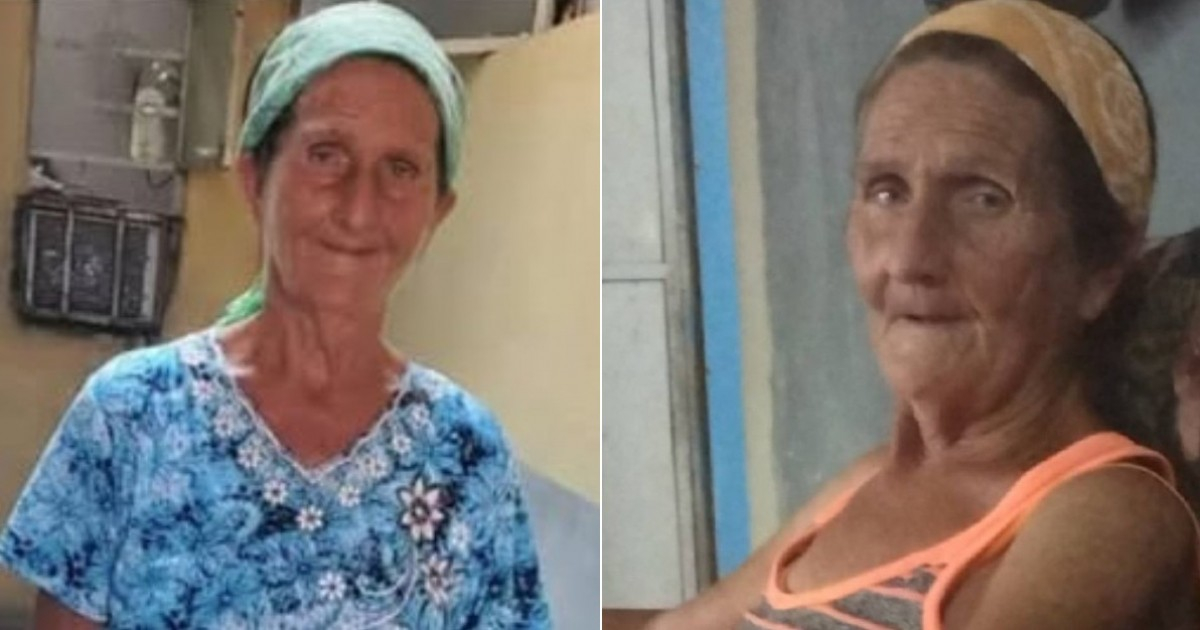
On August 14, it marked a full year since 80-year-old Cuban woman Noguella Lezcano Milián, affectionately known as "La Gallega," vanished in Havana, leaving her family in a relentless search for her whereabouts.
The Alas Tensas Gender Observatory (OGAT) took to Facebook to remind the public of her disappearance, ensuring the alert remains active and the case stays in public consciousness.
Noguella's last known residence is at Calzada de San Miguel del Padrón #9603, between 5th and 6th streets in Luyanó Moderno (La Cuevita). She stands at 1.50 meters, has blue eyes, short dark brown hair, and often wears a cap or scarf.
Reported missing to the police on August 16, 2025, Noguella was last seen two days earlier in the Wajay area, on the outskirts of Havana.
Health Concerns Amplify Urgency
Her case is particularly concerning due to her medical conditions: she suffers from epilepsy, dementia, and experienced an ischemic episode leading to memory loss, significantly increasing her vulnerability.
Throughout the past 12 months, her granddaughters have been tirelessly checking hospitals, psychiatric facilities, homeless shelters, and the Forensic Medicine headquarters with no substantial leads on her whereabouts.
Community Efforts and Social Media Campaign
The search expanded beyond institutions to the streets, with the family posting flyers in churches, on utility poles, and in hospitals throughout the city, while persistently sharing her story on social media.
"If you have any information about her whereabouts, please contact: Lisandra: 58171805, Bebé: 53149024, Liset: 55381553," reads the post from Alas Tensas.
In August 2025, her family offered a $200 reward for verified information leading to her location.
"I appeal to everyone with my heart in my hand to put themselves in my shoes. We need to find my grandmother!" Lisandra García pleaded on Facebook shortly after Noguella's disappearance.
Months later, the granddaughters issued another heartfelt plea: "We are desperate, please help us find her. Do not discriminate against her or leave her alone."
Structural Failures Exposed
OGAT initiated the "Yeniset Alert"—a civic mechanism aimed at highlighting women's disappearances in Cuba, keeping the case prominent throughout the year.
This alert system, however, lacks state support and legal authority, relying solely on citizen solidarity and social media dissemination.
Noguella's disappearance highlights a critical failure of the Cuban regime: the absence of official protocols, rapid alert systems, or legal mechanisms for locating missing persons, akin to the AMBER Alert or similar systems elsewhere.
In light of this institutional void, Cuban families are forced to depend on social media and civil organizations to bring cases to public attention and rally community assistance.
According to OGAT's 2025 annual report, that year saw 40 reported disappearances of women, girls, and children in Cuba: 26 were found alive, six were discovered deceased, and eight remained active cases at the end of the year.
At least nine of these cases involved individuals with mental health issues or cognitive impairment, such as dementia or memory loss, similar to Noguella's vulnerability profile.
Noguella's is not the only unresolved case: other women remain missing in Cuba without state intervention, including Felicia Gómez Díaz, missing since December 5, 2024, in Trinidad, and Doraiky Águila Vázquez, 48, missing in Havana since March 2025.
Understanding the Context of Disappearances in Cuba
What is the "Yeniset Alert"?
The "Yeniset Alert" is a citizen-driven initiative in Cuba aimed at raising awareness about the disappearances of women. It relies on public solidarity and social media to keep cases active and visible, lacking official state support or legal authority.
How does Noguella's health condition impact her disappearance case?
Noguella's epilepsy, dementia, and memory loss make her particularly vulnerable, complicating the search efforts and increasing the urgency to locate her swiftly.
What challenges do Cuban families face in finding missing relatives?
Cuban families encounter significant obstacles due to the lack of official protocols or alert systems for missing persons, forcing them to rely on social media and civil organizations to make their cases heard and seek public assistance.