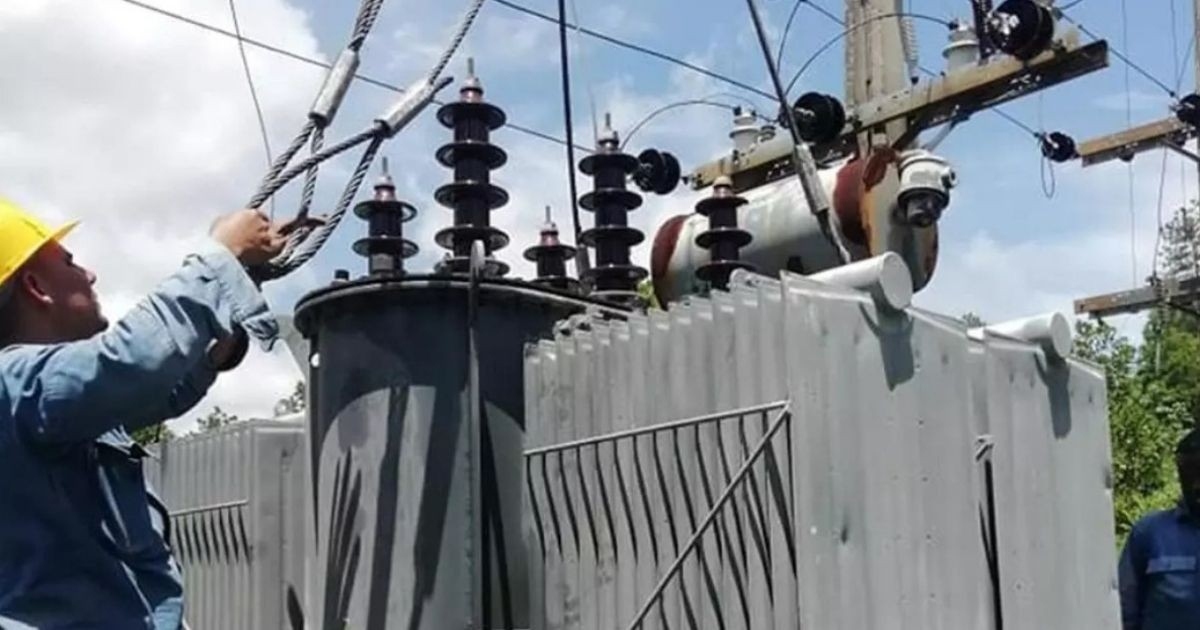
In a pre-dawn operation, authorities apprehended two individuals in Los Arabos, Matanzas, after they were caught in the act with a container filled with dielectric oil, along with a hose, gloves, and a rope all drenched in the same substance.
The provincial Electric Union reported on Facebook that the suspects had removed the cover from a transformer in the Guachinango area and siphoned off the oil prior to being stopped by police.
This theft further exacerbated the ongoing electrical issues faced by local residents, who already endure extended power outages. The state-run entity emphasized that the affected community not only struggles with routine blackouts but now also misses rare opportunities when power is actually available. In response to these crimes, the Electric Union declared a "zero tolerance" policy against such illegal activities.
The Growing Crisis of Dielectric Oil Thefts
The incident adds to a troubling series of dielectric oil heists plaguing Matanzas since early 2026. In May, Lieutenant Colonel Roberto Domínguez Rodríguez, head of the Criminal Investigation Department of the Ministry of the Interior in the province, disclosed that "around 40 individuals are being prosecuted across Calimete, Martí, Los Arabos, Perico, and Jovellanos, with more than 10 criminal networks linked to approximately 33 pending cases." Across the province, over 90 transformers have suffered due to these thefts.
Lieutenant Colonel Domínguez Rodríguez detailed the typical modus operandi of these criminals: "Under the cover of darkness during power outages, they target isolated and unprotected areas, climb poles, puncture transformers, and extract the oil into tanks for subsequent sale." The primary driver, he noted, is not personal use but profit.
Market Dynamics and Broader Impact
Dielectric oil is resold on the black market as an alternative fuel for tractors and trucks, fetching between 600 and over 1,000 Cuban pesos per liter amidst widespread fuel shortages. When the oil is drained, the transformer shorts out, rendering it useless and extending outages beyond scheduled cuts.
This issue is not confined to Matanzas. In August, a six-member ring was dismantled in Mayabeque for similar operations in Güines and Melena del Sur. A comparable theft in Holguín left over 20,000 people without power. On August 15, Cárdenas experienced the complete drainage of a transformer on Calvo Avenue, marking the second such incident in just over a week.
Energy and Mines Minister Vicente de la O Levy acknowledged before the National Assembly in late July that the volume of stolen oil was "nearly equivalent" to what was produced in the same timeframe, and some communities had been left without power for up to 105 days due to damaged transformers that could not be quickly replaced.
Authorities are enforcing Supreme People's Court Ruling 475/2025, categorizing these acts as sabotage under Article 125 of the Penal Code, with punishments ranging from seven to 30 years in prison, life imprisonment, or even the death penalty in severe cases. Courts have already begun handing down sentences: in Ciego de Ávila, several defendants received between seven and 12 years; in the Isle of Youth, an operator was sentenced to eight years; and in Artemisa, the prosecution sought 12 years for a man who stole 70 liters.
Understanding the Oil Theft Crisis in Cuba
What is dielectric oil and why is it stolen?
Dielectric oil is used in transformers to insulate and cool the electrical components. Thieves steal it to sell as alternative fuel on the black market due to its high demand and price in Cuba.
How do these thefts affect the local population?
The thefts lead to prolonged power outages as transformers become damaged and cannot be repaired or replaced quickly, worsening the already frequent blackouts experienced by residents.
What measures are authorities taking against oil theft?
Authorities are employing strict legal measures, including severe penalties under the sabotage category of the Penal Code, to deter and prosecute those involved in oil theft.