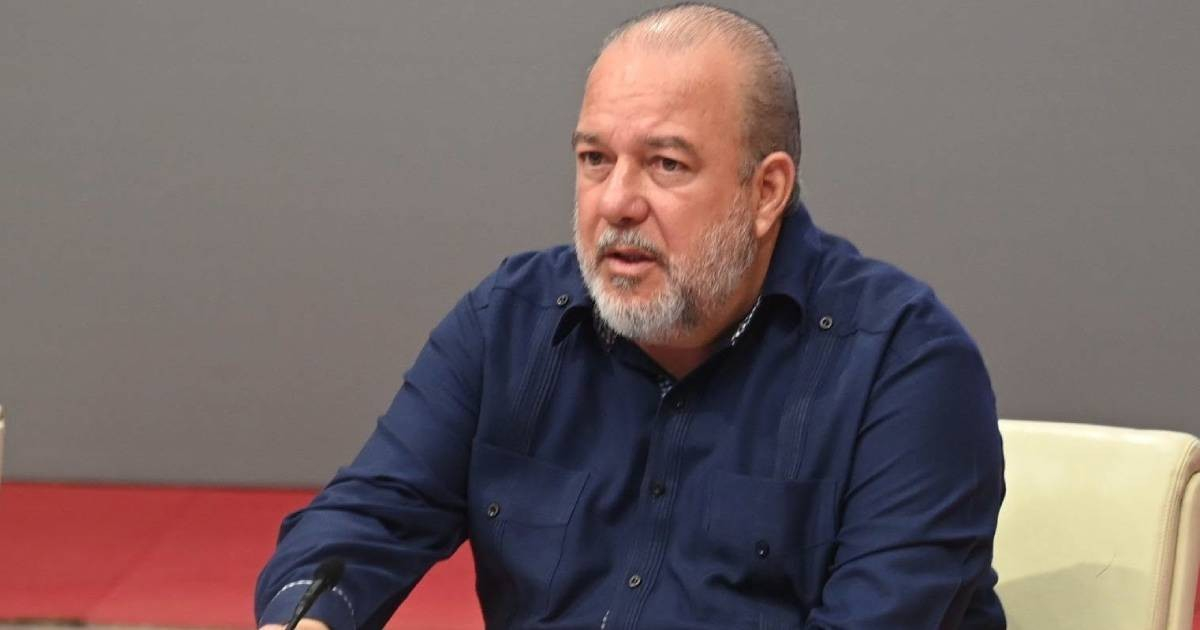
Cuban Prime Minister Manuel Marrero Cruz declared on Tuesday that Cuba is engaging with the global economy "with sovereignty, not submission." This statement was shared on his X account, echoing remarks he made at the First International Colloquium "Fidel: Legacy and Future."
"Cuba integrates into the world economy with sovereignty, not submission, true to the legacy of the Commander on his centenary, who taught us that sovereignty is non-negotiable," Marrero wrote on his X profile, accompanied by the official campaign hashtags #100YearsWithFidel.
The message reinforces comments made by the Prime Minister at the "Fidel and the World Economy" panel during the colloquium, held at Havana's Palace of Conventions from August 10-13, as part of the events marking Fidel Castro's birth centenary.
Economic Reforms and Sovereignty
During the forum, Marrero defended the 176 economic and social reforms approved in June 2026, organized into 23 themes, as "100 percent Cuban measures," rejecting claims that the regime is mimicking the models of China or Vietnam.
"Cuban socialism cannot be a rigid theory," the Prime Minister argued, presenting the reform package as a sovereign adaptation to global economic challenges rather than an abandonment of the system.
The reforms passed in June include increased space for private small and medium-sized enterprises, opening banks and currency exchanges to non-state actors under the Central Bank's supervision, facilitating foreign investment, and reforms in foreign trade.
Contrasting Views on Market Elements
The regime highlights these measures as an "update of the socialist model," although critics argue they introduce market elements that contradict decades of official discourse.
The rhetoric of "non-negotiable sovereignty" is frequently employed by the Cuban government to justify both resistance to external pressures—including the U.S. embargo and the conditions of international financial entities—and the internal legitimacy of changes expanding the private sector.
The centenary of Castro serves as an ideological framework to provide revolutionary continuity to a reform package that, according to critical sectors, represents a shift towards market formulas that the regime itself opposed for decades.
International Participation and Domestic Challenges
The colloquium attracted more than 1,500 delegates from 63 countries, with over 1,000 foreign participants. Its closing events were attended by Miguel Díaz-Canel, Raúl Castro, Esteban Lazo, and Roberto Morales Ojeda.
This occurs as Cuba faces one of its most severe economic crises, characterized by prolonged blackouts, fuel and food shortages, sustained inflation, and an unprecedented population exodus.
The Cuban government has declared 2026 as the "Year of the Centenary" and extended the commemorative agenda until December 4, the tenth anniversary of Castro's interment at the Santa Ifigenia Cemetery in Santiago de Cuba.
Understanding Cuba's Economic Reforms and Sovereignty
What are the key components of Cuba's recent economic reforms?
The reforms include increasing space for private enterprises, opening financial services to non-state sectors under the Central Bank's oversight, facilitating foreign investment, and reforming foreign trade.
How does the Cuban government justify its focus on sovereignty?
The government defends its sovereignty to resist external pressures such as the U.S. embargo and conditions from international financial institutions, using it to legitimize internal changes that expand the private sector.
Why is the centenary of Fidel Castro significant to these reforms?
The centenary is used as an ideological framework to ensure revolutionary continuity, framing the reforms as aligned with Castro's legacy, despite introducing elements that some argue contradict previous policies.